Why Preparation Beats Panic Every Time
When a pet emergency strikes - a sudden collapse, a suspected poisoning, a traumatic injury - the mental bandwidth available for problem-solving drops sharply. Stress narrows focus, slows recall, and makes even familiar tasks feel overwhelming. The antidote is not courage; it is preparation done in advance, when you are calm.
Veterinary professionals consistently note that pet owners who arrive at emergency clinics with their animal's medical history, current medications, and a clear account of what happened are able to support faster, more accurate triage. That information - which takes minutes to organize at home - can make a meaningful difference in care outcomes. This checklist is designed to help you build that readiness before you ever need it.
For a deeper look at what separates a true emergency from a situation that can wait for a regular appointment, our guide to recognizing urgent symptoms versus minor concerns is a practical companion to this checklist. And if you are also setting up a new pet's environment from scratch, our new pet preparation checklist covers the foundational setup steps.
Know the Signs That Mean Go Now
Some symptoms require immediate emergency care, not a wait-and-see approach. Difficulty breathing, collapse, uncontrolled bleeding, suspected broken bones, seizures, known toxin ingestion, and inability to urinate (especially in male cats) are all situations where you should go directly to an emergency clinic without delay. See our guide to recognizing urgent symptoms for a fuller breakdown.
What to Gather and How to Use This Checklist
Work through each group below in order. Some items - like assembling a first-aid kit - require a one-time purchase and assembly session. Others, like saving emergency contacts and recording your pet's baseline vitals, take only a few minutes but are often the most overlooked. Revisit this checklist at least once a year, or any time your pet's health status changes significantly.
Digital thermometer (rectal)
Measures your pet's core temperature to help identify fever or hypothermia before calling the vet.
Self-adhesive bandage wrap (e.g., cohesive bandage)
Controls bleeding and secures dressings without sticking to fur - essential for wound management until professional care is available.
Hard-sided pet carrier
Safely contains an injured or frightened pet during transport to reduce further injury.
Cloud storage or pet health app
Stores digital copies of vaccination records, lab results, and your pet profile for immediate access at any emergency clinic.
Printed pet first-aid reference card
Provides step-by-step guidance for common emergencies when you cannot safely search online.
Contact Information
Pet Medical Profile
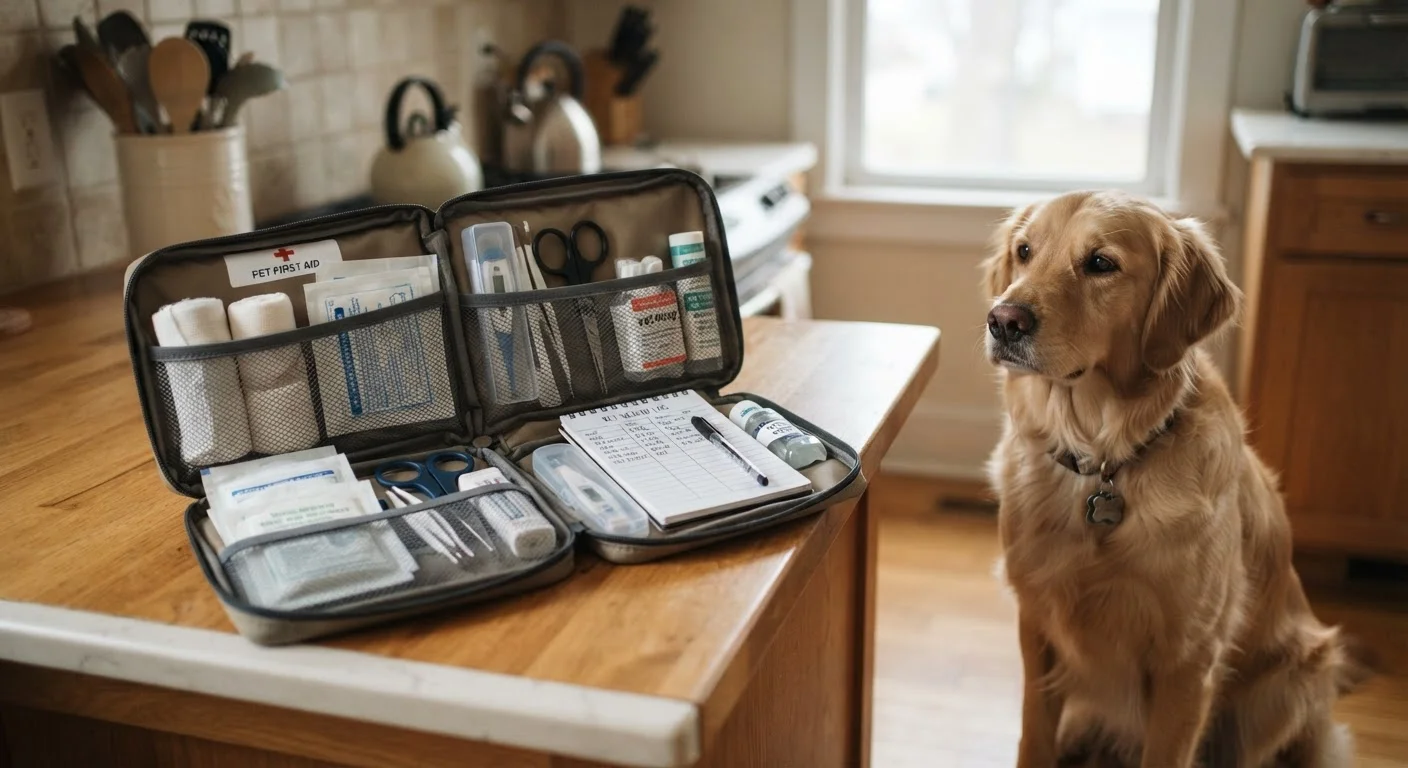
First-Aid Kit Supplies
Transport & Restraint Readiness
Financial Preparedness
Never Medicate Without Veterinary Guidance
Many over-the-counter human medications - including common pain relievers like ibuprofen and acetaminophen - are toxic to dogs and cats. Do not administer any medication to your pet in an emergency without first consulting a veterinarian or poison control professional. Always store human medications separately from pet supplies to prevent accidental access.
Poison Ingestion: Do Not Induce Vomiting Without Direction
Inducing vomiting after a pet ingests a toxin can cause additional harm in certain situations - for example, with caustic substances or in pets with specific health conditions. Always call a veterinary professional or animal poison control before attempting any at-home treatment for suspected poisoning.
Routine preventive care is your first line of defense against emergencies. Staying current on vaccinations, parasite prevention, and wellness exams means many conditions are caught before they become crises. Our overview of standard preventive health measures explains what vets recommend and why each step matters.
It is also worth building your skill at reading your pet's everyday signals. Pets rarely communicate pain in obvious ways - understanding the subtle signs that warrant a call to your vet is one of the most valuable things any pet owner can learn.
This article is for general informational purposes only and does not constitute veterinary medical advice. Always consult a licensed veterinarian for guidance specific to your pet's health needs.