Set yourself and your pet up for success. This checklist covers environment setup, management tools, and foundational concepts to have in place before day one.
Key Takeaways
Preparing your environment before training begins reduces frustration for both you and your pet.
Positive reinforcement - rewarding desired behaviors immediately - is the most research-supported training approach.
Consistency in cues, rules, and routines is more important than any single training session.
Every household member should understand and agree on the same training approach before day one.
Management tools like crates, gates, and leashes prevent unwanted behaviors while learning is still in progress.
A new pet's first veterinary visit should happen before or alongside training to rule out health factors affecting behavior.
Why Preparation Matters More Than Technique
Most training problems aren't about technique - they're about setup. Owners who struggle to make progress typically find that something foundational was missing: the environment rewarded the wrong behavior, household rules were inconsistent, or the pet was too overwhelmed to learn. Taking an hour to audit your readiness before your first session can save weeks of frustration.
This checklist is built around applied behavior analysis and the principles of positive reinforcement - the science-backed approach recommended by veterinary behaviorists and certified professional trainers. It applies to dogs, cats, rabbits, and other companion animals, though specific tools will vary by species.
Training Cannot Overcome an Untreated Health Issue
If your pet is showing sudden behavior changes, aggression, excessive fearfulness, or difficulty focusing, consult your veterinarian before starting any training program. Pain, hormonal imbalances, and neurological conditions can all manifest as behavioral symptoms. Attempting to train through an underlying medical issue is unlikely to succeed and may cause additional stress to your pet.
Tools and Resources You'll Need
Gather these before your first session. Having the right tools in place removes barriers and keeps training moving at your pet's pace.
Required
High-Value Treats
Used as the primary reinforcer during training sessions to immediately reward desired behaviors.
Required
Treat Pouch or Bag
Keeps reinforcers accessible at your hip so reward delivery is fast and seamless during sessions.
Required
Leash and Appropriate Collar or Harness
Provides safe physical management during outdoor training and prevents the pet from practicing unwanted roaming behaviors.
Required
Crate or Exercise Pen
Gives the pet a secure confinement option when unsupervised, protecting both the pet and your home while learning is in progress.
Optional
Clicker or Verbal Marker
Marks the precise moment a correct behavior occurs, improving timing accuracy between behavior and reward.
Optional
Baby Gate or Barrier
Restricts access to areas of the home where the pet should not yet practice independence unsupervised.
Optional
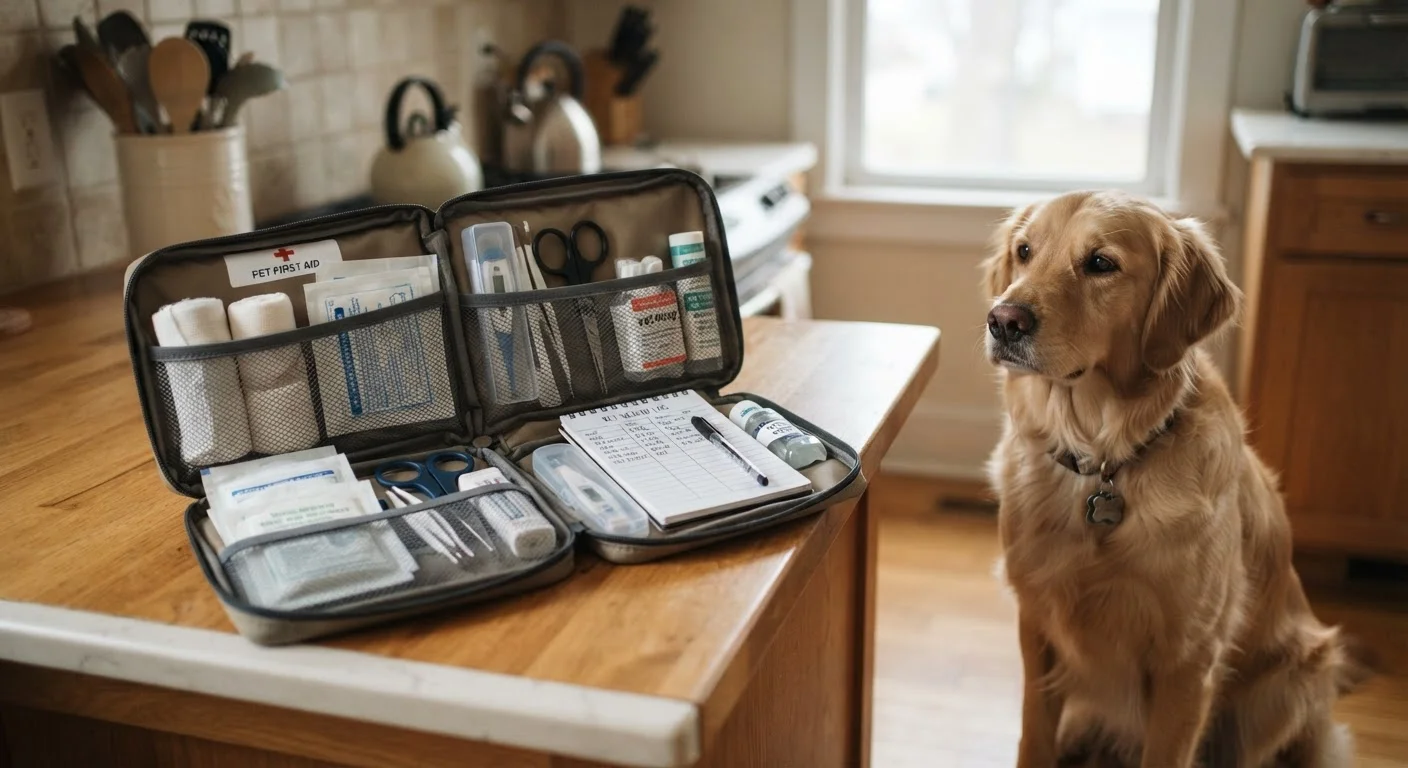
Training Log or Notebook
Tracks which cues and behaviors have been introduced, session duration, and any patterns in the pet's responses.
Your Pre-Training Checklist
Work through each group below before beginning formal training sessions. Items marked must are non-negotiable foundations; should items are strongly recommended; nice to have items will enhance the experience but aren't blockers.
Health & Veterinary Baseline
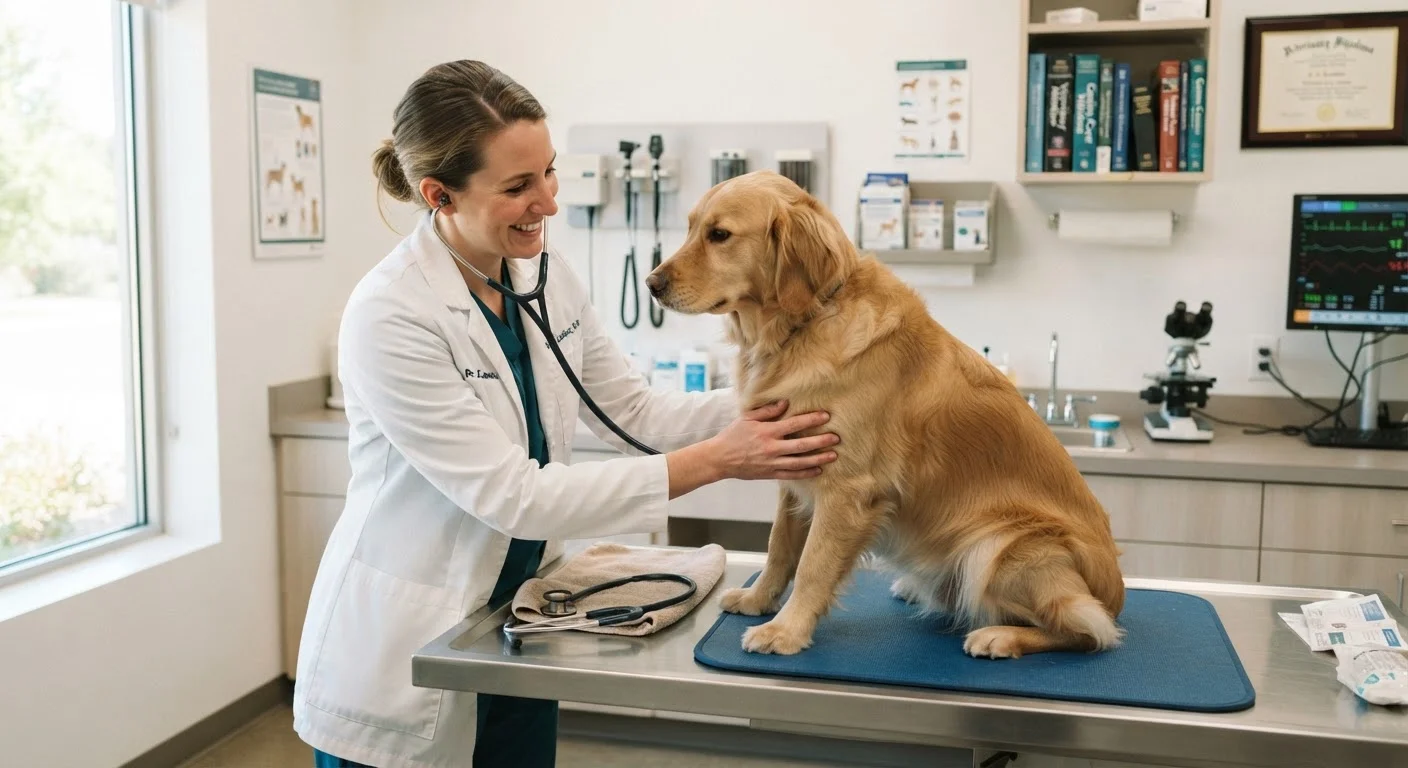
Schedule or complete a new-pet veterinary exam before beginning training, since pain, illness, or sensory impairment can directly affect a pet's ability and willingness to learn.Must
Confirm your pet is up to date on core vaccinations and parasite prevention as recommended by your veterinarian.Must
Ask your vet whether any medications your pet takes could affect alertness, appetite, or behavior, as this may influence treat responsiveness during training.Should
Note any physical limitations - joint issues, vision or hearing loss - so you can adapt cues and reward delivery accordingly.Should
Environment Setup
Identify and secure or remove household hazards (electrical cords, toxic plants, small objects, unsecured food) from any space your pet will access during training.Must
Designate a consistent, low-distraction space for initial training sessions - a quiet room with minimal foot traffic works best for most species.Must
Set up a safe confinement area (crate, pen, or gated room) so your pet has a secure space when unsupervised, reducing the chance of practicing unwanted behaviors.Must
Remove competing rewards from the environment - for example, ensure food bowls are not freely accessible if you plan to use food as a training reinforcer.Should
Add species-appropriate enrichment (chews, puzzle feeders, scratching posts) to the pet's daily space to reduce frustration-driven behavior.Nice to have
Household Consistency
Hold a household meeting so every person who interacts with the pet agrees on which behaviors are allowed and which are not - inconsistency is one of the most common training derailors.Must
Agree on a single verbal cue for each behavior you plan to teach and write them down so everyone uses identical wording.Must
Decide in advance how guests and visitors will be asked to interact (or not interact) with the pet to protect early training progress.Should
Reinforcement Planning
Identify your pet's highest-value reinforcers - small, soft, quickly consumed food treats typically work well for most dogs and many other species, but some animals respond better to play or praise.Must
Portion daily food meals to account for treat calories during training, keeping total intake within your vet's recommended range.Must
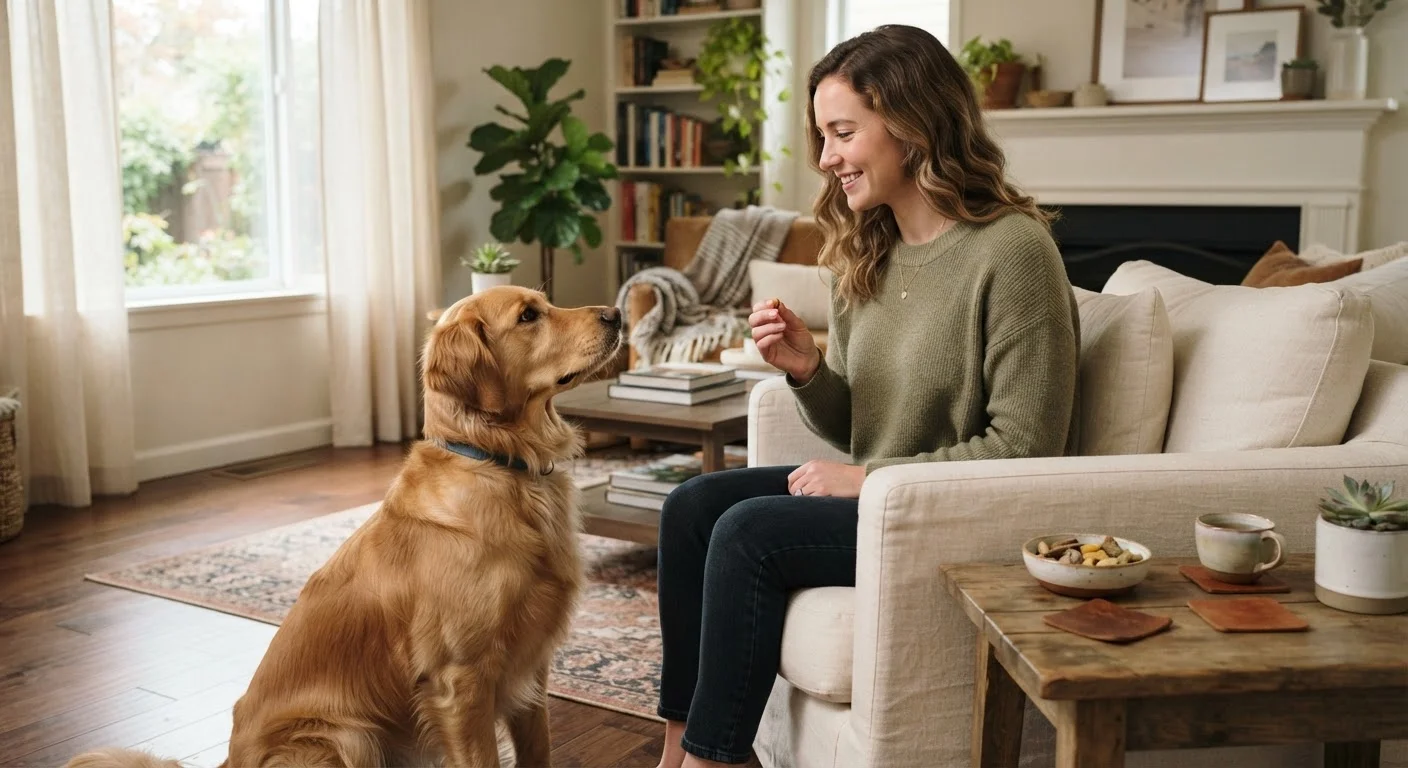
Practice the mechanics of treat delivery - a smooth, quick hand movement to the pet immediately after the desired behavior, not delayed - before your first session.Should
Consider introducing a marker signal (a short verbal word like "yes" or a clicker) that precisely marks the moment the correct behavior occurs, improving communication speed.Should
Training Knowledge & Mindset
Read or watch a reliable introduction to positive reinforcement principles - specifically the concepts of reinforcement, extinction, and the importance of timing - before your first session.Must
Set a realistic session length: most pets learn best in 3-5 minute sessions with breaks, rather than prolonged drilling.Must
Write a short list of the first three behaviors you want to train, prioritizing those most important for safety and daily life (such as recall, leash manners, or litter box use).Should
Identify a certified professional trainer or veterinary behaviorist in your area in case you encounter behavior challenges beyond basic training scope.Nice to have
Avoid Punishment-Based Methods
Training tools and methods that rely on pain, fear, or intimidation - including choke chains, prong collars, and e-collars used for punishment - carry documented risks of increasing anxiety and aggression, according to veterinary behavior research. Professional organizations including the American Veterinary Society of Animal Behavior recommend against their use. If a trainer suggests these methods, seek a second opinion from a certified professional who uses force-free techniques.
If you're preparing to add a second pet to a home that already has animals, the preparation steps are more involved - our article on introducing a second pet without derailing the peace covers the process in detail.
Pets & Animals Editorial Team is the collective byline for our editorial team and contributor network. Articles published under this byline or an editorial pen name are researched, written, and reviewed according to our editorial standards for clarity, consistency, and independence before publication.
The content on this site is provided for informational purposes only and should not be considered a substitute for professional advice. While we strive to provide accurate and up-to-date information, we make no guarantees regarding its completeness or accuracy. Always consult a qualified professional for advice specific to your circumstances before making any decisions.