Why Pets Rarely Show Pain Clearly
Animals evolved to mask vulnerability. In the wild, showing weakness invites predation, so both prey and predator species instinctively suppress obvious pain signals. This instinct doesn't disappear in domestic pets - it means a dog or cat in significant discomfort may still wag its tail, greet you at the door, or eat a full meal. By the time a pet vocalizes distress, pain is often well advanced.
Understanding this biological tendency is the first step to reading your pet accurately. The signs cats suppress illness apply broadly across species: what looks like normal behavior on the surface may mask serious underlying discomfort.
| Primary pain masking species | Cats and dogs (evolutionary survival instinct) |
| Validated feline pain tool | Feline Grimace Scale (assesses facial action units) (Université de Montréal, published 2019) |
| Common undetected pain source | Dental and periodontal disease (American Veterinary Dental College) |
| Key behavioral red flag | Social withdrawal or unprovoked aggression when touched |
| Physiological pain indicators | Elevated heart rate and respiratory rate |
| When to contact a vet | Any sudden behavior change persisting more than 24 hours |
Behavioral Indicators Veterinarians Prioritize
When a pet owner reports a concern, veterinarians are trained to look beyond the obvious. The following behavioral patterns are among the most clinically significant pain indicators across dogs and cats:
- Withdrawal or hiding: A pet that seeks isolation - especially one that is usually social - is a high-priority concern.
- Changes in posture or gait: Hunching, reluctance to rise, lameness, or an unusual stance can all signal musculoskeletal or abdominal pain.
- Altered facial expression: Veterinary researchers use validated tools like the Feline Grimace Scale and the Canine Pain Scale, which assess ear position, orbital tightening, muzzle tension, and whisker position.
- Appetite and thirst changes: Refusing food - particularly in cats - or sudden increases in water intake may indicate pain alongside underlying illness.
- Aggression or irritability: A previously gentle pet that snaps when touched in a specific area is communicating pain clearly. This is also a safety consideration during handling.
- Excessive grooming or self-trauma: Licking, chewing, or scratching a localized area often indicates discomfort at that site.
Behavioral changes also extend to training contexts. If your pet suddenly struggles to perform familiar commands or appears distracted and tense, reading your pet's body language during a session can help you distinguish pain-related signals from simple disengagement.
Feline Grimace Scale
A validated veterinary tool that scores pain in cats by assessing facial muscle changes - including ear position, orbital tightening, and muzzle tension - observed in photographs or direct examination.
Muscle guarding
Involuntary tensing of muscles around a painful area, often detected during palpation. It is a reflexive protective response and a key clinical sign of localized pain.
Proprioception
A pet's ability to sense the position of its own limbs and body in space. Deficits - such as knuckling a paw - can indicate neurological or spinal pain.
Palpation
The act of pressing or feeling areas of the body with the hands during a physical exam to detect pain, swelling, abnormal masses, or tenderness.
Visceral pain
Pain originating from internal organs such as the stomach, bladder, or intestines. It is often harder to localize and may present as vague restlessness, posture changes, or appetite loss.
Physical Signs and What a Vet Exam Includes
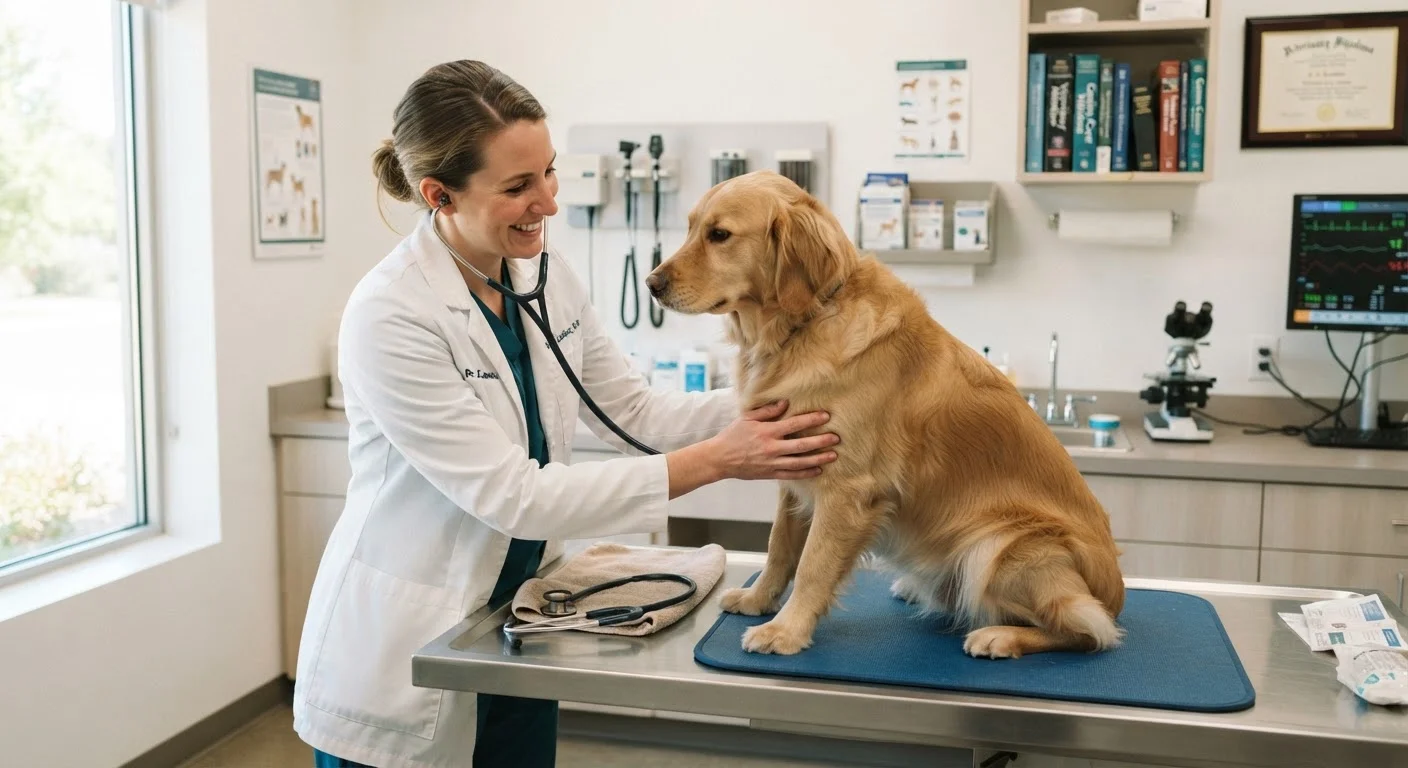
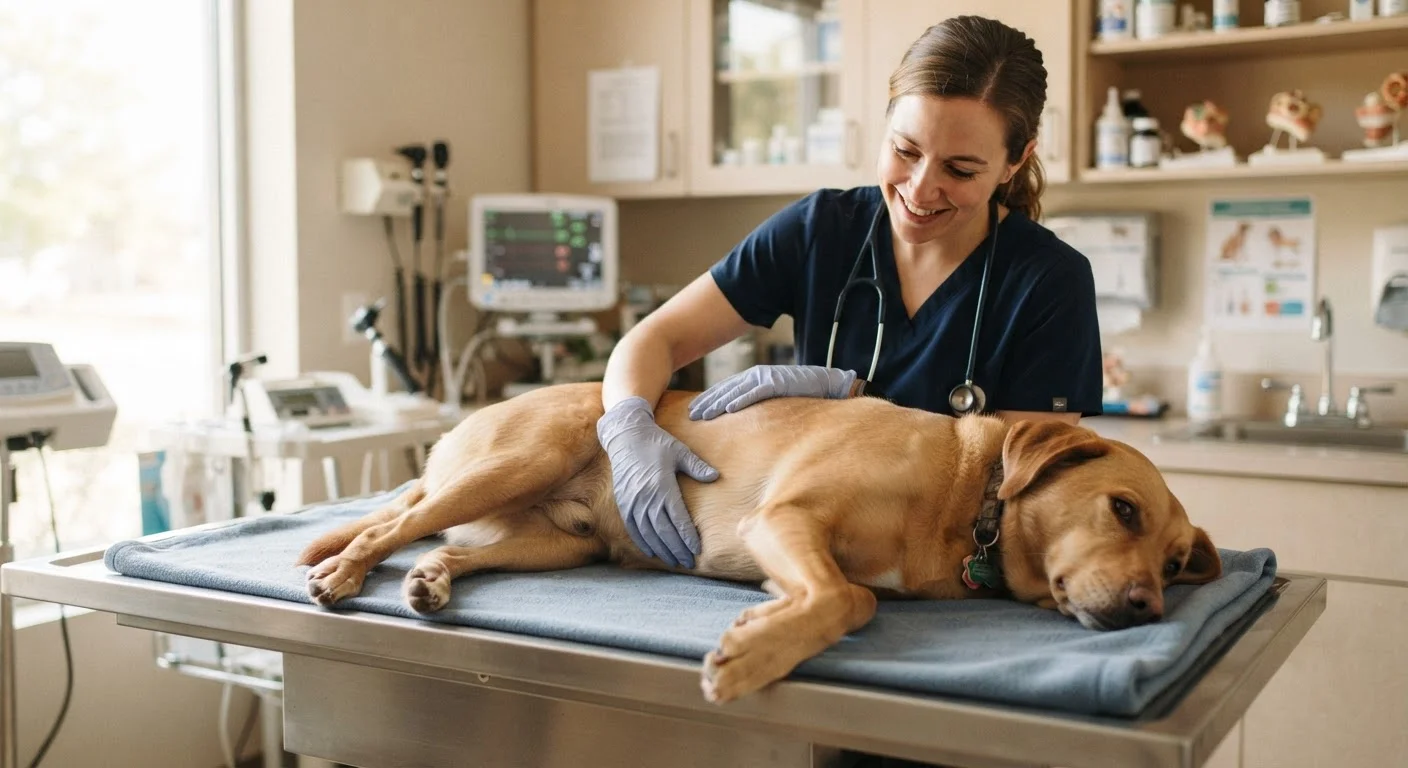
During a pain assessment, veterinarians conduct a systematic physical examination that pet owners cannot replicate at home - but knowing what vets look for helps owners provide more useful histories.
- Palpation responses: Vets press gently along the spine, abdomen, and limb joints, watching for flinching, muscle guarding, or vocalization.
- Vital signs: Elevated heart rate and respiratory rate can be physiological pain responses, even when a pet appears outwardly calm.
- Dental and oral assessment: Oral pain is frequently undetected by owners. Dental disease is among the most common causes of chronic low-grade pain in pets.
- Neurological screening: Proprioception tests (how a pet places its feet) help identify spinal or nerve pain that may not be visually obvious.
If you're uncertain whether a symptom warrants a call, guidance on when to seek veterinary care can help you make that judgment with more confidence. For true emergencies, being prepared in advance matters - having your vet's after-hours contact and a basic first-aid kit ready, as outlined in a pre-emergency checklist, can make a real difference.
This article is for general informational purposes only and does not constitute veterinary advice. Always consult a licensed veterinarian for any concerns about your pet's health or behavior.