What Protective Styles Actually Do
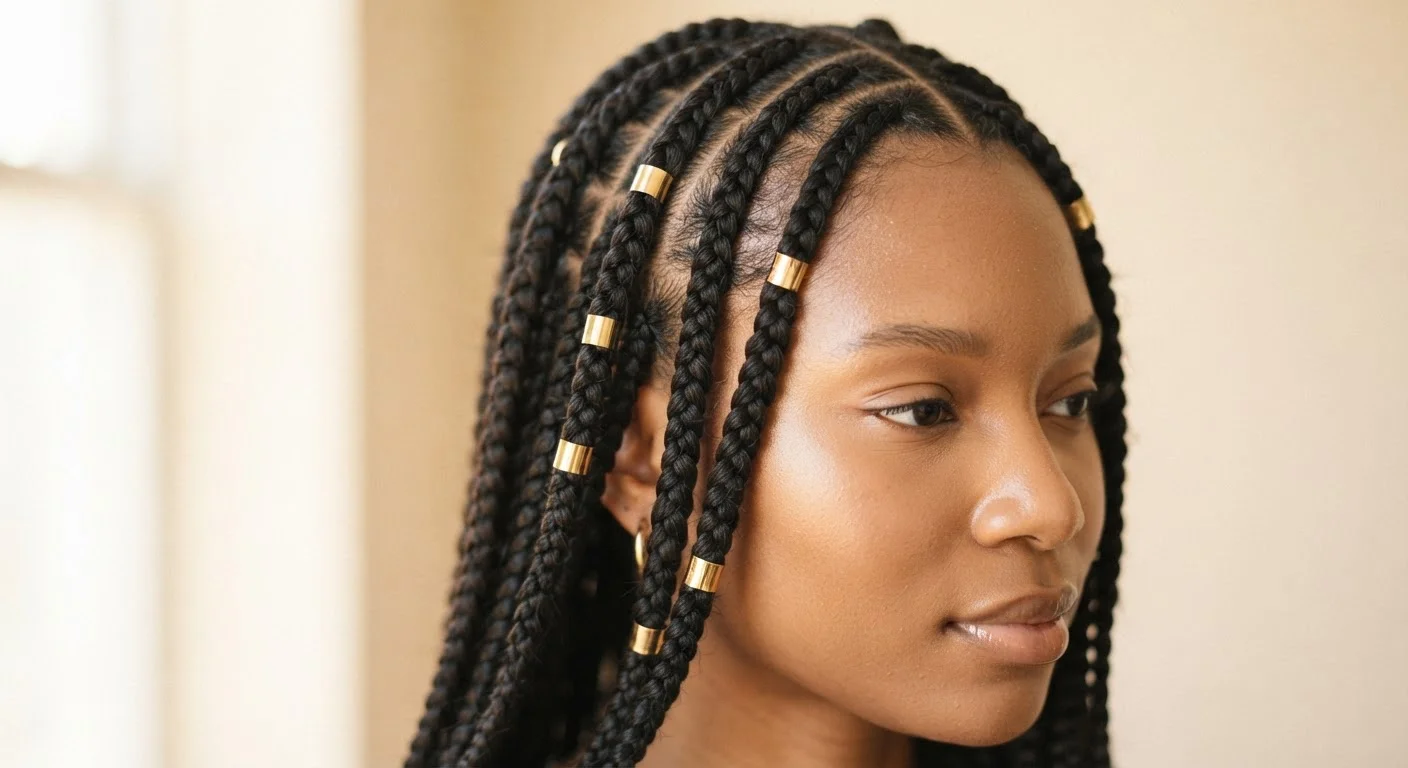
The term protective style refers to any hairstyle that keeps the ends of your hair tucked away and reduces the need for daily manipulation. Common examples include box braids, cornrows, twists, bantu knots, and updos. The principle behind them is straightforward: hair breaks most often at the points of stress - the ends - and at moments of manipulation, such as detangling or restyling.
By minimizing both, protective styles create the conditions for length retention. They're especially popular among people with naturally coily or kinky hair textures, which are structurally more vulnerable to breakage due to the curl pattern's effect on how oils travel down the strand. For more on that foundation, see moisture and low-manipulation principles.
Protective styling is also a meaningful contrast to daily heat tool use. Heat styling stresses hair at the strand level in ways that accumulate over time - protective styles offer a genuine alternative rest period.
Reduces daily mechanical manipulation and friction
Every comb pass, detangling session, and style change introduces stress to the hair strand. Tucking ends away in braids, twists, or updos sharply limits this daily wear and tear.
Helps retain length by protecting fragile ends
The oldest, most fragile parts of a hair strand are the ends. Keeping them tucked and shielded from clothing friction and environmental exposure reduces split ends and breakage.
Limits exposure to weather and environmental stressors
Cold, dry air and wind can strip moisture from hair rapidly. A well-moisturized protective style creates a buffer, especially beneficial during winter months.
Reduces time spent on daily styling
Once installed, protective styles require significantly less day-to-day effort, which also means less heat tool use and less product layering that can build up on strands.
Supports a low-manipulation period for recovering hair
Hair that has experienced heat damage or chemical processing can benefit from a period of reduced handling while new growth comes in and damaged sections are gradually trimmed away.
The Risks That Often Go Unmentioned
Despite the benefits, protective styles carry real risks that are frequently downplayed in hair care content. The most clinically significant is traction alopecia - a form of gradual hair loss caused by repeated or sustained tension on hair follicles. It develops slowly, which is part of why it's missed: the hairline recedes over months or years before many people connect it to styling habits.
Warning signs include soreness at the scalp during or after installation, small pimples or bumps along the hairline, and visible thinning at the temples. If you notice these, the style should be taken down and the hair given time to rest. Similar to how everyday grooming habits quietly accumulate damage, protective styling done carelessly follows the same pattern.
Too-tight installs risk traction alopecia
Traction alopecia - hair loss caused by sustained pulling at the follicle - is directly linked to overly tight braids, weaves, and updos. Early signs include bumps, tenderness, or thinning at the hairline.
Scalp hygiene is harder to maintain
With hair in close, long-term styles, cleansing becomes less straightforward. Neglecting the scalp for weeks leads to product buildup, excess sebum, and conditions that can impede healthy growth.
Leaving styles in too long causes matting
Natural shed hairs that can't fall freely become tangled within braids or twists over time. Extended wear beyond recommended timeframes can result in severe tangling that causes breakage during removal.
Moisture still needs active attention
A common misconception is that hair can be 'set and forgotten' under a protective style. Without regular moisturizing, hair becomes dry and brittle - the opposite of the intended outcome.
Synthetic extensions can create additional weight stress
Extensions add weight to the natural hair and scalp. Over time, this added tension - especially on smaller sections near the root - can weaken follicles even when braids appear visually neat.
Not suitable for all hair or scalp conditions
Active scalp conditions such as psoriasis, seborrheic dermatitis, or folliculitis may be aggravated by protective styles that limit airflow and make treatment application difficult. A dermatologist or trichologist should be consulted in these cases.
This Is General Hair Care Information
The information in this article is intended for general educational purposes only. It is not a substitute for advice from a licensed dermatologist or trichologist. If you are experiencing hair loss, scalp pain, or an active scalp condition, consult a qualified healthcare provider before installing a protective style.
Making Protective Styling Work Safely
The difference between a protective style that helps and one that harms usually comes down to three factors: installation tension, scalp maintenance, and wear duration.
Tension at Installation
Hair should never be painful to touch after a style is installed. A stylist - whether professional or yourself - should be able to complete the install without the scalp feeling pulled. Braids installed too tightly may look neat initially but set up the follicle for damage.
Scalp Care During the Style
Plan for regular light cleansing of the scalp using a diluted shampoo or cleansing spray applied directly to the scalp between sections. Follow with a lightweight oil or scalp serum to maintain moisture. Scalp health does not pause because hair is braided.
Timing the Takedown
Most styles should be taken down within four to eight weeks, depending on the style type, your hair's growth rate, and how well maintenance has been kept up. Removing the style carefully - detangling gently in sections rather than pulling - is just as important as the install itself. Use this period to assess hair condition and consult a grooming checklist before your next install.
~33%
Prevalence of traction alopecia in certain populations
Research published in dermatology literature has estimated traction alopecia affects roughly a third of women of African descent who regularly use tight hairstyles, underscoring the tension risk.
4-8 weeks
Commonly recommended maximum wear time for braided styles
Hair care professionals and trichologists frequently cite this window as the safe upper limit before the risk of matting and scalp buildup increases significantly.