What Heat Actually Does to a Hair Strand
Hair is primarily composed of a protein called keratin, arranged in a layered structure. The outermost layer - the cuticle - consists of overlapping, scale-like cells that protect the inner cortex where much of the strand's strength and pigment reside. When heat is applied, these cuticle scales lift and expand. At moderate temperatures, they settle back down with minimal lasting effect. At higher temperatures, they crack, break off, or fuse unevenly.
Inside the cortex, heat disrupts the hydrogen bonds that give hair its shape and flexibility. This is what makes temporary restyling possible - heat breaks those bonds, the hair cools into a new shape, and the bonds reform. The problem arises when temperatures are high enough to also attack the stronger disulfide bonds and the keratin proteins themselves. At that point, the damage is not reversible with washing or conditioning.
One often-overlooked factor is moisture loss. Heat evaporates water from the strand rapidly. Hair that is dry before styling loses its natural buffer, which means the same tool temperature produces more damage than it would on hair with normal hydration. This is one reason damp hair - despite seeming safer - can actually be more vulnerable to certain types of heat stress.
Hair Type and Heat Tolerance Vary Significantly
There is no single safe temperature that applies to everyone. Fine hair, bleached hair, and hair with high porosity are all more vulnerable at lower temperatures than coarse, unprocessed strands. If you're unsure of your hair's current condition or porosity level, starting with the lowest effective heat setting and working upward is a safer approach than defaulting to high heat and working down.
Blow Dryers, Flat Irons, and Curling Wands: Not the Same Risk
Each tool interacts with hair in a distinct way, and understanding those differences helps you make smarter choices rather than avoiding heat altogether.
- Blow dryers move hot air across the hair surface. The primary damage mechanism is rapid moisture evaporation and cuticle roughening, particularly when held too close to the scalp or used without a concentrator nozzle. A diffuser attachment reduces turbulence and distributes heat more evenly, which is especially useful for curly or wavy textures.
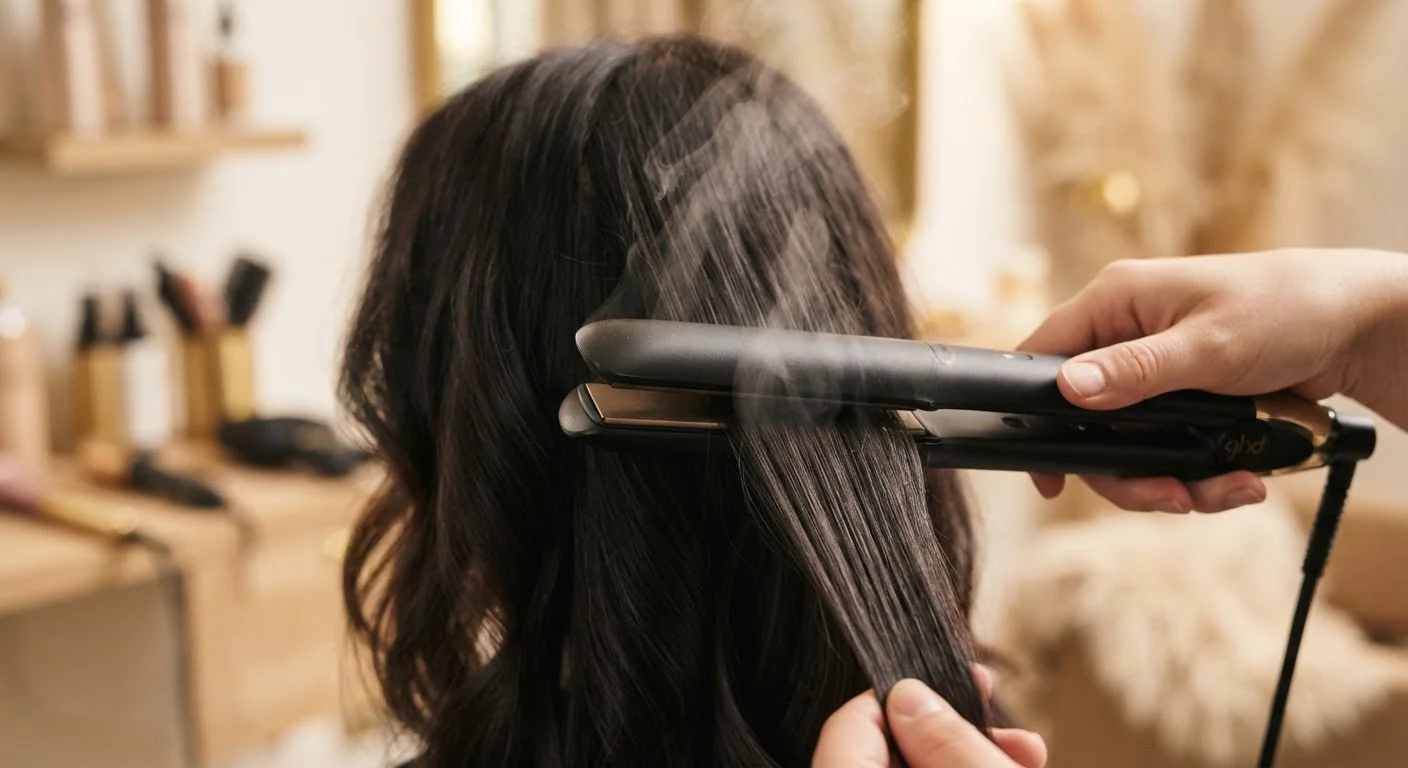
- Flat irons apply direct, concentrated pressure and heat simultaneously. This combination can compress and deform the cortex. Passes that are too slow, temperatures that are too high, or repeated passes over the same section all multiply the structural impact significantly.
- Curling wands and irons wrap hair around a barrel, which means sections of the strand experience both tension and heat at the same time. The ends - which are the oldest, most weathered part of the strand - are typically held at the hottest contact point longest.
Reducing damage isn't only about lowering temperature settings. It's also about technique: fewer passes, consistent movement, and keeping tools away from the ends unless necessary. See our overview of everyday habits that compound hair damage for additional context on cumulative styling stress.
365°F
Threshold where permanent protein changes begin
Research on keratin fiber behavior indicates that sustained exposure above approximately 185°C begins to irreversibly alter the protein structure of hair strands.
~50%
Reduction in breakage with correct protectant use
Laboratory studies on thermal protection formulations have found that properly applied heat protectants can reduce tensile strength loss by up to roughly half compared to unprotected heat exposure at equivalent temperatures.
6 inches/year
Average human hair growth rate
The American Academy of Dermatology notes that scalp hair grows approximately six inches per year on average, meaning significant damage to long hair can take years to fully grow out.
Using Heat Protectants Effectively
Heat protectants work by coating the hair shaft with ingredients - commonly silicones, polymers, or plant-based film-formers - that slow the conduction of heat into the strand. This reduces peak temperature exposure at the cuticle and cortex during styling. The degree of protection depends on the product's formulation, how evenly it's distributed, and the temperature used.
A few practical principles apply regardless of product type:
- Apply before heat, not after. Protectants need to be on the strand before the tool touches it to be effective.
- Coverage matters more than quantity. A thin, even coat across all sections you plan to style is more effective than a heavy application on one area.
- They are not a license for higher temperatures. Using a protectant and then cranking the heat to maximum defeats the purpose.
It's also worth noting that scalp health directly influences the quality of new hair growth, which means that protecting existing strands from heat damage and maintaining a healthy scalp environment work together over time.
The One-Pass Rule for Flat Irons
Rather than going over the same section repeatedly to achieve smoothness, work with smaller subsections so the iron can glide through cleanly in a single pass. Multiple passes on the same spot dramatically increase cumulative heat exposure. If one pass isn't enough, the section is likely too large or the temperature is too low for the hair type - adjust those variables instead.
What 'Damage' Looks and Feels Like - and What Comes Next
Heat damage progresses gradually, which is part of why it often goes unaddressed until it becomes pronounced. Early signs include increased frizz, a rougher texture, and reduced elasticity - strands that stretch and snap rather than spring back. As damage accumulates, hair may feel brittle, appear dull, and develop split ends or mid-shaft breaks more frequently.
One practical test: wet a single strand and stretch it gently. Healthy hair has elasticity and returns to its shape. Hair with compromised cortex integrity may stretch excessively or break without much tension.
Because hair grows from follicles beneath the scalp, the damaged sections of existing strands cannot be structurally repaired. Conditioning treatments, protein masks, and bond-building formulas can temporarily fill in gaps in the cuticle and improve manageability, but they do not restore the underlying protein architecture. The only way to eliminate heat-damaged hair is to grow it out and cut it off over time.
If you're considering reducing heat use, protective styling can be a useful intermediate strategy - though it carries its own set of considerations. For those building a more intentional hair routine from the ground up, wash frequency is another variable worth understanding in relation to overall strand health.
This article is for general informational purposes only and is not a substitute for advice from a qualified dermatologist or trichologist. If you are experiencing significant hair loss or scalp concerns, consult a healthcare professional.