Why the Scalp Deserves Its Own Attention
Most people think about hair care in terms of the strands - what products to apply, how to style, and how to prevent breakage. The scalp, however, rarely enters the conversation. This is a significant gap, because every strand of hair originates from a follicle embedded in scalp tissue. The condition of that tissue directly shapes the quality of the hair that grows from it.
The scalp is skin. It contains sebaceous glands that produce oil, hair follicles, blood vessels that deliver nutrients, and a microbiome - a community of microorganisms that, when balanced, helps maintain a healthy environment. Just as facial skin requires attention to stay functional, the scalp needs consistent, thoughtful care. Ignoring it often leads to problems that show up visibly in your hair: dullness, breakage, excessive shedding, or persistent irritation. See how everyday grooming habits can quietly compound into larger hair concerns over time.
Sebaceous glands
Tiny glands in the skin that produce sebum, the scalp's natural oil. Sebum lubricates the hair shaft and helps protect the skin's surface.
Sebum
The natural oil secreted by sebaceous glands. It moisturizes the scalp and creates a protective barrier, but excess production can make hair appear greasy.
Scalp microbiome
The community of bacteria and fungi that live naturally on the scalp. A balanced microbiome supports scalp health; disruptions can contribute to conditions like dandruff.
Follicle
A small pocket in the scalp skin from which each hair strand grows. The health of the follicle environment influences the strength and growth rate of the hair it produces.
Clarifying wash
A shampoo formulated to remove accumulated product residue, oils, and minerals from the scalp and hair - used periodically rather than as an everyday cleanser.
Seborrheic dermatitis
A common skin condition affecting oil-producing areas like the scalp, causing flaking and mild redness. It is linked to an overgrowth of naturally occurring fungi and is not contagious.
What a Balanced Scalp Actually Looks Like
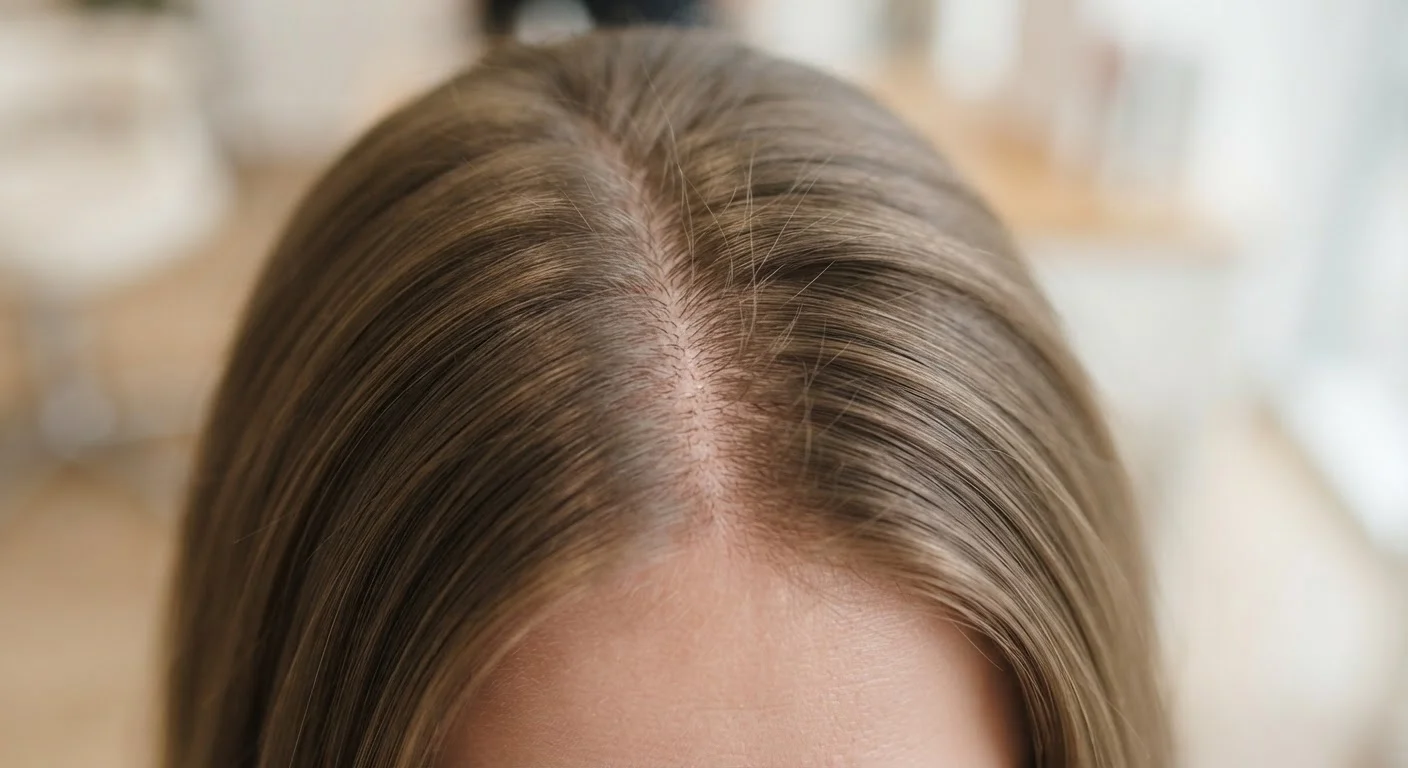
A healthy scalp is neither excessively oily nor noticeably dry. It is free from flaking, redness, persistent itching, and tenderness. Hair grows at a relatively consistent rate, and shedding stays within the range generally considered typical - roughly 50 to 100 hairs per day, though this varies by individual.
The scalp's surface should feel comfortable. Occasional mild oiliness between washes is normal and even protective - sebum (the scalp's natural oil) creates a barrier that helps retain moisture and guards against environmental irritants. The goal is balance, not complete oil elimination.
Think of scalp health in the same framework you might use for building a foundational skincare routine: understand your baseline, identify what disrupts it, and respond with appropriately targeted care rather than the most aggressive solution available.
Common Scalp Issues and What Causes Them
Several scalp conditions are widespread and often misunderstood:
- Dandruff (seborrheic dermatitis): Characterized by flaking, itching, and sometimes mild redness. It is linked to an overgrowth of Malassezia, a fungus naturally present on skin. Stress, hormonal shifts, and cold weather can trigger flare-ups.
- Dry scalp: Produces fine, white flakes and tightness. Often worsened by harsh shampoos, cold air, or infrequent moisturizing. Unlike dandruff, it is not fungal in origin.
- Product buildup: Accumulation of styling products, dry shampoo, or silicone-heavy conditioners can coat the scalp, leading to dullness, heaviness, and occasionally blocked follicles.
- Contact dermatitis: An allergic or irritant reaction to ingredients in hair products - fragrance and certain preservatives are frequent culprits - causing redness, burning, or itching.
- Scalp psoriasis: An autoimmune condition producing thicker, silvery-scaled plaques. This is distinct from dandruff and typically requires medical treatment.
Don't Confuse Dandruff With Dry Scalp
These two conditions look similar but have different causes and require different responses. Dandruff is fungal in nature and produces oilier, larger flakes, while dry scalp produces finer, drier flakes and is related to moisture loss. Using an anti-fungal treatment for a dry scalp - or vice versa - can make either condition worse. If you're unsure which you're dealing with, a dermatologist can provide a clear diagnosis.
Recognizing which issue you're dealing with matters because the approach for each differs. Treating a dry scalp with anti-dandruff products, for example, can worsen dryness. When in doubt about a persistent or worsening condition, seek professional evaluation rather than experimenting with stronger products.
Building a Basic Scalp Care Routine
A sound scalp routine does not require a complex product lineup. The core principles are cleansing, balancing, and protecting.
- Cleanse appropriately: Use a shampoo suited to your scalp type - hydrating formulas for dry scalps, balancing ones for oilier types. Focus application on the scalp itself, not the length of the hair.
- Avoid over-washing: Washing too frequently strips the scalp's natural oils, prompting the sebaceous glands to overproduce oil to compensate. Find a frequency that keeps your scalp comfortable.
- Rinse thoroughly: Residue left from shampoo or conditioner contributes to buildup and irritation. Spend time ensuring products are fully rinsed from the scalp.
- Occasional clarifying: Periodic use of a clarifying wash removes accumulated buildup. Once or twice a month is a reasonable starting point for most people - not a weekly practice.
- Scalp massage: Gentle massage during washing improves circulation to the follicles and helps distribute product. No tools are required - fingertips work well.
For those who use a lot of styling products or protective styles, reviewing your grooming checklist for your hair texture can help identify whether your current routine is adequately addressing scalp care. Also consider that consistent habits outperform even the best individual products when it comes to long-term results.
Use Your Fingertips, Not Your Nails
When shampooing or massaging your scalp, always use the pads of your fingertips rather than your nails. Scratching with nails can create micro-abrasions that irritate the scalp and disrupt its protective barrier. Gentle, circular motions are effective and safe.
When to Consult a Professional
Basic scalp care can address many mild, common concerns. But some conditions are outside the scope of home management. Consult a board-certified dermatologist if you experience:
- Noticeable patches of hair loss or thinning that develop over a short period
- Significant scalp pain, swelling, or sores
- Flaking that does not respond to routine adjustments over several weeks
- Symptoms that spread or worsen despite gentle care
Conditions like alopecia areata, scalp psoriasis, and tinea capitis (a fungal infection) have distinct clinical presentations and require diagnosis and, often, prescription treatment. Attempting to self-manage these with over-the-counter approaches may delay appropriate care. For more context on shedding patterns, this overview of hair loss in women explains what distinguishes typical shedding from patterns that warrant medical attention.
This article is for general informational and educational purposes only and does not constitute medical advice. Consult a qualified healthcare professional for any concerns about scalp conditions, hair loss, or symptoms affecting your health.