How to Use This Checklist
This checklist is designed as a routine audit, not a strict prescription. Work through each group and note which steps you're already doing well, which you've been skipping, and which may not apply to your texture. Hair care is not one-size-fits-all - straight, wavy, curly, and coily hair have genuinely different needs around moisture, manipulation, and styling frequency.
If you're starting from zero, see our introduction to building a grooming routine for a broader starting point. For a deeper look at why consistency matters more than product choice, the article on what actually makes the biggest difference in hair care is essential reading before you begin.
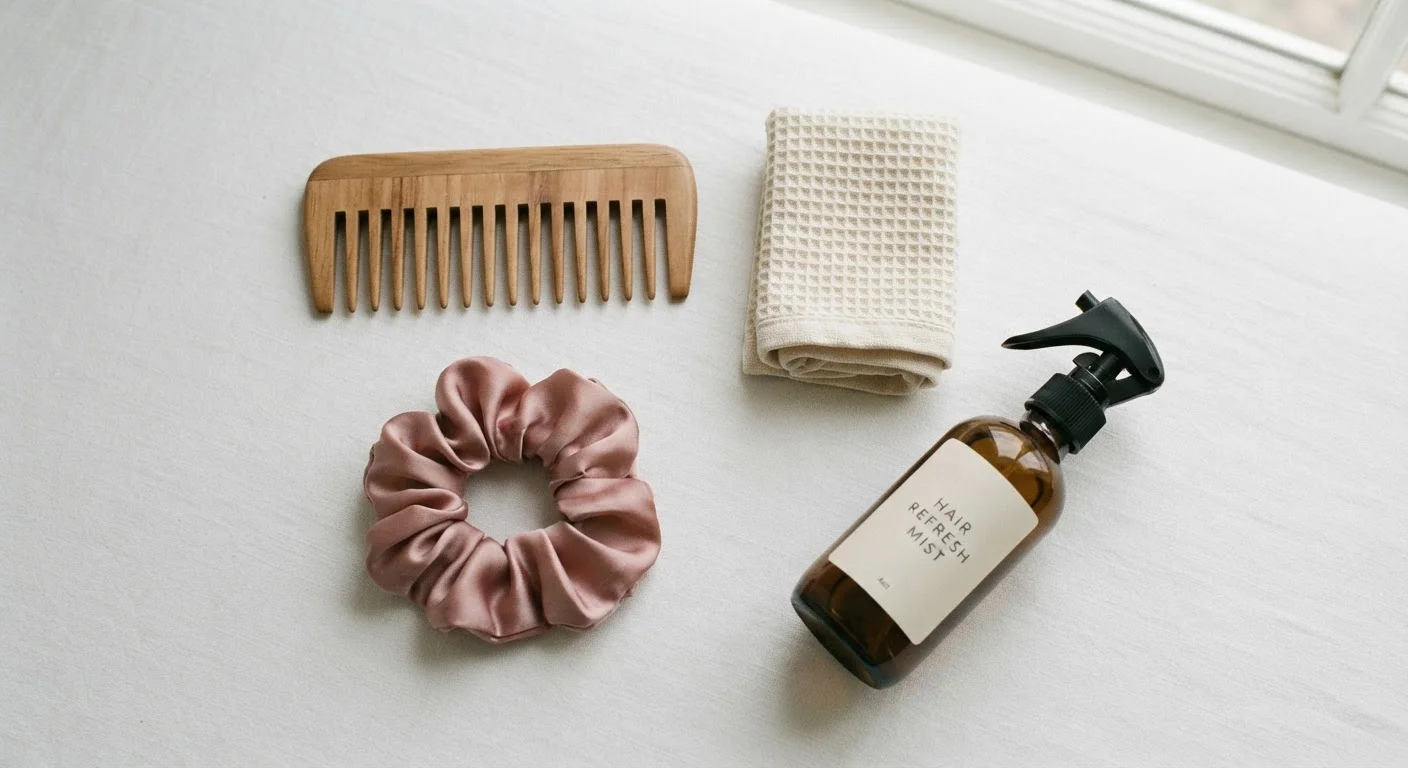
Wide-tooth comb
Detangles all hair textures with minimal breakage, especially when hair is wet or has conditioner applied.
Microfiber towel or old T-shirt
Absorbs water gently without the roughness of standard terrycloth, reducing frizz and mechanical damage.
Spray bottle
Mists hair with water to rehydrate between wash days or prepare hair for detangling and styling.
Satin or silk pillowcase
Reduces overnight friction that contributes to frizz, tangling, and moisture loss across all hair textures.
Diffuser attachment
Dries curly and wavy hair with low, dispersed airflow to maintain curl pattern without frizz.
Shower filter
Reduces hard water mineral buildup that can leave hair feeling dry or brittle over repeated washes.
The Full Grooming Checklist
Work through these groups in order. Each item is labeled by priority so you can tackle non-negotiables first and layer in optional steps as your routine matures.
Scalp Care
Cleansing and Conditioning
Detangling and Manipulation
Heat and Environmental Protection
Overnight and Between-Wash Care
Common Habits That Quietly Cause Damage
Several routine grooming habits - rough towel drying, skipping trims, and wearing tight hairstyles daily - cause cumulative damage that only becomes visible weeks or months later. These aren't dramatic errors; they're subtle patterns that compound over time. Our article on grooming habits that damage hair over time covers the most common culprits in detail. Use this checklist as an opportunity to spot and correct them early.
Texture-Specific Considerations
While the checklist above applies broadly, a few areas deserve extra attention depending on your hair's natural pattern and porosity.
Straight and Fine Hair
Fine, straight hair is more prone to product buildup and can look weighed down quickly. Focus on lightweight conditioning and avoid applying heavy creams or oils directly to roots. Washing frequency may need to be higher than for other textures.
Wavy and Medium-Texture Hair
Wavy hair benefits from diffusing rather than rough towel drying, which can disrupt the natural wave pattern and cause frizz. Moisture is important, but so is avoiding over-conditioning, which can flatten waves.
Curly and Coily Hair
Tightly coiled and kinky textures are naturally more prone to dryness because sebum from the scalp has difficulty traveling down the curl shaft. Moisture retention - not just application - is the priority. The LOC method and low-manipulation principles are particularly relevant here. Protective styling can help reduce breakage, though it comes with its own caveats - read about the real limits of protective styles before committing to extended wear.
Color-Treated or Chemically Processed Hair
Any chemical process - relaxers, bleaching, perms - alters the hair's internal structure and increases fragility. Deep conditioning becomes a must, heat use should be minimized, and trims need to happen more regularly to remove compromised ends.
If you notice unusual shedding beyond routine loss, consult a qualified healthcare provider or dermatologist. Our overview of what's normal hair loss versus a concerning pattern can help you recognize when professional input is warranted.
This article provides general hair care information for educational purposes only and is not a substitute for advice from a qualified healthcare professional or licensed cosmetologist.