Why Natural Hair Needs a Different Approach
Coily and kinky hair textures - commonly classified on the type 3 and type 4 spectrum - have a distinct structure that sets them apart from straight or wavy hair. The tight curl pattern means the hair strand bends repeatedly along its length, making it harder for the scalp's natural oils (sebum) to travel down the shaft. The result: natural hair is structurally prone to dryness, even when the scalp itself is healthy and active.
This isn't a flaw. It's simply a characteristic that calls for a routine built around moisture delivery and gentle handling rather than frequent washing or heavy styling. Understanding why natural hair behaves the way it does is the first step toward caring for it effectively - and stopping the cycle of frustration that comes from applying routines designed for other hair types.
For a broader look at how routine consistency outperforms product-switching, see why consistency drives hair health.
The Science of Moisture Retention in Coily Hair
Hair is primarily composed of a protein called keratin. Each strand is coated by a cuticle - overlapping, scale-like cells that lie flat when hair is healthy and hydrated. In tightly coiled hair, the cuticle layer is naturally more raised at the bends, which makes moisture escape more easily and leaves the strand vulnerable to friction and breakage.
Effective moisture care works on two levels: getting water into the hair shaft and then keeping it there. Water is the primary source of hydration for hair - no oil or cream alone can replicate it. However, water evaporates quickly without a sealant layer. This is why product layering strategies like the LOC method exist: they address both delivery and retention in sequence.
Type 4
Hair type most prone to moisture loss
Tightly coiled type 4 hair has the most bends per inch, creating more cuticle disruption and increased transepidermal moisture loss compared to straighter textures.
~30%
Elasticity drop in dry vs. hydrated hair
Research in hair science literature suggests adequately hydrated hair strands show meaningfully greater elasticity, reducing the likelihood of breakage under tension.
2-3x
More friction from cotton vs. satin surfaces
Studies on textile friction and hair damage suggest satin and silk surfaces create significantly less mechanical friction overnight than standard cotton pillowcases.
Deep conditioning plays a critical supporting role here. Unlike a rinse-out conditioner, a deep conditioning treatment - also called a hair mask - uses heat and time to allow conditioning agents to penetrate beyond the cuticle. To understand how each conditioning product fits into the bigger picture, see when to use a conditioner versus a co-wash versus a mask.
What Is the LOC Method and How Does It Work?
The LOC method is a layering technique designed to maximize moisture retention in natural hair. Each letter stands for a product type applied in sequence: L for Liquid, O for Oil, and C for Cream.
- Liquid: This is typically water or a water-based leave-in conditioner. It delivers direct hydration to the hair shaft. Always start here - applying oil or cream to dry hair traps air rather than moisture.
- Oil: A lightweight oil (such as jojoba, argan, or sweet almond) is applied next to slow moisture evaporation from the liquid layer. Oils do not moisturize on their own; they seal. Heavier oils can create buildup and are generally better suited to the ends rather than the roots.
- Cream: A butter- or cream-based styler adds an outer layer that further locks in the previous two layers, defines curl pattern, and reduces frizz. Look for creams with humectants - ingredients like glycerin or aloe vera - that help draw and hold moisture.
Test your hair's porosity before choosing oils: float a clean, shed strand in a glass of water for two minutes. If it sinks quickly, your hair is high porosity and needs heavier sealants; if it floats, lighter oils will serve you better.
Porosity - how well hair absorbs and retains moisture - varies significantly and determines which products will actually work rather than sit on the surface.
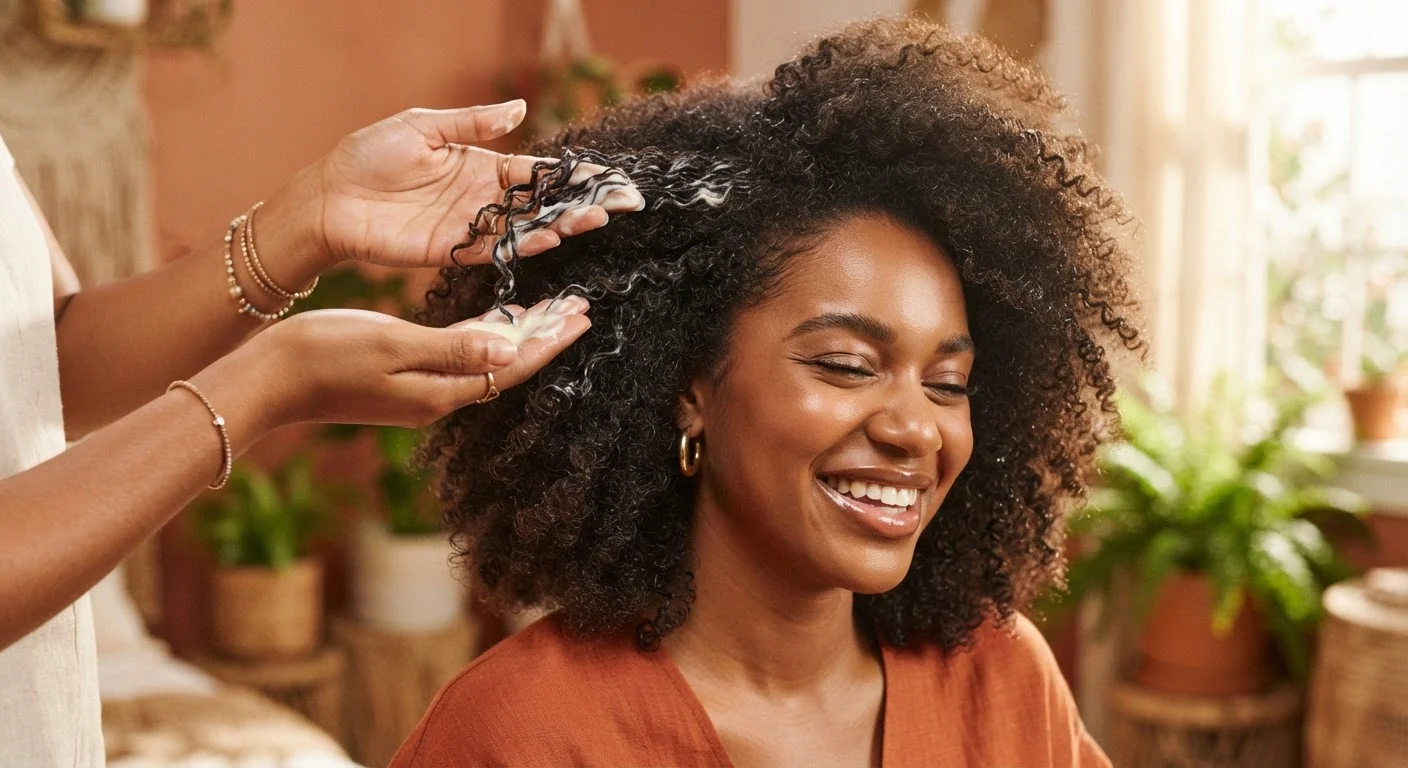
Apply your LOC layers to sections while hair is still damp from rinsing, not soaking wet. Water-saturated hair can't absorb leave-in as effectively, and excess water dilutes the sealant layers.
The goal is 'damp' - hydrated but not dripping - which gives conditioners and oils the right environment to bond to the strand and create an effective seal.
A related variation called the LCO method (Liquid, Cream, Oil) works better for some hair types, particularly finer coils that can feel weighed down by cream applied before oil. Experimenting with the order on a small section of hair is a practical way to determine which sequence works best for your specific texture and porosity.
Low-Manipulation Practices That Reduce Breakage
Even a perfectly hydrated strand can break when handled roughly or too frequently. Mechanical stress - combing, detangling dry hair, tight hairstyles, friction from cotton pillowcases - is one of the leading causes of breakage in natural hair. Low-manipulation care means minimizing these stressors deliberately.
Key practices include:
- Detangle only on wet, conditioned hair: Use a wide-tooth comb or your fingers, starting from the ends and working upward. Never force a comb through dry coils.
- Sleep on a satin or silk surface: Satin pillowcases or bonnets dramatically reduce overnight friction compared to cotton, which absorbs moisture and creates drag.
- Limit heat styling: High heat weakens the keratin structure over time. When heat is used, always apply a heat protectant first and choose the lowest effective temperature.
- Stretch styles thoughtfully: Twists, braids, and banding techniques can reduce tangles without heat, keeping hair in a manageable, low-friction state between wash days.
Protective styles like box braids or cornrows can support a low-manipulation approach - but they carry their own risks when tension is too high or styles are left in too long. For a realistic look at both sides, see the benefits and limits of protective styling.
Building a Sustainable Natural Hair Routine
A sustainable routine for natural hair doesn't require a shelf full of products. It requires a small set of well-understood steps performed consistently. A basic framework looks like this:
- Cleanse: Use a sulfate-free shampoo or co-wash (conditioner washing) to clean the scalp without stripping moisture. Frequency depends on your scalp's needs - typically every one to two weeks for most natural hair types.
- Deep condition: Follow every cleanse with a deep conditioning treatment to restore moisture and elasticity to the strand.
- Apply LOC or LCO: While hair is still damp from rinsing, layer your leave-in, oil, and cream in your preferred order to seal moisture in.
- Style low-manipulation: Twist-outs, braid-outs, or wash-and-go styles with minimal manipulation help preserve moisture and reduce friction.
- Protect overnight: Pineapple (loose topknot), a satin bonnet, or a silk scarf keeps styles intact and prevents moisture loss while you sleep.
For a structured checklist to audit and fill gaps in your current routine, see a practical grooming checklist for all hair textures.
The most effective natural hair routines are built on understanding, not trends. When you know what your hair needs and why, you can adapt any routine to your specific texture, porosity, and lifestyle - and get consistent results over time.
This article is for general informational purposes only. For concerns about scalp health, hair loss, or underlying conditions, consult a qualified dermatologist or trichologist.