
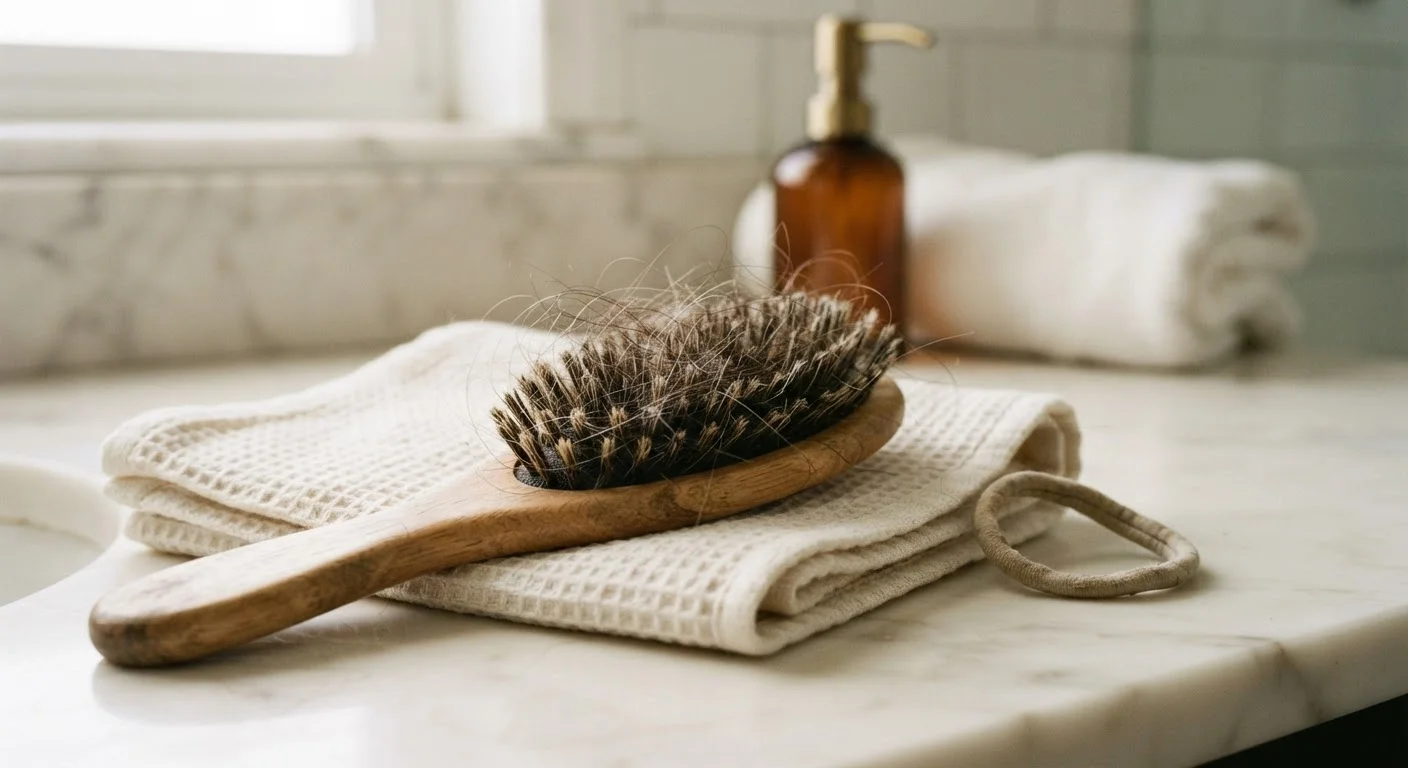
Why Everyday Habits Deserve a Second Look
Hair damage rarely arrives all at once. More often, it accumulates gradually through routines that seem harmless - and that's exactly what makes these habits so persistent. A ponytail worn every day, a towel rubbed briskly after a shower, or a brush dragged through wet hair don't feel risky in the moment. But repeated daily, they add up to breakage, thinning, and dullness that's hard to reverse.
Understanding why a habit is harmful makes it easier to change. The sections below walk through the most common grooming mistakes, the reasoning behind each, and practical ways to adjust your routine without overhauling it entirely. For a broader audit of your care routine, a practical grooming checklist for all hair textures is a useful starting point.
Common Mistakes and How to Correct Them
The following mistakes cover grooming behaviors across different hair types and textures. Most are fixable with simple, low-cost adjustments.
Wearing tight hairstyles - like high ponytails, sleek buns, or very tight braids - on a daily basis.
Why it happens: These styles look polished and feel secure, so many people default to them every day without considering the tension they create at the hairline and roots.
Rubbing hair vigorously with a regular bath towel after washing.
Why it happens: Rubbing is the instinctive way to dry something quickly, and most people have done it since childhood without ever questioning the habit.
Brushing or combing hair aggressively when it's wet.
Why it happens: Wet hair tends to tangle more, and the impulse is to work through knots quickly. Many people don't realize that wet hair is structurally weaker and stretches before it snaps.
Skipping regular trims because hair appears to be growing.
Why it happens: The logic seems reasonable - trimming removes length, so avoiding it should help hair grow longer. In reality, split ends travel up the shaft and cause more damage if left unaddressed.
Sleeping on a rough cotton pillowcase without any hair protection.
Why it happens: Sleep feels passive, so the idea that it could be damaging hair doesn't occur to most people. Cotton creates friction as hair moves against it throughout the night.
Relying on product buildup rather than addressing hair's actual moisture needs.
Why it happens: With so many conditioning and styling products available, it's easy to layer multiple products hoping one will compensate for another, without understanding what the hair actually needs.
Heat tools deserve special attention as well. If you regularly use a flat iron, curling wand, or blow dryer, understanding what's actually happening at the strand level can help you make better choices. See our guide to heat styling and hair damage for a full breakdown.
The Role of Scalp and Wash Habits
Hair health doesn't start at the strand - it starts at the scalp. A congested or irritated scalp environment can slow growth, increase shedding, and affect the quality of new hair emerging from the follicle. Yet scalp care is frequently overlooked in favor of focusing on the lengths and ends.
~100
Hairs shed per day on average
Dermatologists generally consider losing up to 100 hairs daily to be within the normal range for most adults, though individual baselines vary.
6-7
Weeks average between trims for many people
Hair care professionals often suggest trim intervals based on hair texture, damage level, and styling habits rather than a fixed universal schedule.
Wash frequency is another area where habits often go unchecked. Both over-washing and under-washing can disrupt the scalp's natural balance. What research actually says about daily hair washing may challenge some assumptions you've held for years. Similarly, scalp health basics offers foundational guidance that many routines skip entirely.
This article is for general informational purposes only and does not constitute medical or dermatological advice. If you're experiencing significant hair loss, scalp discomfort, or changes in hair texture, consult a qualified healthcare professional or dermatologist.