The Logic Behind a Four-Step Routine
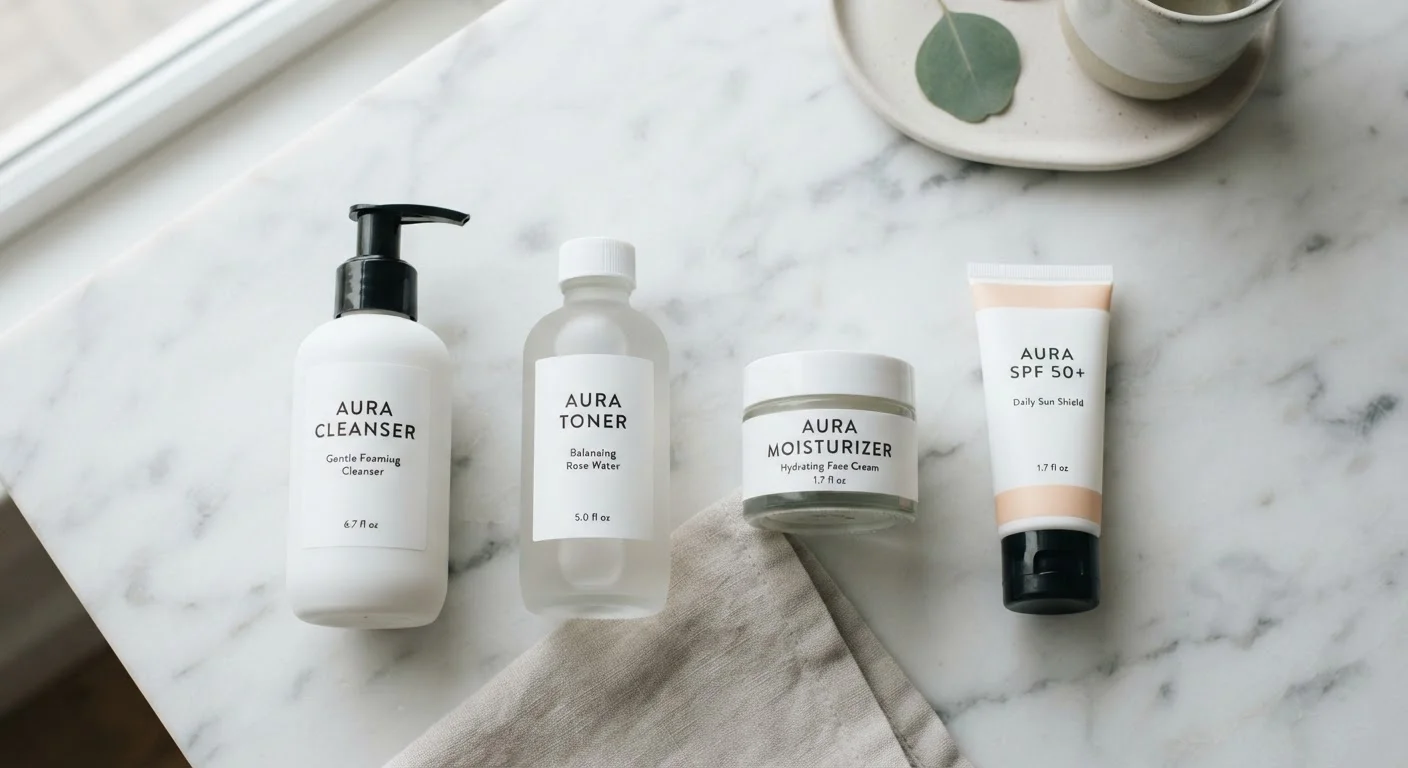
Most dermatologists and estheticians agree on a core framework: cleanse, tone, moisturize, and protect. These four steps aren't arbitrary - each one performs a specific function in a logical sequence. Skip or swap their order and you reduce the effectiveness of every product that follows.
If you're brand new to building a routine, the beginner's guide to skincare is a useful starting point before diving into individual steps. For readers ready to understand the mechanics, here's what each step actually accomplishes.
| Recommended routine order | Cleanser → Toner → Moisturizer → SPF (AM); Cleanser → Toner → Treatment → Moisturizer (PM) |
| Skin's natural pH range | Approximately 4.5-5.5 (slightly acidic) (General dermatological reference) |
| Most skippable step | Toner - beneficial but not essential for all skin types |
| Least skippable step (AM) | SPF - protects against UV-related aging and damage year-round (American Academy of Dermatology guidance) |
| Why order matters | Thinner, water-based layers absorb first; SPF must sit on top to form an even protective film |
| Cleanser types by skin concern | Oil/balm for makeup & SPF removal; gel/foam for oily skin; cream/milk for dry or sensitive skin |
Cleanser: Reset Your Skin's Surface
A cleanser removes what accumulates on skin throughout the day or overnight - excess oil, environmental pollutants, dead skin cells, sweat, and any products you applied previously. This isn't cosmetic housekeeping; it's functional preparation. Products applied to uncleansed skin have to work through a layer of debris before they can interact with the skin itself, which reduces their efficacy.
Cleansers come in gels, foams, milks, oils, and balms. The right formulation depends on your skin type and what you're removing. Oil-based cleansers are particularly effective at dissolving sunscreen and makeup. Gel and foam formulas tend to suit oilier skin. Cream or milk cleansers work gently for drier or more sensitive types.
One important note: over-cleansing or using a formula that's too harsh can strip the skin's natural moisture barrier - the thin, protective layer that keeps water in and irritants out. A well-chosen cleanser cleans without disrupting that balance.
Moisture Barrier
The outermost layer of the skin, made up of lipids and proteins, that prevents water loss and shields against external irritants. A damaged barrier can lead to dryness, sensitivity, and increased breakouts.
Humectant
A type of moisturizing ingredient that draws water from the environment and deeper skin layers toward the surface. Common examples include hyaluronic acid and glycerin.
Broad-Spectrum SPF
A sunscreen formulation that protects against both UVA rays (which contribute to aging and deeper skin damage) and UVB rays (which cause sunburn). SPF alone measures only UVB protection.
pH Balance
A measure of acidity or alkalinity on a scale of 0-14. Healthy skin typically sits around 4.5-5.5 (slightly acidic). Cleansing can temporarily shift skin's pH, affecting how well subsequent products perform.
Occlusive
An ingredient that forms a physical barrier on skin's surface to prevent moisture from escaping. Common occlusives include petrolatum, shea butter, and dimethicone.
Toner: More Than Just Residue Removal
Toners have an outdated reputation as astringent products meant to "close pores" or swipe away leftover cleanser. Modern toners are different. Depending on their formulation, they can hydrate, balance the skin's pH after cleansing, deliver lightweight actives like niacinamide or hyaluronic acid, or gently exfoliate with acids such as AHAs or BHAs.
Skin has a naturally slightly acidic pH, typically around 4.5-5.5. Cleansing can temporarily shift that balance. A pH-balancing toner helps restore it, which matters because several skincare actives work best within a specific pH range. Applying a serum or treatment to skin whose pH hasn't recovered may reduce how well those ingredients perform.
Not everyone needs a toner, and it's the most skippable step for minimalists. But for those targeting specific concerns - uneven texture, dullness, or congestion - a targeted toner adds meaningful value. For guidance on how different actives work and interact, see our plain-language active ingredients reference.
Moisturizer and SPF: Seal and Shield
Moisturizer does two things: it adds water-attracting molecules (called humectants, like glycerin or hyaluronic acid) to the skin, and it seals the surface with emollients and occlusives to prevent that moisture from evaporating. The result is skin that stays hydrated, which supports barrier function and resilience. Even oily skin types benefit from moisturizer - when the skin is dehydrated, it can produce more oil to compensate.
SPF (sun protection factor) is the final, non-negotiable morning step. UV radiation - both UVA and UVB rays - contributes to premature aging, hyperpigmentation, and long-term skin health concerns. Broad-spectrum sunscreen blocks both types. Dermatologists widely consider daily SPF the single most impactful step for long-term skin health, regardless of weather or season. Our article on why sunscreen is the most important skincare step covers this in depth.
SPF goes on last in your morning routine because most sunscreens need to sit on top of other products to form an even, unbroken film. Mixing it with moisturizer or applying it beneath other layers can reduce its protective coverage. For a look at what can go wrong when steps are skipped or misapplied, see common routine habits that backfire.
This article is for general informational purposes only and does not constitute medical or dermatological advice. Consult a qualified dermatologist for personalized guidance about your skin.