Beyond Curl Pattern: The Full Picture of Hair Type
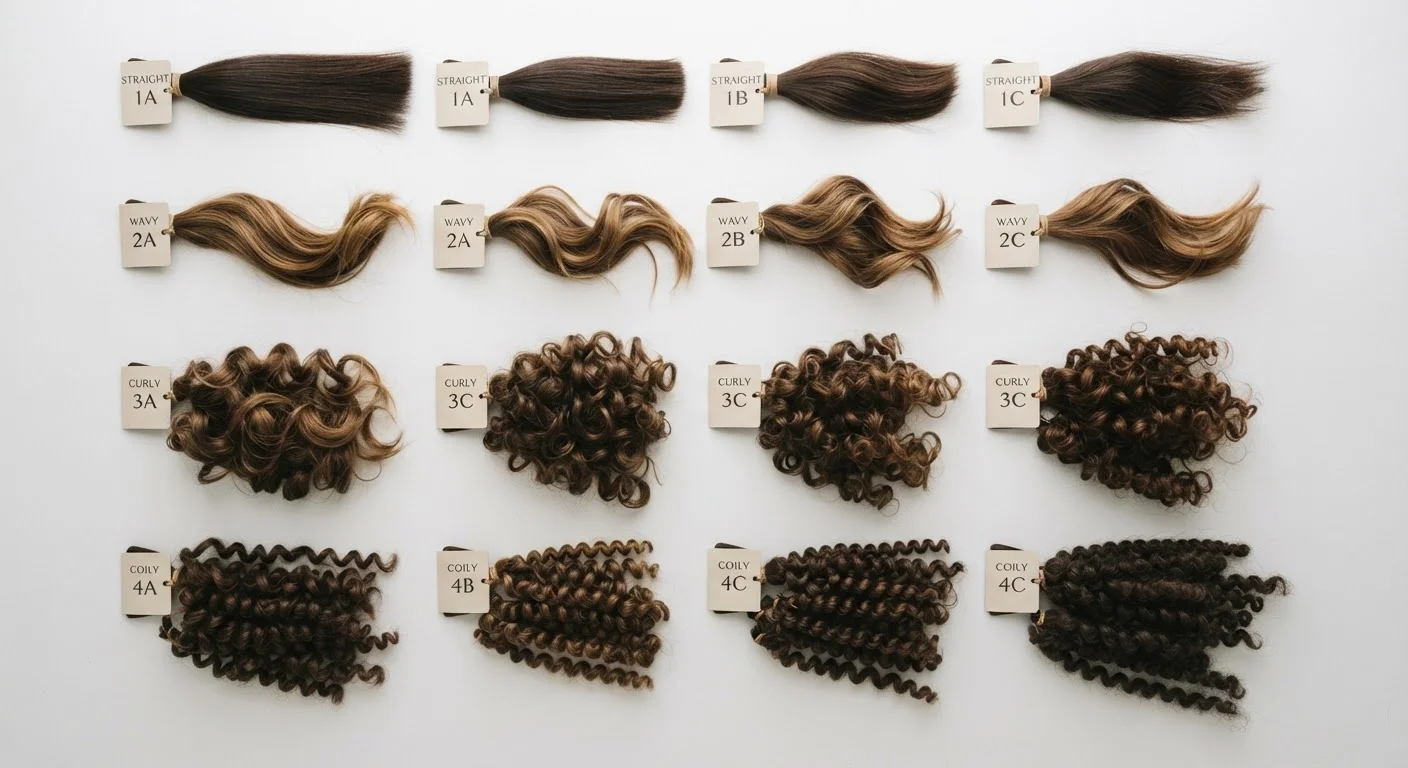
When most people hear "hair type," they think of the curl pattern numbering system - straight (Type 1), wavy (Type 2), curly (Type 3), and coily or kinky (Type 4), each with letter subcategories. It's a helpful visual shorthand, but it leaves out several characteristics that have a much more direct impact on how you care for your hair.
A complete picture of hair type includes four properties: curl pattern, porosity, density, and strand width (texture). Understanding all four - not just one - is what turns generic advice into a routine that actually works for your hair.
Just as skin type shapes a skincare routine, your hair's characteristics shape every decision from how often you wash to which ingredients you should prioritize.
Porosity: How Your Hair Handles Moisture
Porosity refers to your hair's ability to absorb and retain moisture. It's determined by the state of your hair's cuticle - the outermost layer of each strand, which is made up of overlapping scales.
- Low porosity: Cuticles lie flat and tightly packed. Water and products tend to bead up on the surface rather than absorbing quickly. This hair type can resist moisture initially but holds it well once hydrated. Lightweight, water-based products work better than heavy butters or oils.
- Medium (normal) porosity: Cuticles are moderately open. This hair absorbs and retains moisture relatively easily, making it the most adaptable type. Most standard routines work well here.
- High porosity: Cuticles are raised or have gaps, often due to chemical processing, heat damage, or genetics. Moisture enters quickly but escapes just as fast, leaving hair prone to dryness and frizz. Richer products and sealants help lock in hydration. For more on how heat affects strand structure, see our explainer on heat styling and hair damage.
3 types
Porosity categories recognized in trichology practice
Low, medium, and high porosity are the standard classifications used by hair care professionals to guide product and treatment recommendations.
~100,000
Average number of hair follicles on an adult scalp
According to dermatological literature, scalp follicle counts vary significantly by individual and ethnicity, directly influencing what we describe as hair density.
Density and Strand Width: The Often-Overlooked Factors
Hair density describes the number of individual strands on your scalp. You can have low density (fewer strands, scalp more visible) or high density (strands packed tightly together). Density affects volume, how long styling takes, and how much product you actually need - not just a few drops, but potentially much more for high-density hair.
Strand width, often called texture, describes the diameter of each individual hair: fine, medium, or coarse. Fine strands are more fragile, weigh down easily, and may respond poorly to heavy products. Coarse strands are generally more resilient but can feel rough or dry if under-moisturized.
These two characteristics interact. High-density, fine-stranded hair requires very different handling than low-density, coarse-stranded hair - even if they share the same curl pattern. Our grooming checklist for all hair textures breaks down how to adapt your routine based on these factors.
Why Getting This Right Actually Matters
Hair care marketing often targets curl pattern exclusively - curly hair gets one set of products, straight hair gets another. But two people with the same curl number can have opposite porosity levels, making those product recommendations irrelevant or even counterproductive for one of them.
Understanding your hair type in full lets you:
- Choose products whose weight and ingredients match how your hair absorbs and releases moisture
- Adjust wash frequency based on sebum production and density rather than arbitrary schedules
- Protect your strands from damage with techniques suited to their actual fragility level
- Build a routine grounded in consistency - the factor that matters more than products alone
If you have coily or kinky hair specifically, understanding porosity becomes even more central to retaining moisture effectively. Our guide on caring for natural hair explores this in depth.
This article is for general informational and educational purposes only. For concerns about hair loss or scalp health, consult a qualified healthcare or dermatology professional. See also: hair loss patterns and when to seek help.