Why Your Routine Beats Your Product Cabinet
The hair care industry generates billions of dollars annually by persuading consumers that the right serum, mask, or shampoo will transform their hair. Yet dermatologists and trichologists - hair and scalp specialists - consistently point to a less glamorous truth: how you treat your hair every day matters far more than what brand you use.
Hair is largely composed of keratin, a structural protein that is, by the time it emerges from the scalp, no longer living tissue. This means it cannot repair itself the way skin can. Damage accumulates. The behaviors that protect hair from damage - or accelerate it - compound over months and years, making consistency your most powerful tool.
Understanding this shifts the focus from chasing trending ingredients to building habits that preserve what you already have. For a closer look at how ingredients actually perform, see our article on which hair growth ingredients have research behind them.
The Core Practices That Actually Move the Needle
The following practices are grounded in established hair science. None require expensive products - they require attention and repetition.
Wash your hair at a frequency that suits your scalp type - not a universal schedule.
Over-washing strips natural oils (sebum) that coat and protect the hair shaft, leading to dryness and increased breakage. Under-washing allows product buildup and excess oil to clog follicles. The right frequency depends on your scalp's oil production, activity level, and hair texture.
Apply heat to hair only when necessary, and always use a thermal protectant beforehand.
High temperatures denature keratin proteins and evaporate water from the hair shaft, causing structural weakness over time. Thermal protectants form a barrier that slows this process, but they do not eliminate heat damage entirely - reducing frequency is equally important.
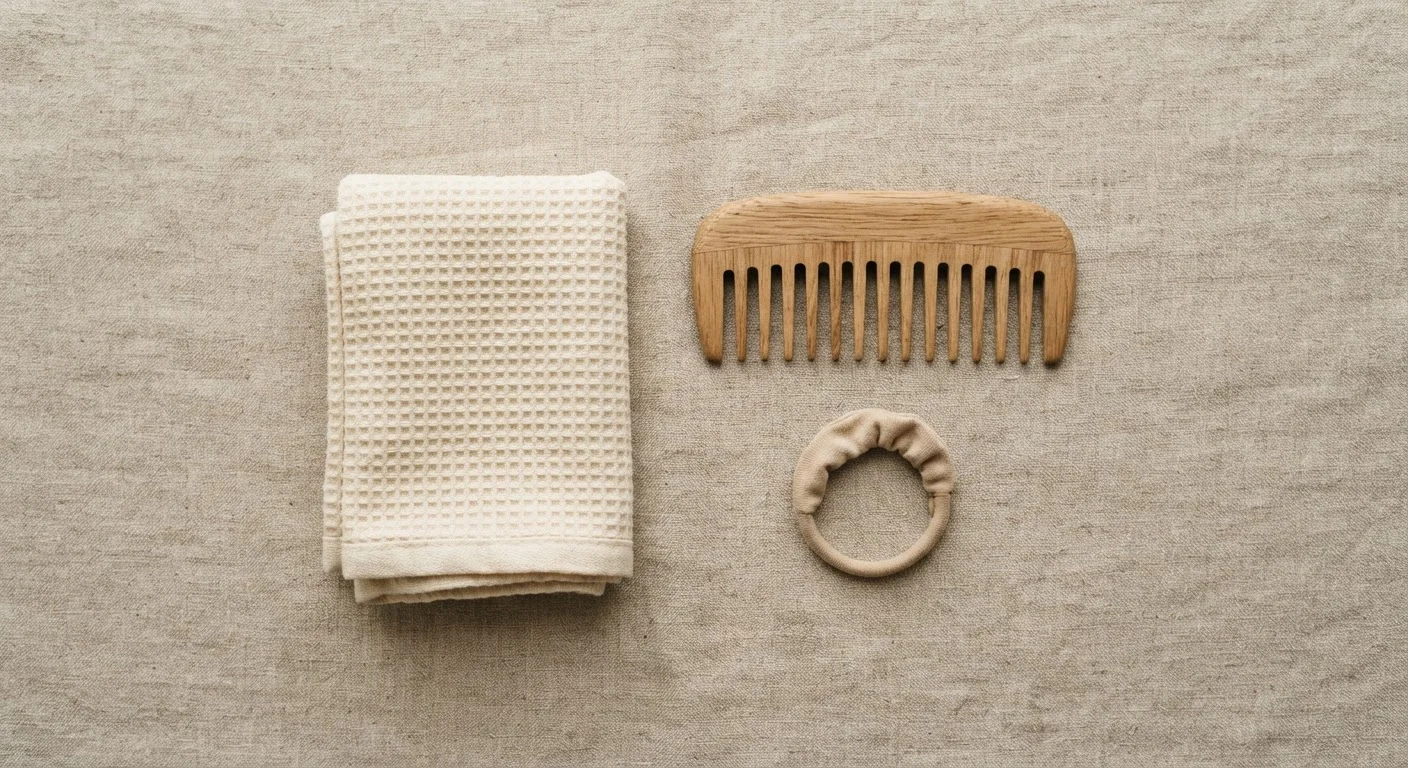
Handle wet hair gently - use a wide-tooth comb and microfiber or cotton T-shirt instead of a regular towel.
Hair is most vulnerable to mechanical damage when wet, because water temporarily weakens hydrogen bonds within the keratin structure. Rough towel friction and aggressive brushing on wet hair cause immediate breakage that adds up over time.
Trim hair on a regular basis to remove split ends before they travel up the shaft.
Split ends cannot be permanently 'fused' by any topical treatment - the damage is structural. Left untrimmed, splits migrate upward, causing more extensive breakage. Regular trimming maintains length more effectively in the long run than skipping trims to 'grow it out.'
Prioritize moisture retention through conditioner use after every wash.
Conditioners deposit emollients and sometimes proteins that temporarily smooth the cuticle, reducing friction between strands and improving elasticity. Hair with good moisture balance is more resistant to breakage than dry, brittle hair - regardless of its texture or type.
The Scalp: Your Starting Point
Most hair care conversations focus on the shaft - the visible strand - but hair health originates at the scalp. A balanced scalp environment supports healthy follicle function, while chronic dryness, excess oil, or inflammation can interfere with the normal hair growth cycle.
Simple scalp care means keeping it clean without stripping it, and massaging gently during washing to support circulation. You don't need a specialized routine unless a specific concern arises. Our guide to scalp health fundamentals covers this in detail.
Keep Scalp Care Separate from Hair Care
Products formulated for the hair shaft - conditioners, serums, masks - often aren't designed for direct scalp application and can contribute to buildup or clogged follicles. Apply conditioners from mid-shaft to ends, and reserve scalp-specific products for the scalp itself. When in doubt about an ingredient's role, check the label's directions rather than assuming a single product does everything.
If you're uncertain how conditioning products fit into scalp care, it helps to understand what each type is actually designed to do - from rinse-out conditioners to deep masks. See when to use conditioner, co-wash, and hair masks for a practical breakdown.
Quick Wins You Can Start Today
Building a consistent hair care routine doesn't require overhauling everything at once. Start with the changes that require the least investment and deliver the most immediate protection.
For a fuller picture of which daily habits cause silent, cumulative damage, our article on grooming habits that quietly damage hair is worth reading alongside this one.
This article is for general informational and educational purposes only. It does not constitute medical advice. If you are experiencing hair loss, scalp conditions, or significant changes in hair health, consult a qualified healthcare professional or dermatologist.