How Smart Speakers Actually Work
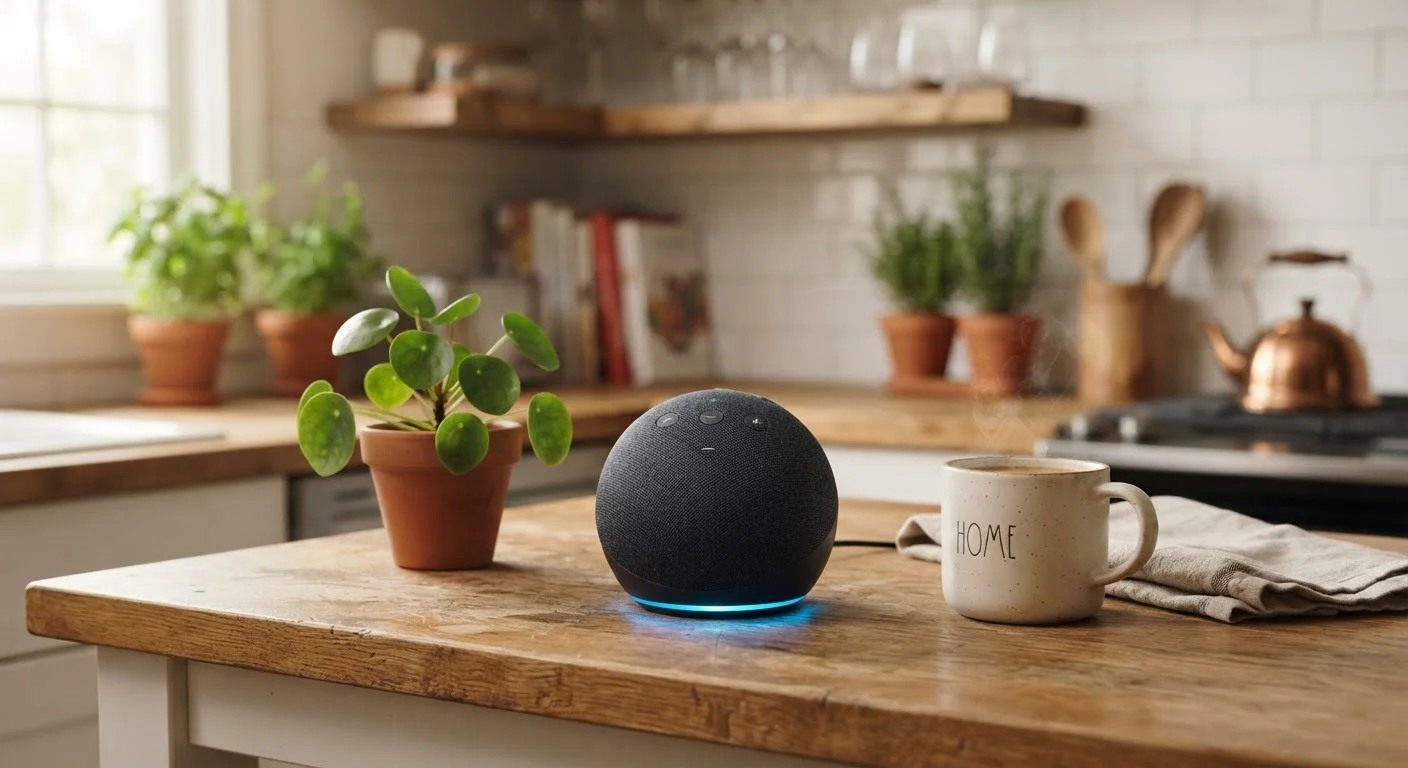
A smart speaker is essentially three things bundled together: a microphone array, a speaker, and a small computer with a permanent internet connection. Understanding how these pieces interact helps explain both what the device can do and why privacy questions arise.
Wake word
A specific spoken phrase - like "Alexa" or "Hey Google" - that activates a smart speaker. The device listens for this word locally without sending audio to the internet.
Natural language processing (NLP)
A type of software that allows computers to interpret and respond to spoken or written human language. Smart speakers rely on NLP running in the cloud to understand your requests.
Cloud processing
When a device sends data to remote servers over the internet to do the heavy computing work, then receives a result back. Most smart speaker responses are generated this way.
False activation
When a smart speaker's wake word is accidentally triggered by background speech or sounds that resemble the phrase, causing it to start recording unintentionally.
Microphone array
A set of multiple microphones built into a smart speaker that work together to detect sound from different directions and filter out background noise.
Firmware
Built-in software that controls a hardware device like a smart speaker. Manufacturers release firmware updates to fix bugs, patch security issues, and add features.
At rest, the device's onboard processor runs a lightweight program that listens for one specific phrase - the wake word. This processing happens locally on the device, not in the cloud, which is why the speaker can hear you without constantly transmitting audio. Once the wake word is detected, the device activates, records your request, and sends that audio over your home Wi-Fi network to the manufacturer's servers. Those servers apply natural language processing (NLP) to interpret what you said, generate a response, and send it back - all typically within a second or two.
This architecture means a solid home network is a prerequisite for the device to function. If you're unfamiliar with how home networking works, the Home Wi-Fi From the Ground Up offers a clear foundation.
What Smart Speakers Can Do
Smart speakers handle a well-defined range of tasks reliably. Understanding where they genuinely shine prevents frustration from expecting too much.
- Quick information lookups: Weather forecasts, unit conversions, timer setting, basic math, and general knowledge questions are all handled quickly and accurately.
- Media control: Playing music, podcasts, audiobooks, or internet radio through linked streaming accounts works smoothly with a voice command.
- Smart home control: Compatible lights, thermostats, locks, and plugs can be controlled by voice once paired through the speaker's companion app.
- Reminders and calendar entries: Setting alarms and reminders, or adding events to a linked calendar, works consistently.
- Shopping lists and notes: Adding items to a shared list is one of the most common - and genuinely useful - daily habits users develop.
These tasks share a common trait: they are short, clearly stated, and have an unambiguous correct answer or action. That's the zone where smart speakers excel.
What Smart Speakers Cannot Do
Equally important is understanding where smart speakers fall short. Marketing often overstates capability, which leads users to distrust the device entirely when it underperforms.
- Complex, multi-step reasoning: Asking a smart speaker to plan a trip, compare nuanced options, or help you draft a document generally produces limited results. These tasks require context and judgment the systems aren't built for.
- Sensitive or professional advice: A smart speaker cannot give you reliable medical, legal, or financial guidance. Responses in these areas may sound confident but can be incomplete or wrong.
- Working without internet: Nearly all meaningful functionality requires a cloud connection. A network outage renders the device largely non-functional for voice commands.
- Understanding ambiguity well: Requests with unclear phrasing, regional slang, or multiple meanings frequently produce errors or unexpected responses.
Set Realistic Expectations From the Start
Smart speakers perform best with short, direct requests - think single-sentence commands rather than open-ended conversations. If a request fails, try rephrasing it more simply before concluding the device can't help. Most frustration comes from asking for things outside the device's design intent.
Thinking of a smart speaker as a very capable but narrow assistant - rather than a general-purpose AI - sets accurate expectations and makes daily use more satisfying.
How They Listen - and What That Means for Privacy
Privacy concerns about smart speakers are legitimate and worth understanding clearly - without overstating the risk.
The device's microphone is always active at a low level to detect the wake word. This local listening does not transmit audio to any server. The privacy question begins after the wake word fires. At that point, audio is recorded and sent to the manufacturer's cloud. Depending on platform settings, this audio may be stored, reviewed by human quality-assurance teams in anonymized form, or used to improve the service.
False activations - moments when background conversation accidentally resembles the wake word - are a real phenomenon. When they occur, a short audio clip may be captured and stored unintentionally. Most platforms offer the ability to review and delete your voice history through the companion app or account settings. This is worth exploring for anyone who keeps a smart speaker in a room where sensitive conversations occur.
Understanding how apps and connected services handle your data more broadly is covered in our guide on what software collects across a typical day.
Practical Steps to Use Smart Speakers More Confidently
A few deliberate actions give you meaningful control over how a smart speaker behaves in your home.
- Review privacy settings in the companion app. Every major platform provides settings to limit data retention, turn off human review of recordings, and delete your voice history. Spend ten minutes exploring these when you first set up the device.
- Use the physical mute button. All major smart speakers include a hardware mute that disconnects the microphone. This is the most definitive way to stop listening when you want silence - no software setting is more reliable.
- Keep the device software updated. Smart speakers receive periodic firmware updates that address security vulnerabilities. Most update automatically, but it's worth confirming in the app. Our overview of why software updates matter explains what's at stake when updates are skipped.
- Position the speaker thoughtfully. Avoid placing it next to a television or in rooms where sensitive conversations are common, since media audio is a frequent source of false activations.
- Know your account permissions. Smart speakers often connect to other apps and services. Reviewing which third-party skills or actions have been enabled - and removing ones you don't use - is a straightforward privacy measure. Our article on what app permissions actually mean puts this in broader context.