Why Grocery Habits Matter More Than Willpower
Most nutrition guidance focuses on what to eat, but the decisions that shape your diet are often made before a single meal is prepared - they happen in the grocery store. Research in behavioral nutrition consistently shows that the food environment at home is one of the strongest predictors of dietary quality. What you buy determines what you eat.
This means that building reliable grocery habits is, in practical terms, a nutrition strategy. Rather than relying on moment-to-moment willpower at mealtimes, a structured approach to shopping creates an environment where healthy choices become the path of least resistance. It also pairs well with broader consistency efforts - the same behavioral principles that support sticking to a financial plan apply to dietary routines as well.
Always shop from a written or digital list organized by store section.
A pre-planned list reduces exposure to impulse decision-making, which research shows is heavily influenced by placement, packaging, and hunger state. Organizing by section also shortens time spent in high-temptation areas.
Plan meals for the week before you write your list.
Meal planning anchors your list to actual nutritional needs rather than vague intentions. It reduces food waste, prevents redundant purchases, and makes it easier to ensure dietary variety across the week.
Shop after eating, not when hungry.
Studies indicate that shopping in a hungry state increases caloric content of purchases and leads to greater selection of energy-dense, high-fat foods. This effect is consistent and measurable even in laboratory conditions.
Build your cart around whole or minimally processed foods first.
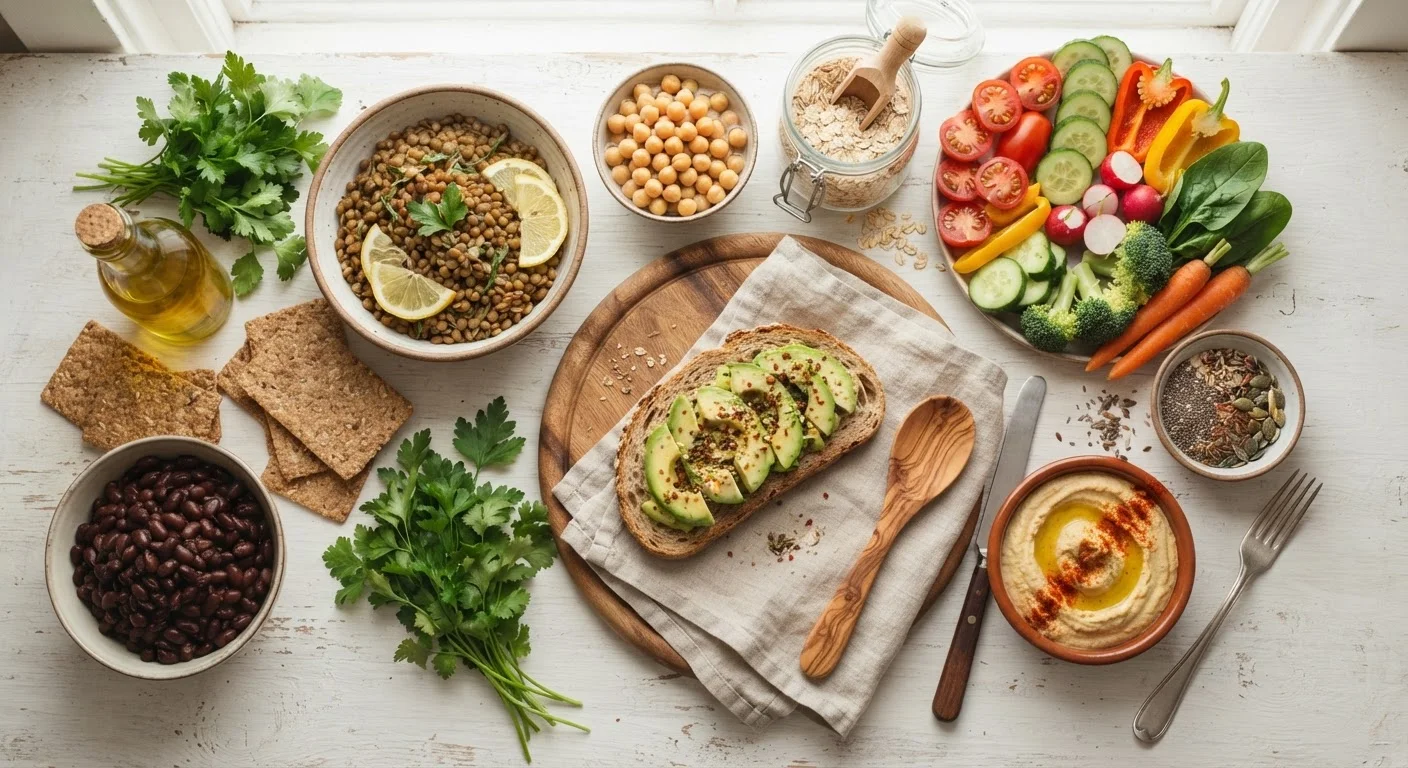
Prioritizing produce, legumes, whole grains, lean proteins, and dairy before adding packaged goods ensures that the foundation of your diet is nutrient-dense. It also naturally limits shelf space - and budget - for less nutritious options.
Use frozen and canned options strategically as nutritional equivalents.
Frozen vegetables and canned legumes are nutritionally comparable to fresh counterparts and substantially reduce prep time and food waste. This makes it easier to maintain a nutritious diet across busy weeks.
Set a consistent day and time for grocery shopping each week.
Habit research shows that routines anchored to fixed time cues are more durable than those based on variable intention. A consistent shopping day reduces the likelihood of gaps in fresh food supply that lead to less healthy convenience choices.
Core Practices for a Healthier Cart
The following habits are grounded in nutrition science and behavioral research. They are not about perfection - they are about reducing the friction that makes healthy eating hard to sustain.
For readers exploring specific eating patterns to build their list around, our comparison of the Mediterranean and DASH dietary approaches offers a useful evidence-based reference point.
Navigating the Store With Intention
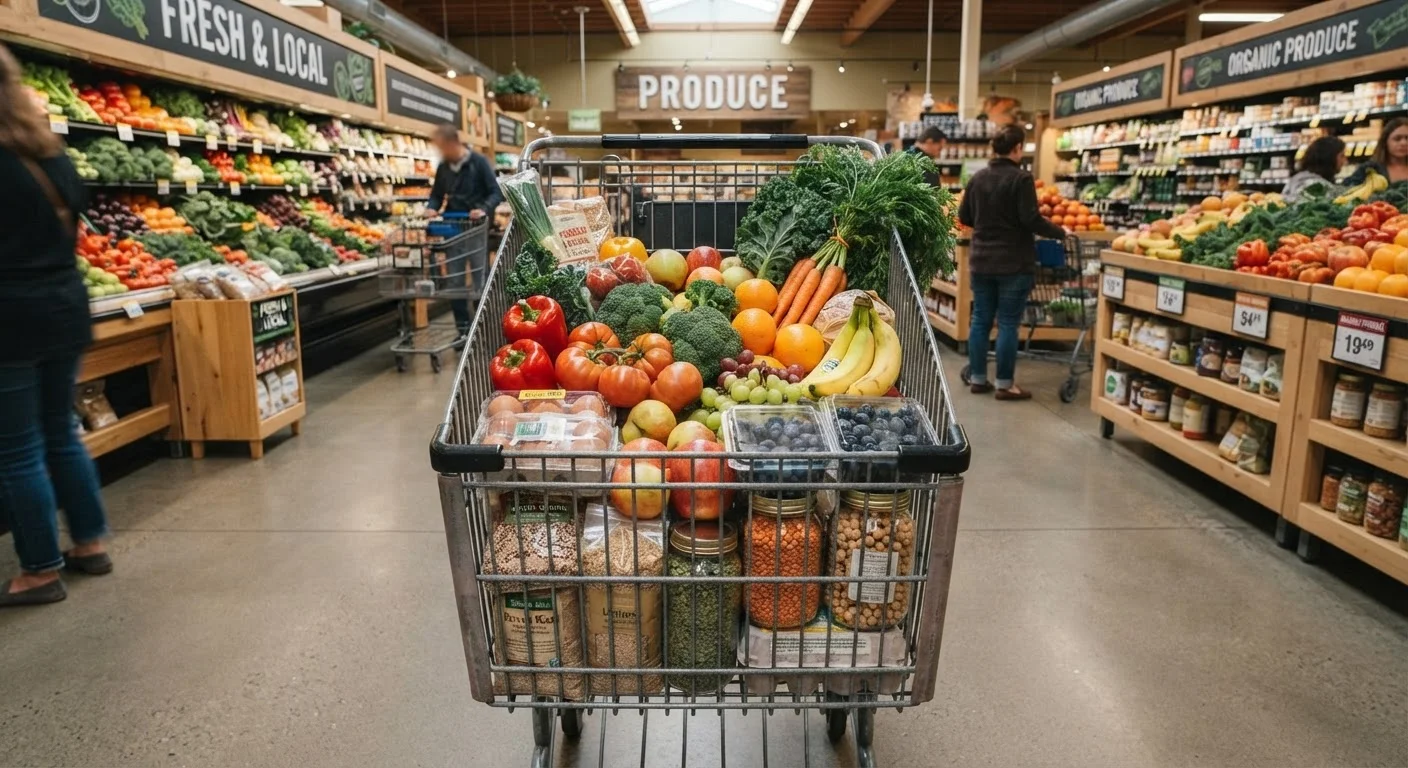
Supermarket layouts are deliberately designed to maximize purchase volume. High-margin, heavily processed products are typically placed at eye level and near checkout lanes. Understanding this architecture helps you shop more deliberately rather than reactively.
The store perimeter - produce, dairy, meat, seafood - tends to contain minimally processed whole foods. The inner aisles house both useful staples (canned legumes, whole grains, frozen vegetables) and the most heavily marketed packaged goods. A useful mental model: start in the perimeter, then move selectively into aisles for specific planned items.
Not All Inner-Aisle Products Are Equal
While the store perimeter is a useful general heuristic, many inner aisles contain genuinely nutritious staples - whole grain pasta, canned fish, nut butters, dried legumes, and low-sodium canned vegetables among them. The goal is not to avoid inner aisles entirely but to enter them with a specific list and awareness of marketing tactics. A planned approach is more effective than a rigid rule.
Learning to read nutrition labels is a complementary skill. Focus on ingredient lists and serving sizes rather than front-of-package marketing claims. If you're stocking up on grains, our article on whole grains versus refined grains explains what to look for and why it matters nutritionally.
Grocery habits also work best as part of a larger dietary consistency effort. Patterns that hold up during the week can break down on weekends - something worth understanding if you're trying to make progress. See our article on why weekend eating patterns often undermine weekday effort for context.
This article provides general nutrition and consumer education information only. It is not a substitute for personalized advice from a registered dietitian or qualified healthcare provider. Consult a professional for guidance tailored to your individual health needs.