
Origins and Core Principles
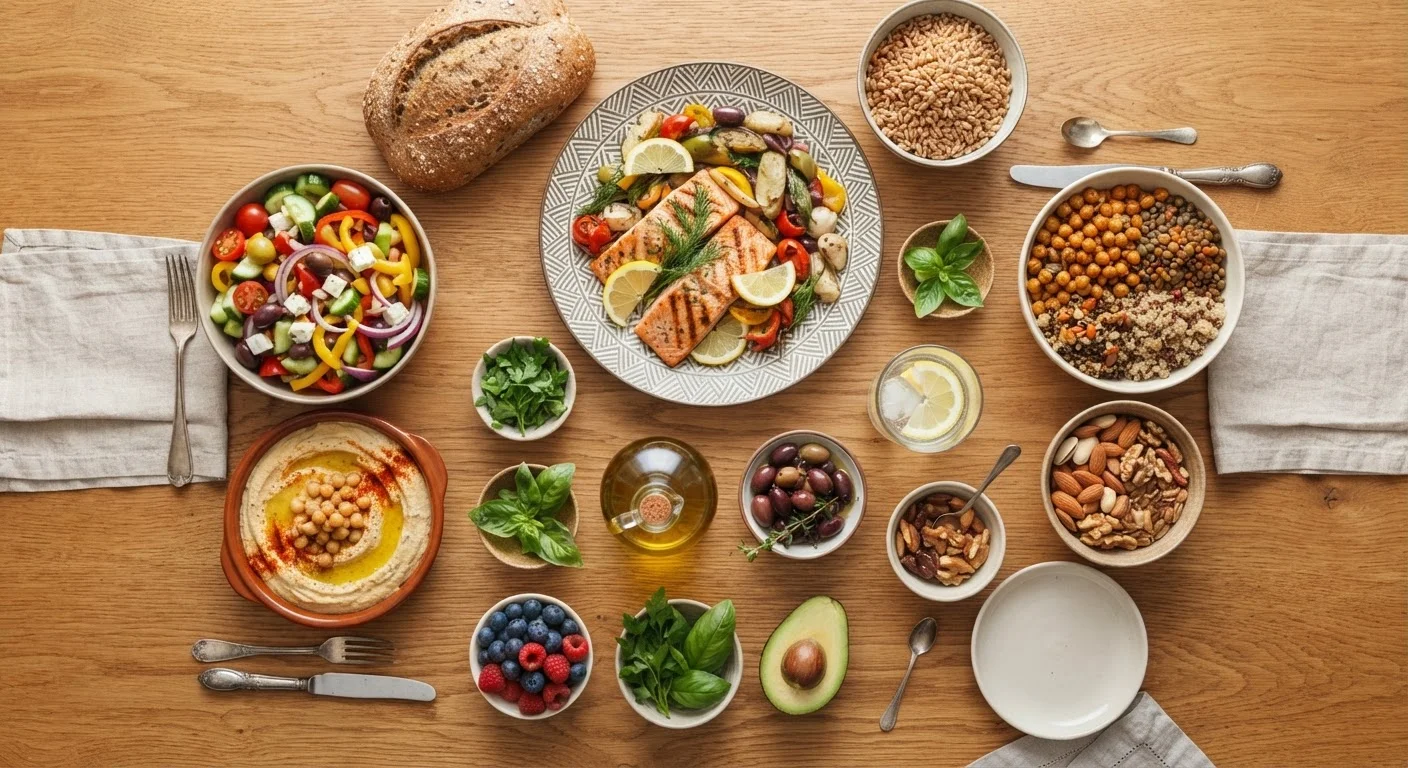
The Mediterranean diet is modeled on the traditional eating habits of countries bordering the Mediterranean Sea and gained scientific attention following the landmark Seven Countries Study in the 1950s and 60s. Its foundation rests on abundant vegetables, fruits, whole grains, legumes, nuts, and olive oil as the primary fat source, with moderate fish and seafood intake, limited red meat, and optional moderate wine consumption with meals.
The DASH diet (Dietary Approaches to Stop Hypertension) was developed in the early 1990s specifically to reduce high blood pressure without medication. Funded by the National Heart, Lung, and Blood Institute (NHLBI), it emphasizes fruits, vegetables, low-fat dairy, whole grains, and lean proteins while setting explicit caps on sodium, saturated fat, and added sugars.
Both patterns share a plant-forward foundation, but their motivating goals differ: Mediterranean eating emerged from cultural tradition and observational research, while DASH was engineered through controlled clinical trials with a specific physiological target in mind.
How They Compare Across Key Dimensions
Understanding how these two patterns differ - and overlap - helps clarify which may align better with an individual's health priorities and daily habits.
| Mediterranean Diet | DASH Diet | |
|---|---|---|
| Primary health goal | Overall cardiovascular and metabolic health | Lowering blood pressure |
| Fat guidance | Encourages olive oil and omega-3 fats | Limits saturated fat; emphasizes low-fat dairy |
| Sodium restriction | Not explicitly specified | Central feature; defined daily limits |
| Dairy | Moderate, often full-fat cheese/yogurt | Low-fat or fat-free dairy encouraged |
| Alcohol | Moderate red wine optional | Not encouraged; alcohol limited |
| Structured nutrient targets | General food-group guidance | Specific targets for sodium, fat, potassium |
| Flexibility | High; culturally adaptable | Moderate; sodium limits require label awareness |
| Evidence base | Large RCTs and extensive observational data | Multiple controlled clinical trials |
One meaningful distinction is fat philosophy. The Mediterranean diet explicitly endorses olive oil as a daily staple and encourages fatty fish like salmon and sardines, embracing monounsaturated and omega-3 fats as beneficial. DASH does not restrict healthy fats per se but places greater emphasis on reducing overall saturated fat and sodium, making low-fat dairy a signature feature. For practical grocery planning, see research-informed grocery habits that can support either pattern week to week.
What the Research Actually Shows
The Mediterranean diet has an extensive observational literature. The PREDIMED trial - a large Spanish randomized controlled trial - found that participants assigned to a Mediterranean diet supplemented with olive oil or nuts had significantly lower rates of major cardiovascular events compared to a control low-fat diet group. Research also associates the pattern with reduced risk of type 2 diabetes and cognitive decline, though much of the evidence remains observational.
30%
Reduced major cardiovascular events
The PREDIMED randomized trial found approximately a 30% relative risk reduction among participants following a Mediterranean diet compared to a control low-fat diet.
8-14 mmHg
Systolic blood pressure reduction with DASH
Research published in the New England Journal of Medicine found the DASH diet can lower systolic blood pressure by this range in people with hypertension.
DASH's evidence base is more narrowly focused but equally compelling within its domain. Multiple controlled trials consistently show it lowers systolic blood pressure, with effects measurable within weeks. When combined with sodium restriction - a version called DASH-Sodium - the blood pressure reductions are even more pronounced. The American Heart Association recognizes DASH among its recommended dietary patterns for cardiovascular health.
It is worth noting that diet research faces inherent challenges: self-reported intake, confounding lifestyle factors, and variation in how each pattern is defined across studies. Both diets show strong signals, but no diet eliminates disease risk, and individual responses vary considerably. For a contrasting approach to dietary timing rather than composition, the evidence on intermittent fasting offers a useful point of comparison.
Practicality, Cost, and Flexibility
Neither diet requires exotic or expensive ingredients. Both center on staples - beans, lentils, oats, canned fish, seasonal produce, eggs - that are widely available and budget-conscious when planned well. Our guide to eating well on a budget covers strategies that apply directly to both patterns.
Start With Overlapping Principles
Both diets share a strong foundation in vegetables, legumes, whole grains, and minimally processed foods. If choosing between them feels daunting, beginning with these shared elements is a low-barrier, evidence-supported starting point. Over time, you can layer in the specific features - olive oil, reduced sodium, low-fat dairy - that align with your health priorities and the guidance of your healthcare provider.
The Mediterranean diet offers somewhat more flexibility. Wine is optional, red meat is limited rather than eliminated, and interpretations vary across Greek, Italian, Spanish, and Middle Eastern culinary traditions. This cultural breadth can make it easier to maintain socially and across diverse households.
DASH's explicit nutrient targets - particularly its sodium guidance - require more label-reading and meal planning discipline, especially for people accustomed to processed or restaurant food. However, that same specificity makes it easier to measure progress, particularly for individuals monitoring blood pressure responses. Those interested in a fully plant-centered approach may also find value in exploring the spectrum of plant-based eating, which overlaps meaningfully with both patterns.
This article is for general informational and educational purposes only and does not constitute medical or nutritional advice. Consult a qualified healthcare professional or registered dietitian before making significant changes to your diet, particularly if you have a chronic health condition.