What Defines a Whole Grain vs. a Refined Grain
A grain kernel has three distinct anatomical layers: the bran (the fibrous outer shell), the germ (the nutrient-rich embryo), and the endosperm (the starchy interior). A whole grain preserves all three layers in their original proportions, whether in its intact form - like brown rice or oats - or milled into flour with all parts still present, as in whole wheat flour.
Refined grains undergo milling that strips away the bran and germ, leaving primarily the endosperm. This process dramatically extends shelf life and creates the softer texture many consumers associate with white bread, white rice, and standard pasta. What it also removes is a substantial share of fiber, B vitamins such as thiamine and folate, iron, magnesium, and thousands of phytonutrients that accumulate in the outer layers of the kernel.
Many refined grain products in the US are enriched - meaning a handful of nutrients (typically iron and several B vitamins) are added back after milling. Enrichment was introduced to address deficiency diseases and has been nutritionally important, but it does not restore fiber or the full spectrum of plant compounds lost in processing. Learning to read ingredient labels accurately is essential for distinguishing genuine whole grain products from those that merely appear brown or hearty. Our guide on decoding nutrition labels explains how to interpret ingredient lists and percent daily values with confidence.
The Nutritional Gap: What Processing Actually Removes
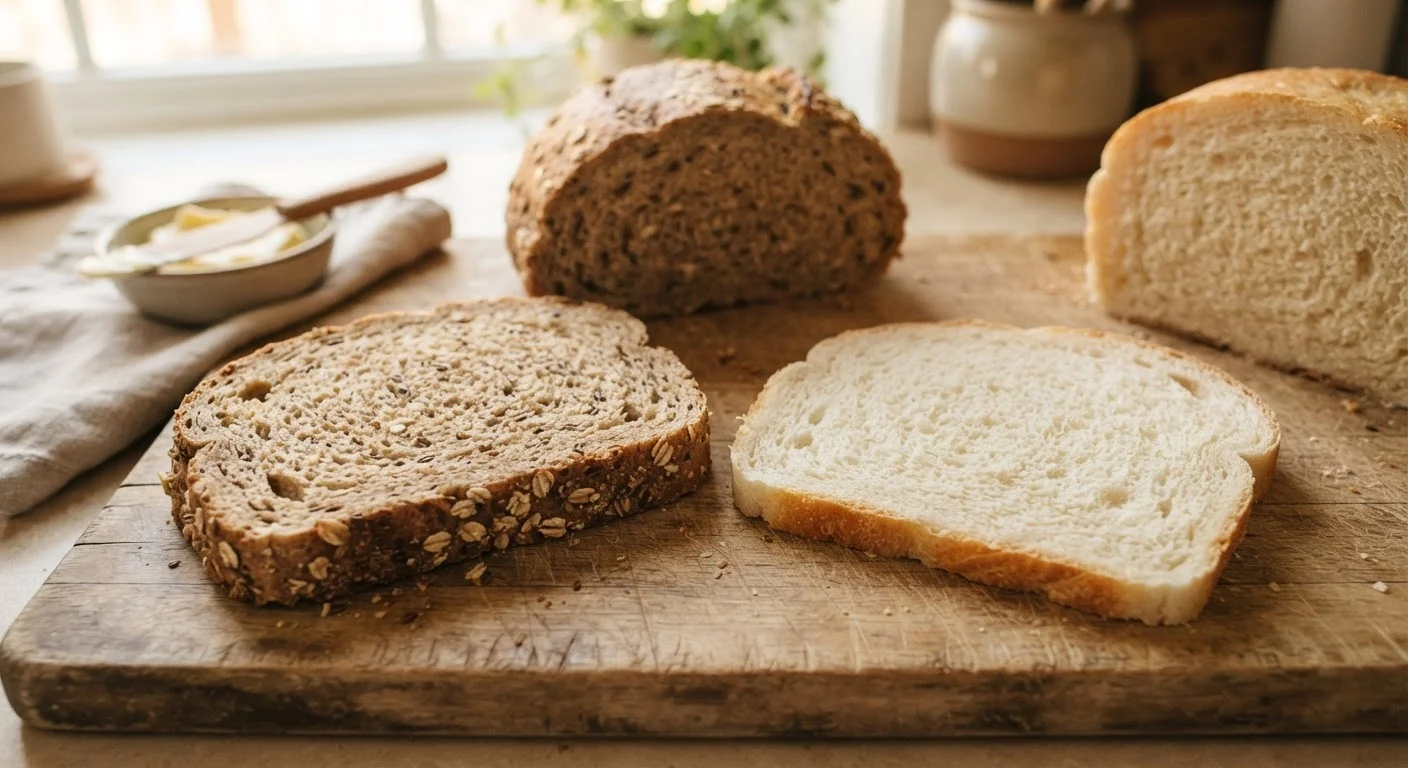
The nutritional difference between whole and refined grains is not trivial. A slice of whole wheat bread typically contains two to three times more fiber than an equivalent slice of white bread. Fiber is well-established as supporting digestive regularity, contributing to satiety, and playing a role in cholesterol management.
25%
Fiber reduction from refining wheat
Milling whole wheat into white flour removes approximately 75-80% of the fiber found in the original kernel, according to nutritional composition data from the USDA.
3+ servings
Recommended whole grain servings daily
The 2020-2025 Dietary Guidelines for Americans advise adults to make at least half their daily grain intake whole grains, equating to roughly three or more one-ounce servings.
~20%
Lower cardiovascular disease risk
A 2019 meta-analysis in The Lancet found that populations with the highest dietary fiber intake had approximately 20% lower risk of cardiovascular disease compared to those with the lowest intake.
Beyond fiber, the bran and germ house a meaningful concentration of magnesium, zinc, vitamin E, and phytochemicals including lignans and phenolic acids. These compounds are studied for their potential anti-inflammatory and antioxidant properties. Because they are not added back during enrichment, refined grain consumers miss out on this broader nutritional package.
The glycemic response also differs. Without the structural fiber matrix of a whole grain, refined grain products are digested and absorbed more quickly, which can produce a sharper spike in blood glucose. For people managing blood sugar levels, this distinction can be practically significant - though individual responses vary, and any dietary changes should be discussed with a qualified healthcare provider.
What the Research Says About Long-Term Health
Epidemiological evidence linking whole grain intake to health outcomes is among the more consistent findings in nutritional research. The Lancet published a comprehensive dose-response meta-analysis in 2019 that found higher dietary fiber - much of it from whole grains - was associated with significantly lower incidence of coronary heart disease, stroke, type 2 diabetes, and colorectal cancer compared to low-fiber intakes.
| Criterion | Whole Grains | Refined Grains |
|---|---|---|
| Grain layers retained | Bran, germ, and endosperm | Endosperm only |
| Dietary fiber content | High | Low (unless added back) |
| B vitamins | Naturally present | Partially restored via enrichment |
| Phytonutrients | Abundant (lignans, phenolics) | Largely removed, not restored |
| Glycemic response | Slower, more gradual | Faster, sharper spike |
| Shelf life | Shorter (oils in germ can oxidize) | Longer |
| Texture and taste | Denser, nuttier | Lighter, milder |
The mechanisms are still being studied and involve multiple pathways: gut microbiome modulation from fermentable fibers, reduced LDL cholesterol, improved insulin sensitivity, and lower systemic inflammation. It is important to note that most large studies in this area are observational, meaning they identify associations rather than proving direct causation. Nonetheless, the consistency and strength of these associations across diverse populations have shaped dietary guidelines in the US and internationally.
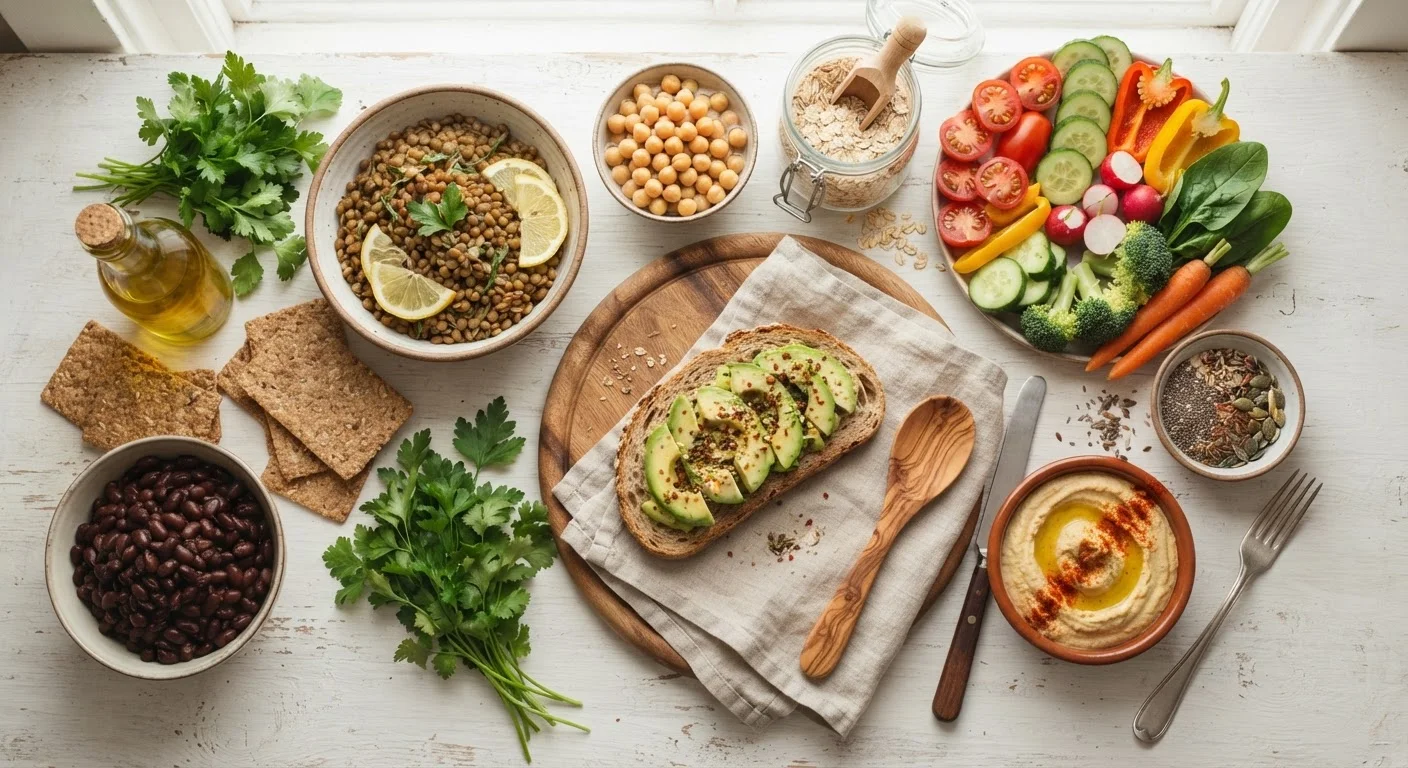
The 2020-2025 Dietary Guidelines for Americans recommend that at least half of all grains consumed daily be whole grains. For most adults, that translates to roughly three or more servings of whole grains per day. If you're building a more plant-forward eating pattern, plant-based eating approaches naturally tend to feature higher whole grain consumption as a dietary foundation.
Making the Switch: Practical Steps That Actually Stick
Transitioning toward more whole grains does not require abandoning all familiar foods at once. Gradual substitution tends to be more sustainable than an abrupt overhaul. Common entry points include switching to whole wheat bread or tortillas, replacing white rice with brown rice or farro, and choosing oatmeal over instant refined cereals.
One reliable strategy is looking at the first ingredient on any grain product's label. If it reads "whole wheat flour," "whole oats," or "whole grain corn," the product genuinely leads with the complete kernel. Terms like "multigrain," "wheat flour," or "made with whole grains" do not guarantee a predominantly whole grain product. For a deeper dive into navigating packaging claims, see our article on grocery shopping habits that support healthy eating.
Taste adaptation is real - whole grains have a denser, nuttier profile that some palates need time to appreciate. Mixing half whole wheat pasta with regular pasta, or blending whole grain flour with all-purpose in baking, can ease the transition without sacrificing texture entirely.
This article provides general nutrition information for educational purposes and is not a substitute for personalized advice from a registered dietitian or qualified healthcare professional. Individual dietary needs vary; consult a professional before making significant changes to your diet.