What Proportional Eating Actually Means
Proportional eating is not a diet. It is a practical framework - grounded in decades of nutrition research and reflected in official dietary guidelines - that focuses on how much of each food group you include at a given meal rather than forbidding any particular food.
The concept gained wide institutional backing through frameworks like the USDA's MyPlate, which replaced the older food pyramid. The central insight is straightforward: overall dietary pattern matters more than individual foods. A meal heavy in refined grains and minimal vegetables is nutritionally different from one where vegetables dominate, even if total calories are similar.
This approach reduces the cognitive burden of eating well. Rather than memorizing nutrient targets, you learn to recognize proportions visually - a skill that transfers to restaurants, meals at friends' homes, and busy weeknights alike.
Nutrient density
How many vitamins, minerals, and beneficial compounds a food delivers relative to its calorie count. Foods like leafy greens and legumes are nutrient-dense; sugary beverages are not.
Whole grains
Grains that retain all three parts of their kernel - bran, germ, and endosperm - providing more fiber and nutrients than refined grains that have been milled.
Phytonutrients
Naturally occurring compounds in plants - such as flavonoids and carotenoids - that may support health. They are not classified as essential nutrients but contribute to the benefits of a plant-rich diet.
Plate method
A visual portioning tool that divides a standard dinner plate into sections for vegetables, grains, and protein, making balanced eating easier to practice without measuring.
Healthy fats
Unsaturated fats found in foods like olive oil, nuts, seeds, and avocados that support heart health and help the body absorb fat-soluble vitamins.
Food group
A category of foods that share similar nutritional properties - such as vegetables, grains, or proteins - used in dietary guidelines to help people eat a variety of nutrients.
The Core Food Groups and Their Roles
Understanding what each food group contributes helps you make intentional choices rather than arbitrary ones.
- Vegetables and fruits supply fiber, vitamins, minerals, and phytonutrients. Non-starchy vegetables - greens, broccoli, peppers, zucchini - are especially nutrient-dense relative to their calorie load.
- Whole grains (oats, brown rice, whole wheat, quinoa, barley) provide sustained energy via complex carbohydrates, along with B vitamins and fiber. Refined grains offer fewer of these benefits per serving.
- Protein foods - including lean meats, poultry, fish, eggs, legumes, and soy products - support tissue repair, immune function, and satiety. Plant-based proteins simultaneously deliver fiber and micronutrients.
- Dairy or fortified alternatives contribute calcium, vitamin D, and protein. Low-fat options are commonly recommended for regular consumption.
- Healthy fats from sources such as nuts, seeds, avocado, and olive oil are essential for fat-soluble vitamin absorption and cell function. They should be present in modest, not absent, amounts.
If you are exploring a more plant-forward approach, our comprehensive guide to plant-based eating covers nutritional considerations at every level of the spectrum.
How to Build a Balanced Plate
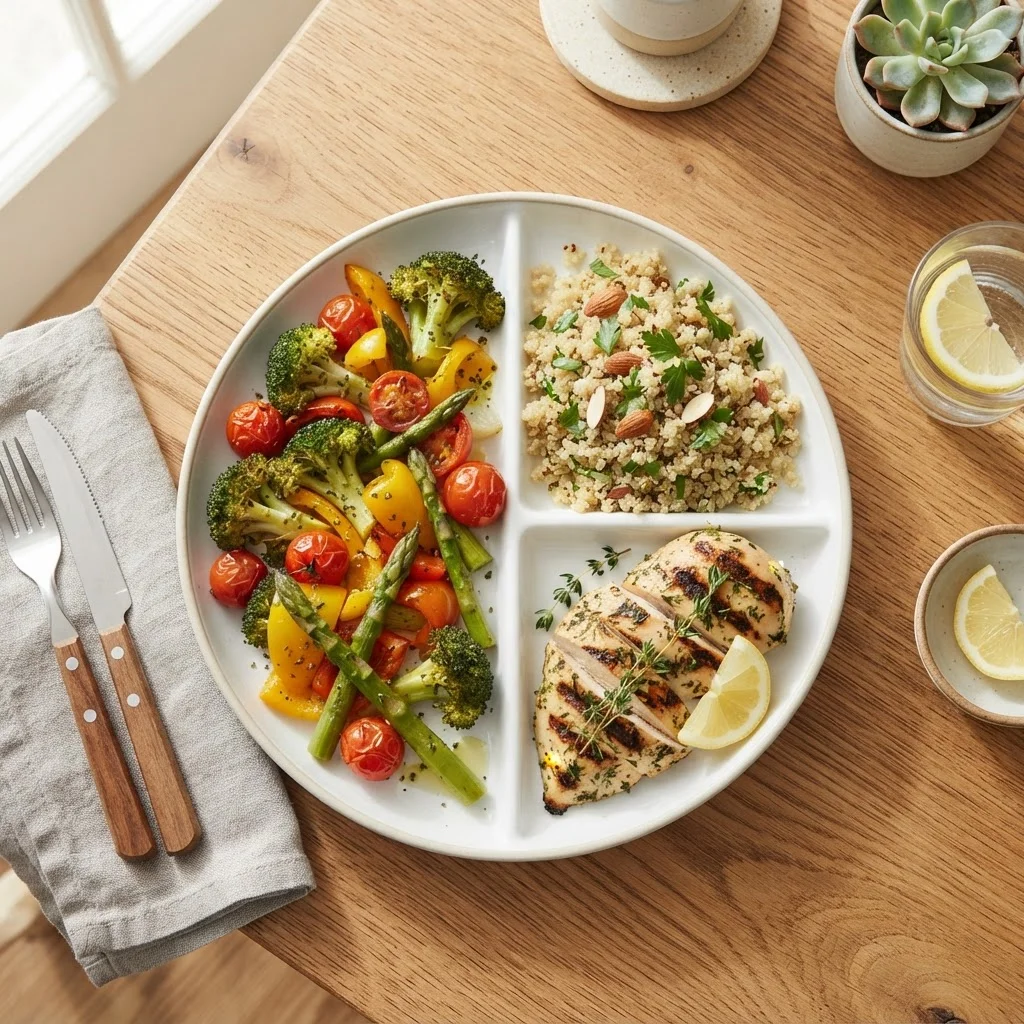
The plate method translates nutrition principles into a visual, repeatable routine:
- Fill half your plate with vegetables and fruit. Prioritize variety and color. A mix of raw and cooked vegetables diversifies your micronutrient intake.
- Dedicate one quarter to whole grains. A fist-sized portion of cooked grains is a useful reference for most adults.
- Use the remaining quarter for quality protein. A palm-sized portion of lean meat, fish, or a cup of cooked legumes fits this space well.
- Add a small amount of healthy fat. A drizzle of olive oil, a few slices of avocado, or a small handful of nuts rounds out the meal.
- Choose water or low-calorie beverages as your primary drink. Sugary drinks add significant calories with little nutritional return.
Make Vegetables the Default, Not the Afterthought
When planning a meal, start with the vegetable component and build around it rather than adding vegetables as a side note to a protein-centered dish. This simple reversal in planning order naturally shifts the proportions on your plate. Frozen vegetables are just as nutritious as fresh and require no prep - keeping them stocked removes a common barrier to hitting your vegetable targets.
This structure is flexible. A stir-fry, a grain bowl, or a hearty soup can all reflect balanced proportions - the plate model is a mental template, not a literal requirement.
Common Pitfalls and How to Avoid Them
Even well-intentioned eaters run into predictable obstacles:
- Oversized portions of grains or protein: Restaurant servings and packaged portions often far exceed one quarter of a plate. Mentally redistributing before eating helps recalibrate expectations.
- Treating starchy vegetables as the vegetable portion: Potatoes, corn, and peas are nutritious but behave more like grains in terms of carbohydrate load. Pairing them with non-starchy vegetables preserves balance.
- Eliminating fats entirely: Fat-free eating can reduce the absorption of fat-soluble vitamins (A, D, E, K) and leave meals less satisfying. The goal is quality and moderation, not elimination.
- Inconsistency labeled as failure: One unbalanced meal does not undo a healthy dietary pattern. Consistency over weeks and months is what drives meaningful outcomes.
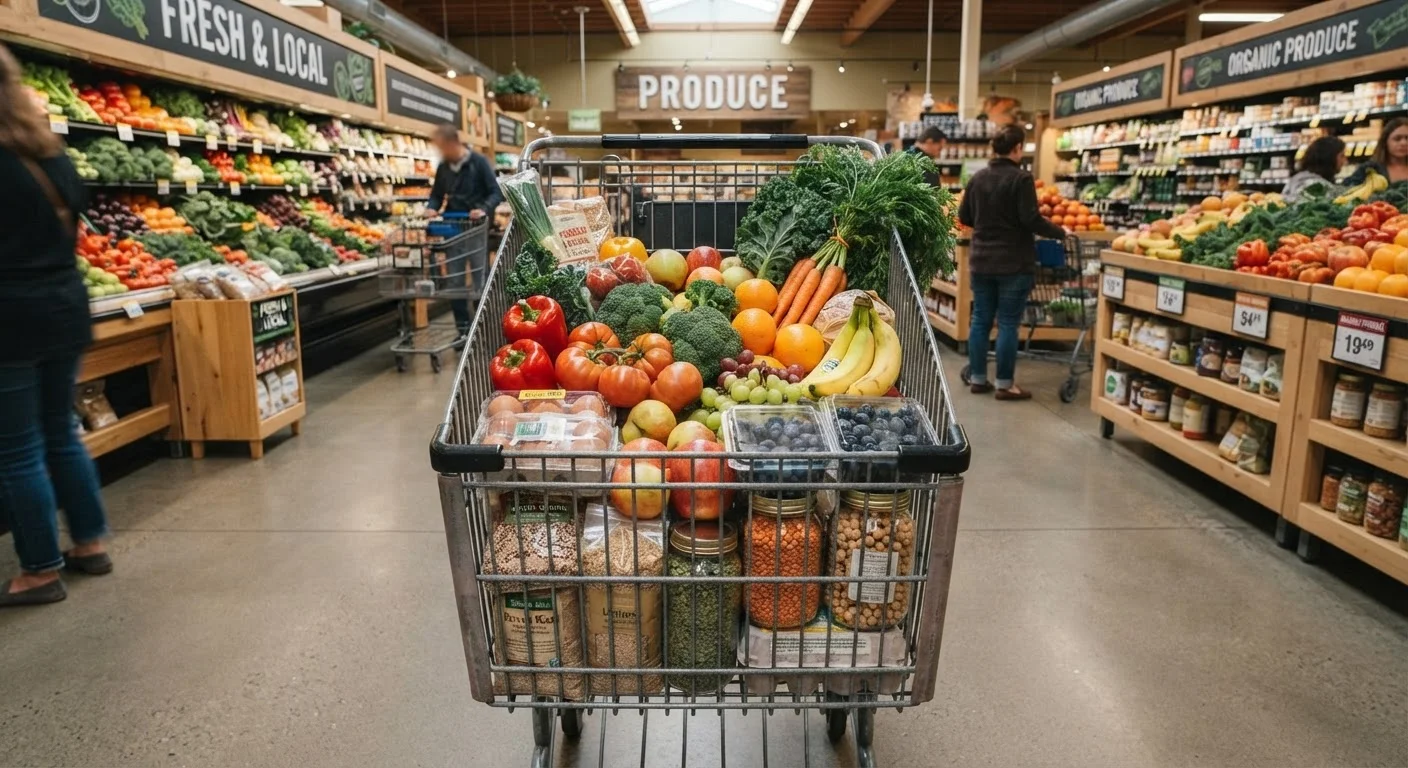
For support building sustainable grocery habits that reinforce these meal patterns, see our guidance on grocery shopping habits that support consistent healthy eating.
Making It Work in Real Life
Nutrition knowledge only produces benefit when it is actually applied day to day. A few evidence-informed practices that support consistency:
- Prep vegetables in advance. Washed, chopped vegetables stored in visible containers are consumed more frequently than those requiring preparation at mealtime.
- Use smaller plates when appropriate. Research on portion perception suggests that plate size influences how much people serve themselves, independent of hunger signals.
- Apply the plate model to mixed dishes. A pasta bowl, a burrito, or a stew can still reflect balanced proportions - simply assess whether vegetables are the dominant ingredient.
- Pair this approach with physical activity. Nutrition and movement work together. Our fitness and exercise hub offers practical guidance on building an active routine alongside healthy eating.
Remember: proportional eating is a compass, not a rulebook. Individual nutritional needs vary based on age, activity level, health status, and other factors. For personalized guidance, a registered dietitian is the most qualified resource.
This article is for general informational and educational purposes only and is not a substitute for professional medical or dietary advice. Always consult a qualified healthcare provider before making significant changes to your diet, especially if you have an existing health condition.