
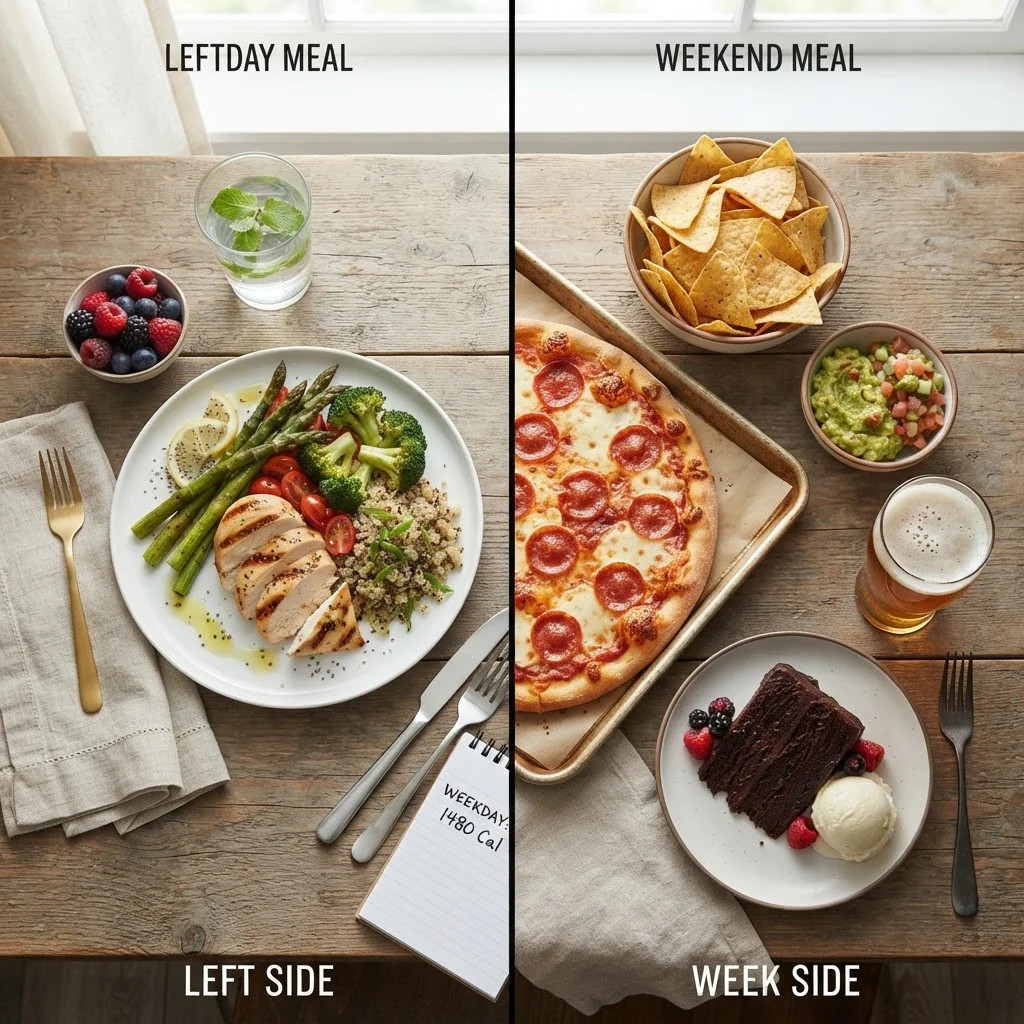
The Weekday-Weekend Nutrition Gap Is Real
Many people follow a structured eating routine from Monday through Friday - portioned meals, planned snacks, limited alcohol - only to see those habits loosen significantly over Saturday and Sunday. Research published in journals such as Obesity has found that adults tend to consume meaningfully more calories on weekends than on weekdays, with differences large enough to stall or reverse weekly nutritional progress.
This isn't a willpower failure. It reflects predictable shifts in environment, social context, and psychological framing that make it harder to apply weekday habits. Understanding the specific mistakes that drive this pattern is more useful than general advice to "just eat better" on weekends. As consistent grocery habits can anchor weekday eating, similar structural strategies can carry over into the weekend.
Common Mistakes That Erode Weekend Nutrition
The following patterns are among the most frequently observed drivers of the weekday-weekend nutrition gap. Recognizing them in your own routine is the first step toward addressing them without resorting to rigid restriction.
Treating weekends as a reward for weekday discipline, leading to significant overconsumption.
Why it happens: The 'all-or-nothing' mindset frames strict weekday eating as deprivation, making the weekend feel like a legitimate payoff. This psychological contrast makes large indulgences feel earned and justified.
Skipping or delaying breakfast on weekends, which leads to erratic hunger and larger compensatory meals later.
Why it happens: Without a workday schedule, weekend mornings lack the cues that prompt regular eating. Sleeping in and a relaxed pace mean breakfast is often skipped entirely or pushed into the early afternoon.
Underestimating the caloric impact of social eating and alcohol consumed at gatherings.
Why it happens: Social settings shift attention away from food awareness. Alcohol lowers inhibitions around food choices and adds calories that are easy to overlook, while shared meals encourage larger portions through social mirroring.
Abandoning weekday meal structure and relying on convenience or takeout without planning.
Why it happens: Weekends lack the built-in scheduling of work hours, making it easy to arrive at mealtimes without a plan. Takeout and convenience foods then fill the gap, often delivering higher sodium, fat, and calorie loads than home-prepared meals.
Using the 'I'll fix it Monday' mentality to justify ongoing poor choices throughout the entire weekend.
Why it happens: Once one meal feels 'off plan,' many people mentally write off the rest of the weekend. This cognitive distortion - sometimes called the 'what the hell effect' in behavioral research - amplifies the impact of a single lapse.
~400-500
Extra calories consumed per weekend day on average
Research published in the journal Obesity found that adults consumed roughly 400-500 more calories per day on weekends compared to weekdays, with fat intake showing the largest increase.
2 days
How long the weekend nutritional gap spans
Because weekends represent roughly 29% of the weekly calendar, even moderate daily overconsumption across Saturday and Sunday can meaningfully affect overall weekly caloric balance.
Building a More Consistent Seven-Day Approach
Consistency across the full week doesn't require identical meals every day or avoiding social events. It requires closing the gap between weekday intention and weekend behavior. Consistency in fitness follows the same principle: moderate, regular effort outperforms intense bursts followed by complete disengagement.
Practically, this might mean anchoring weekends with at least one or two structured meals, setting a loose intake awareness goal before a social event rather than after, or simply maintaining breakfast habits that normally keep morning hunger manageable. The goal is continuity, not perfection. Sustainable dietary habits are ones that function across all seven days - not ones that require a Monday reset each week.
Strict Restriction Often Backfires
Attempting to compensate for weekend eating by dramatically restricting intake on weekdays can create a cycle of deprivation and overconsumption rather than genuine balance. Nutrition research consistently suggests that sustainable dietary patterns rely on moderate consistency rather than alternating extremes. If you find yourself caught in a rigid restrict-then-overeat cycle, speaking with a registered dietitian can provide individualized, evidence-based guidance.
This article is for general informational and educational purposes only and does not constitute medical or dietary advice. Consult a qualified healthcare professional or registered dietitian for guidance tailored to your individual health needs.