Why Nutrition and Budget Goals Aren't in Conflict
A common assumption is that eating well costs more - that nutrient-dense food is inherently a premium category. The evidence does not fully support this view. Many of the most nutritionally dense foods available - legumes, whole grains, eggs, canned oily fish, and frozen vegetables - are among the least expensive items in most US grocery stores. The cost gap that many people experience often reflects habits around food: unplanned shopping, heavy reliance on convenience and processed items, and food waste from produce that goes uneaten.
Research in dietary economics suggests that the primary driver of high food spending in low- to moderate-income households isn't the price of healthy food itself, but the structural patterns around how food is purchased and prepared. Addressing those patterns - through planning, staple-stocking, and batch cooking - tends to produce meaningful savings without requiring a shift to a specialized or restrictive eating style.
Understanding your overall financial picture supports this kind of change. The fundamentals of personal budgeting can help you see where food spending fits within your broader financial commitments.
This Is General Information, Not Medical Advice
The guidance in this article is for general educational purposes only. Individual nutritional needs vary based on health status, age, medications, and other factors. If you have a medical condition, are pregnant, or have specific dietary requirements, consult a registered dietitian or your healthcare provider before making significant changes to your diet.
Getting Started: Tools and Preparation
Before working through the steps below, gather the basics that make budget-conscious meal planning practical rather than burdensome.
What you will need
Weekly meal planner (paper or digital)
Map out meals in advance so your grocery list is targeted, minimizing impulse purchases and food waste.
Kitchen scale
Helps with portioning and comparing cost per gram when evaluating different package sizes.
Airtight storage containers
Enable batch cooking by safely storing prepped grains, legumes, and cooked proteins for several days.
Grocery store loyalty app
Surfaces store-specific discounts and digital coupons without requiring brand loyalty or deviation from your planned list.
The Freezer Is an Underrated Nutrition Tool
Frozen vegetables and fruits are picked and flash-frozen at peak ripeness, which preserves most of their vitamins and minerals. Research has shown that frozen produce can be nutritionally comparable to fresh - and it dramatically reduces food waste, which is one of the biggest silent costs in household food budgets.
Step-by-Step: Building a Budget-Friendly Nutrition Routine
Set a realistic weekly food budget before you shop
Begin by identifying what you can consistently spend on food each week, not what you'd ideally like to spend. Review your recent bank or card statements to understand your actual current spending - most people underestimate it. From there, set a target that is achievable, not punishing. A workable budget you stick to consistently outperforms an aggressive one that collapses mid-month. For broader budgeting habits that support this kind of follow-through, see strategies for making a budget stick.
Build meals around high-value staple foods
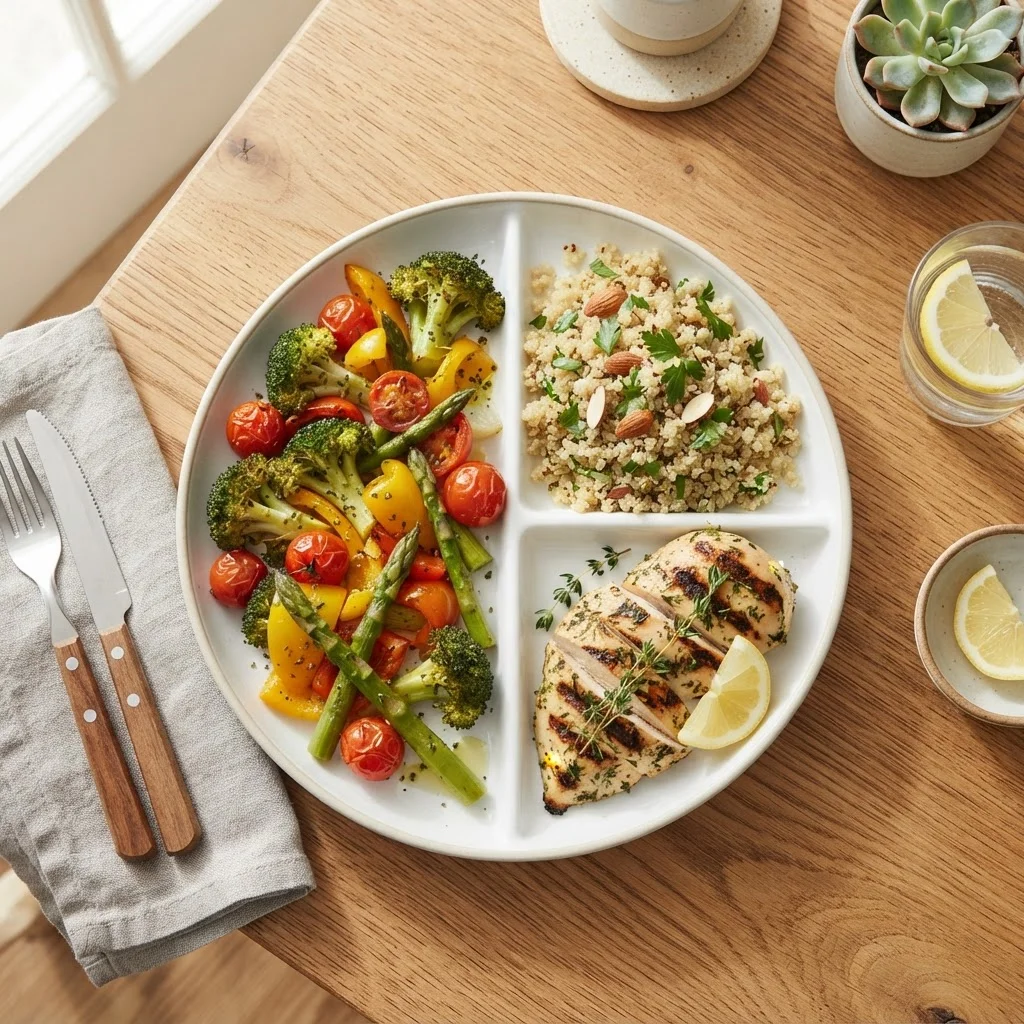
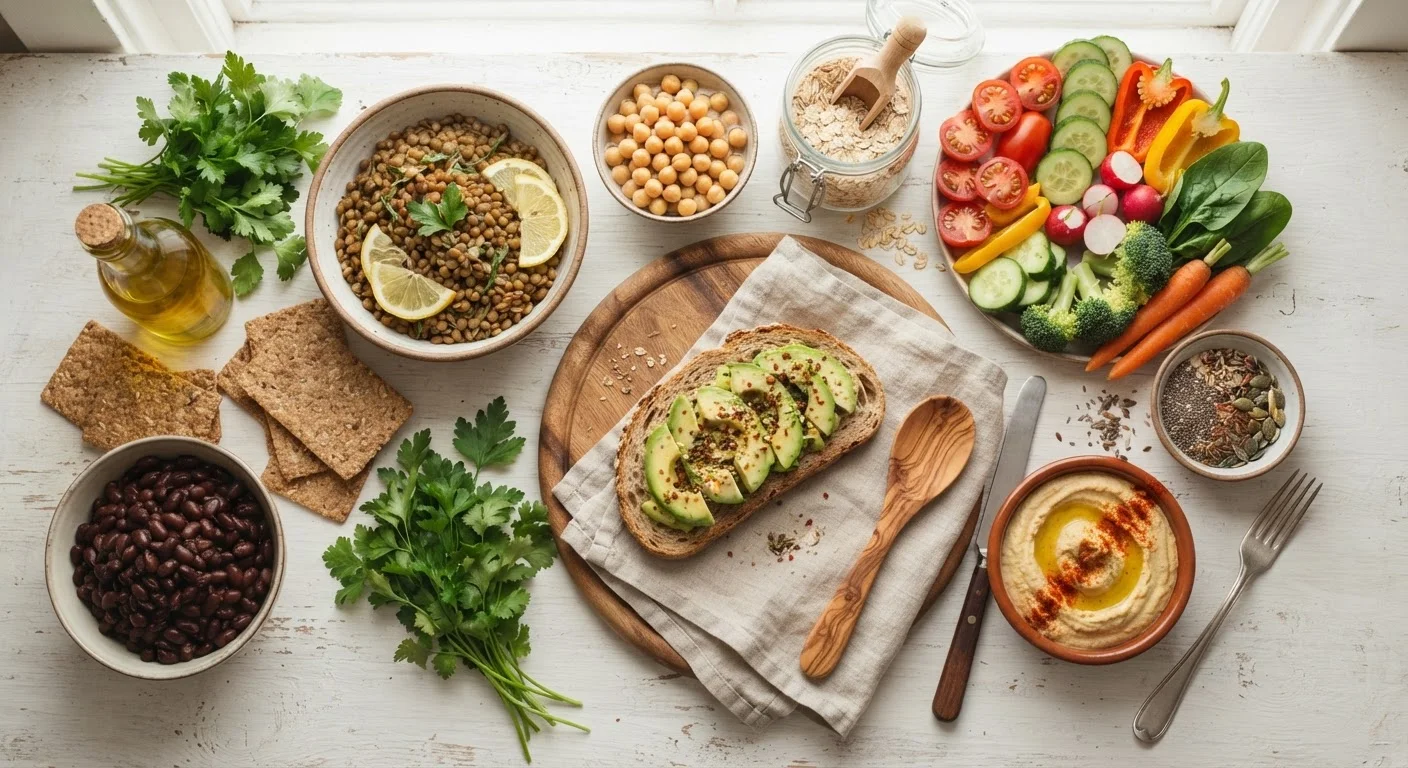
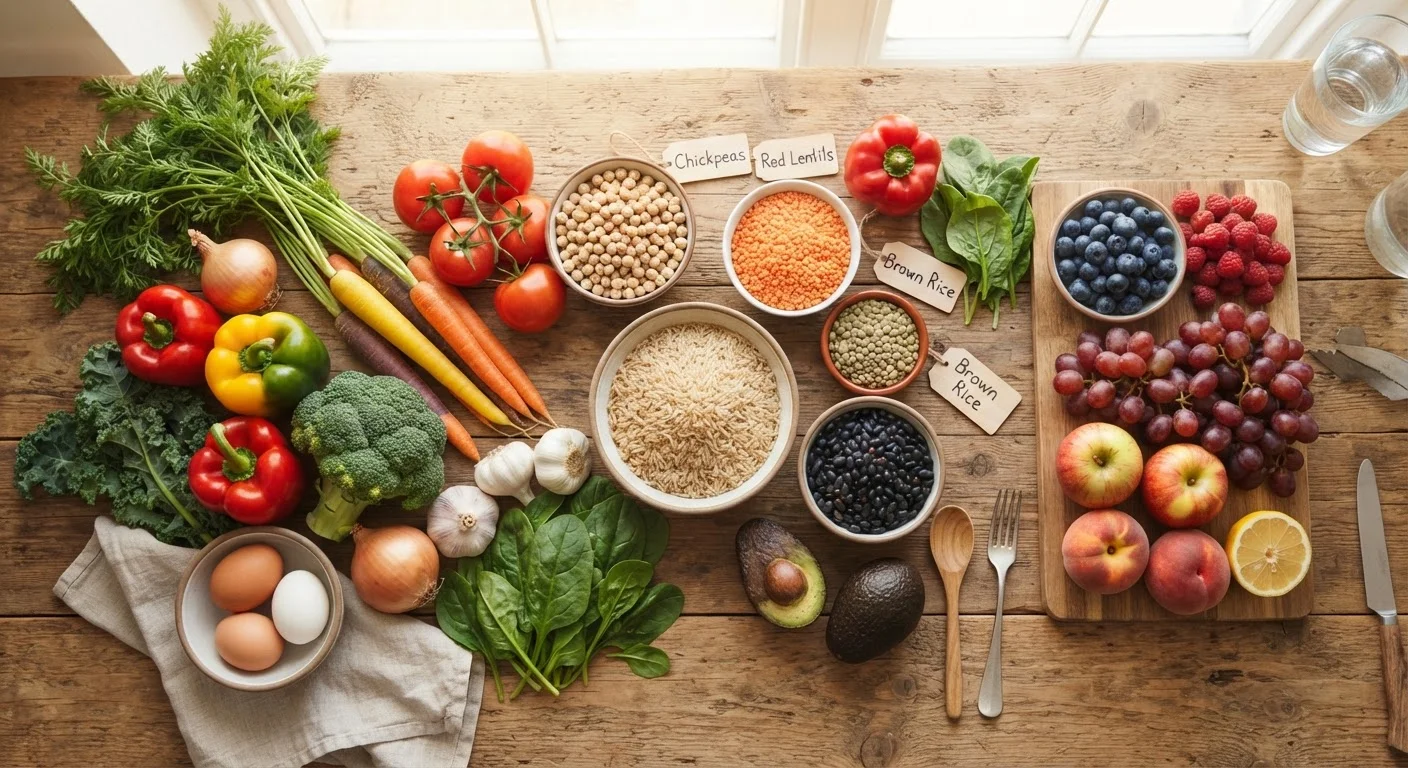
Certain foods deliver exceptional nutrient density relative to their cost. Dried or canned legumes (lentils, chickpeas, black beans), whole grains (oats, brown rice, barley), eggs, canned fish, and frozen vegetables consistently rank among the most cost-effective nutritious options available in US grocery stores. Structuring your weekly meals around these staples, then adding seasonal fresh produce and small amounts of animal protein where desired, yields balanced nutrition without premium pricing. This approach aligns with proportional eating principles - see building a balanced plate for a practical framework.
Plan your meals for the week before writing your grocery list
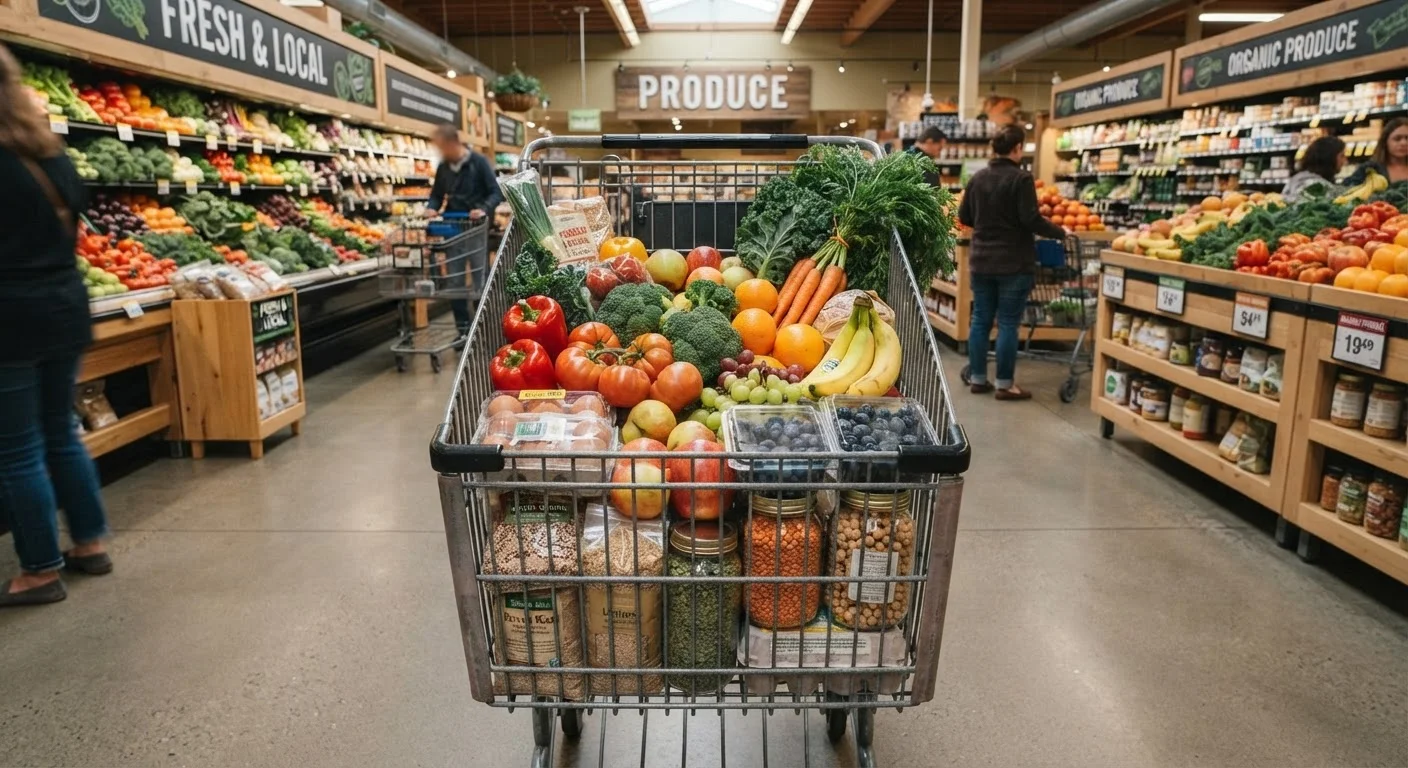
Meal planning is one of the most evidence-supported behaviors for reducing food spending and improving dietary quality simultaneously. The process is straightforward: choose five to seven dinners, plan for leftovers to cover lunches, and identify two or three simple breakfasts. Then build your grocery list from those specific needs. Shopping with a list tied to a plan consistently reduces unplanned purchases. For more on the shopping behaviors that reinforce healthy eating patterns, see grocery shopping habits that support healthy eating.
Batch cook grains and proteins at the start of the week
Preparing a large quantity of one or two staples - a pot of brown rice, a tray of roasted vegetables, a batch of hard-boiled eggs - at the beginning of the week reduces both the temptation to order food and the time cost of daily cooking. Batch cooking is especially effective for legumes and whole grains, which reheat well and can be combined with different seasonings and vegetables throughout the week to maintain variety. Store components separately in airtight containers for maximum flexibility.
Compare cost per serving, not cost per package
Package size and price can be misleading. A larger bag of oats that costs more upfront may deliver a lower cost per serving than a smaller box. When evaluating items in store, divide the total price by the number of servings listed on the nutrition label to get a true comparison point. This habit is especially useful for protein sources - a bulk bag of dried beans often provides two to three times more protein servings per dollar than the equivalent weight in canned beans or processed protein products.
Reduce - don't eliminate - higher-cost items gradually
A total diet overhaul is rarely sustainable. Instead, identify the two or three highest-cost items in your current weekly shop and explore lower-cost alternatives for each. If specialty cheeses are a frequent purchase, a standard block cheese may serve many of the same culinary purposes. If red meat appears at every dinner, replacing two of those meals with legume- or egg-based alternatives reduces cost and diversifies your nutrient intake. Gradual substitution tends to produce more durable change than drastic elimination. For those curious about plant-forward eating as part of this shift, plant-based eating approaches offer a range of options that don't require going fully vegan.
Sustaining the Approach Over Time
The strategies above are not a one-time fix - they become more effective as habits. The first week of meal planning takes the most effort; by the fourth or fifth week, the process typically takes under fifteen minutes. Similarly, batch cooking becomes faster as you identify the staples your household actually enjoys and builds a rotation around them.
Nutritional variety is achievable within a constrained budget by rotating protein sources, using different spice profiles with the same base ingredients, and adjusting to seasonal produce, which is typically cheaper and at peak flavor. The goal is not dietary perfection but consistent, sustainable improvement - a principle that applies equally well to both nutrition and financial habits.
Avoid Extreme Restriction in the Name of Saving
Cutting food spending by severely limiting calories or entire food groups can undermine your health. A budget-conscious approach should prioritize nutrient density, not simply the lowest possible food intake. Consistently under-eating to save money may lead to deficiencies that carry real health consequences.
For readers interested in how specific eating patterns compare on both health and practicality dimensions, the evidence on Mediterranean and DASH dietary patterns offers useful context. Both emphasize many of the budget-friendly staples - legumes, whole grains, vegetables - described in this article.
This article provides general nutritional information for educational purposes only and does not constitute medical or dietary advice. Individual needs vary. Consult a registered dietitian or qualified healthcare provider for guidance tailored to your health situation.