Why Hair Growth Claims Are So Hard to Evaluate
Walk down any beauty aisle or scroll through social media and you'll find dozens of products promising thicker, longer, fuller hair. The challenge for consumers is that marketing language - words like "supports," "promotes," or "clinically inspired" - often sounds scientific without being grounded in rigorous evidence. Understanding the difference between an ingredient with real clinical backing and one riding a trend requires looking past the label.
Hair growth is a complex biological process influenced by genetics, hormones, nutrition, scalp health, and stress. No single ingredient can override all of these factors. What the research can tell us is which ingredients have been shown, under controlled conditions, to meaningfully affect the hair growth cycle - and which ones haven't cleared that bar yet.
For a broader look at how to read ingredient claims critically, our guide on reading skincare and hair care labels is a useful starting point.
Common Myths and Facts About Hair Growth Ingredients
The following myth-and-fact pairs address the most widely circulated claims about hair growth ingredients - some earned, some overstated, and some simply unfounded.
Myth
Taking biotin supplements will make your hair grow faster and thicker.
Fact
Biotin deficiency is rare, and supplementing when levels are already adequate has not been shown to improve hair growth in healthy individuals.
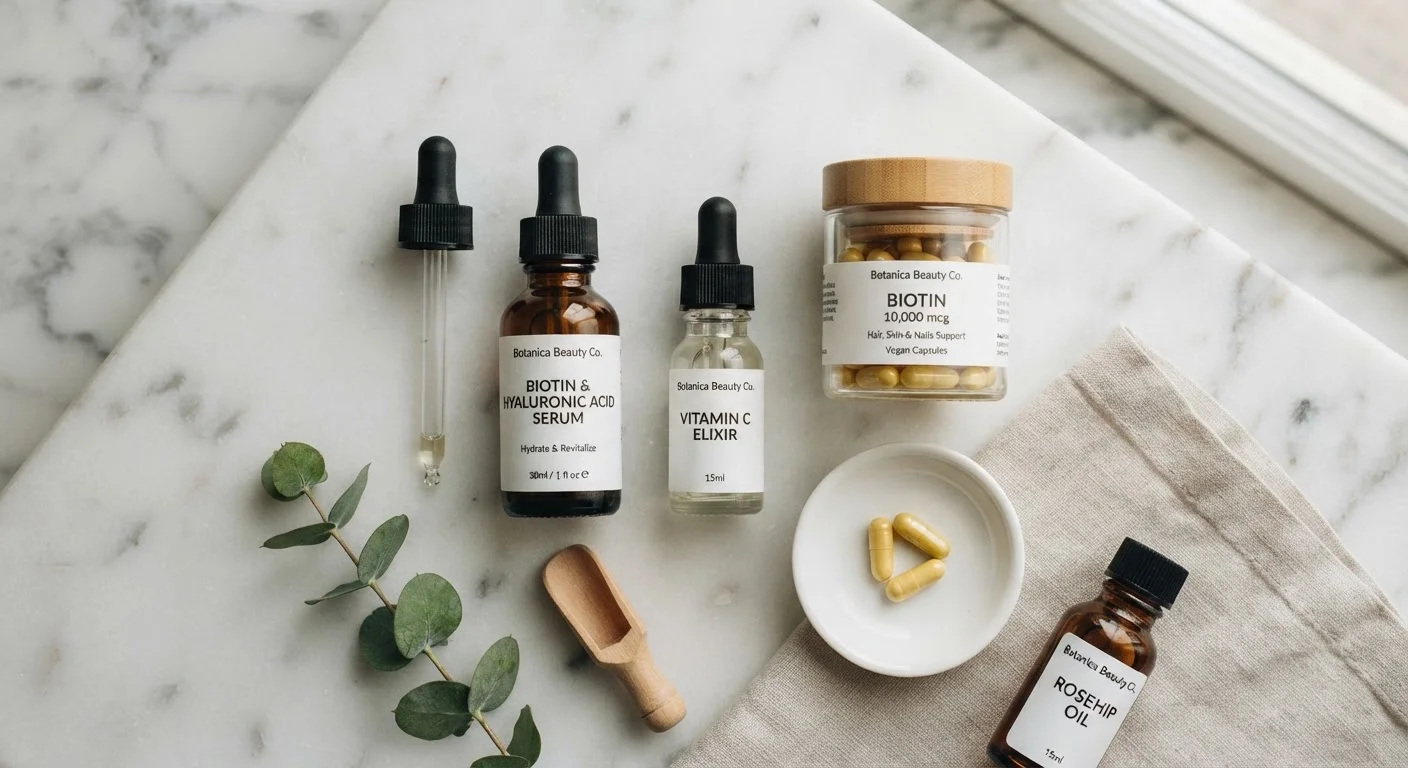
Biotin (vitamin B7) is essential for keratin production, which is why it became associated with hair health. However, clinical evidence supporting biotin supplementation for hair growth is largely limited to people with a confirmed deficiency - a condition that is uncommon in people eating a varied diet. Several dermatology organizations note that the widespread use of biotin supplements for hair growth is not supported by robust clinical trials. High-dose biotin supplements can also interfere with certain laboratory tests, which is worth discussing with a healthcare provider.
Myth
Caffeine-infused shampoos and serums significantly reverse hair loss.
Fact
Caffeine shows early laboratory and small-scale study promise, but evidence in humans remains limited and preliminary.
Caffeine applied topically has been studied for its potential to block the effects of DHT (dihydrotestosterone) - a hormone linked to pattern hair loss - at the follicle level. Some small studies suggest it may extend the anagen phase of hair growth. However, these are early-stage findings, and most studies have been small, short-term, or conducted in lab settings rather than large randomized trials. Caffeine-containing products are unlikely to cause harm, but consumers should temper expectations based on current evidence.
Myth
Natural oils like castor oil and coconut oil grow new hair from the scalp.
Fact
These oils primarily condition existing hair and the scalp surface; there is no strong evidence they stimulate new follicle activity.
Castor oil and coconut oil are popular natural hair care staples, and they do offer real benefits - they can reduce protein loss in hair strands, improve moisture retention, and soothe a dry scalp. But conditioning and growth stimulation are distinct mechanisms. There are no well-designed clinical trials demonstrating that either oil meaningfully increases hair count or follicle activity in humans. They remain useful as part of a gentle hair care routine without being relied on as growth treatments. For context on what genuinely moves the needle in hair care, see our piece on consistency and hair health.
Myth
Rosemary oil is just as effective as minoxidil for hair growth.
Fact
One small study found comparable results, but this single trial is not sufficient to establish equivalence - more research is needed.
A frequently cited 2015 study published in Skinmed compared rosemary oil to 2% minoxidil and found similar hair count improvements after six months in people with androgenetic alopecia. This is an intriguing finding, but a single small-scale trial does not establish clinical equivalence. Minoxidil has decades of replicated research behind it across large populations. Rosemary oil is considered low-risk and may be a reasonable complementary option, but it should not be positioned as a proven substitute for clinically validated treatments, especially for significant hair loss.
Myth
If a product causes hair to look fuller immediately, it is stimulating growth.
Fact
Volumizing effects from products are cosmetic - they alter the appearance of hair, not the biology of follicle growth.
Many shampoos, conditioners, and styling products create the appearance of volume or thickness by coating the hair shaft, reducing static, or temporarily swelling the cuticle. These are cosmetic outcomes and have no bearing on the hair growth cycle. True hair growth - measured by increased follicle activity, higher hair counts, or a prolonged anagen phase - takes weeks to months to assess and requires controlled observation. Conflating cosmetic results with biological growth is one of the most common ways misleading product claims gain traction.
What the Evidence Actually Supports
~50%
Of adults experience noticeable hair loss by age 50
Hair loss is one of the most common concerns seen in dermatology; prevalence estimates vary by type and population but consistently affect a large share of adults.
2
FDA-approved treatments for pattern hair loss
Minoxidil (topical) and finasteride (oral, for men) are currently the only FDA-approved treatments for androgenetic alopecia, underscoring how limited the proven-treatment landscape is.
Among topical ingredients, minoxidil has the strongest and most consistent body of evidence. Originally developed as a blood pressure medication, it was observed to stimulate hair regrowth and has since been extensively studied for androgenetic alopecia (pattern hair loss) in both men and women. It works by prolonging the anagen (growth) phase of the hair cycle and increasing blood flow to follicles.
Ketoconazole, an antifungal agent found in some shampoos, has also shown meaningful results in reducing scalp inflammation linked to hair shedding, particularly when dandruff or seborrheic dermatitis is a contributing factor. Addressing scalp conditions is often an overlooked but foundational step - something our Scalp Health 101 guide explores in more depth.
Beyond topicals, ensuring adequate intake of iron, zinc, and protein through diet supports the conditions hair follicles need to function properly - though supplementing without a confirmed deficiency is generally not recommended without professional guidance.
This article is for informational purposes only and does not constitute medical advice. If you are experiencing significant hair loss, consult a qualified healthcare professional or dermatologist for a personalized evaluation.