Why Grooming Routines Matter
A grooming routine isn't about vanity - it's about basic maintenance. Just as you'd brush your teeth daily without much thought, a consistent grooming practice keeps your skin healthy, reduces irritation, and helps you feel more put-together with minimal effort.
The barrier for most men isn't motivation; it's not knowing where to begin. Product marketing is loud, advice is often contradictory, and the grooming aisle can feel overwhelming. This guide cuts through that noise. You don't need a shelf full of products - you need a few that work, applied consistently.
If you're also new to skincare more broadly, the beginner's guide to skincare from scratch is a useful companion read covering skin types and ingredient basics in plain language.
Skin barrier
The outermost layer of skin that protects against moisture loss and environmental irritants. Harsh cleansers and over-washing can weaken it.
Sebum
The natural oil produced by skin glands. It helps keep skin lubricated, but excess production can contribute to oily skin and clogged pores.
Broad-spectrum SPF
Sun protection that shields against both UVA (aging) and UVB (burning) rays. 'Broad-spectrum' on a label means both are covered.
Scalp microbiome
The community of microorganisms living on your scalp. A balanced microbiome supports hair health; disruption can contribute to flaking or irritation.
Combination skin
A skin type where some areas (typically the T-zone) are oily while others, like the cheeks, are normal or dry.
Starting with Skin: The Non-Negotiable Foundation
Face care is the highest-return step in any men's grooming routine. It addresses the skin you present to the world and has a direct impact on comfort - preventing dryness, irritation, and clogged pores.
The Core Three-Step Framework
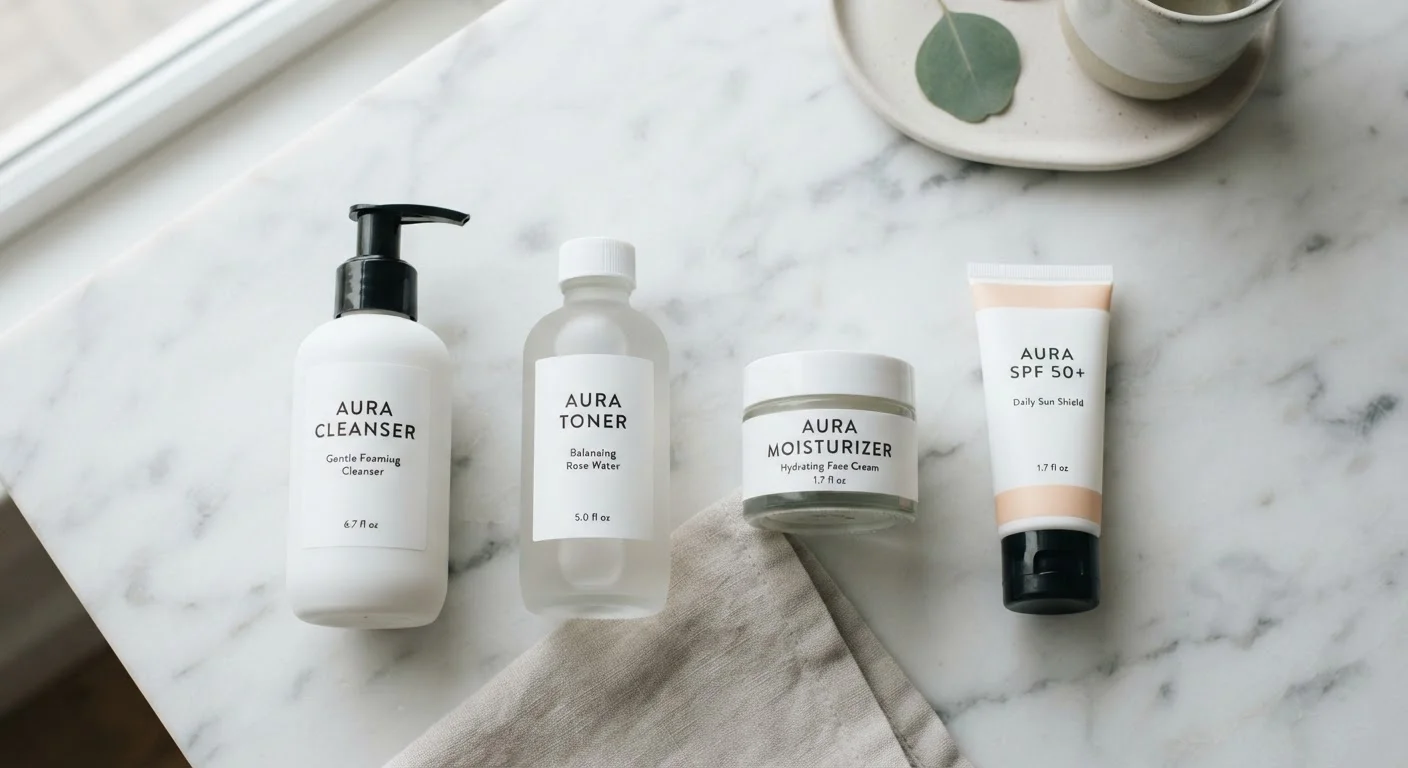
- Cleanse: Use a gentle, water-soluble face wash suited to your skin type. Avoid bar soaps designed for the body - they tend to be too alkaline for facial skin and can strip its protective barrier.
- Moisturize: Apply a lightweight moisturizer while your face is still slightly damp. This locks in hydration. Dry skin and oily skin both benefit from moisturizing - the formulas just differ.
- Protect: Daily SPF is not optional if long-term skin health is the goal. Look for a moisturizer that includes broad-spectrum SPF 30 or higher to simplify the step.
The Skincare Basics hub covers additional foundational knowledge if you want to go deeper on ingredients and routine-building after you've established these three steps.
The Skin Type Test Takes One Hour
To identify your skin type, wash your face with a gentle cleanser, pat dry, and wait an hour without applying anything. Tight or flaky skin signals dryness; a uniform shine indicates oily skin; shine only in the T-zone suggests combination skin. This one observation will make choosing the right cleanser and moisturizer significantly easier.
Hair and Scalp: Simple Habits That Make a Difference
Hair care for beginners often focuses on the wrong thing - products that add shine or hold - when the real foundation is a healthy scalp. An unhealthy scalp can contribute to dryness, flaking, and even hair thinning over time.
Key Habits to Build
- Wash frequency: How often you shampoo depends on your scalp type. Oily scalps may need washing every one to two days; dry scalps do better with less frequent cleansing - every two to four days is common.
- Conditioner use: Apply conditioner primarily to the mid-lengths and ends of hair, not the scalp, to avoid buildup. Leave it in for a couple of minutes before rinsing.
- Water temperature: Hot water opens the hair cuticle and can lead to dryness and frizz over time. Rinsing with cooler water helps seal the cuticle and add shine.
For a deeper look at what a balanced scalp looks like and how to address common issues, see our article on scalp health fundamentals. If you're growing or maintaining a beard, beard grooming from scratch covers shaping, skin care underneath, and sustainable maintenance.
Body Grooming: The Basics Worth Knowing
Body grooming is straightforward but easy to overlook in conversations about men's routines. A few consistent habits go a long way.
- Body wash vs. bar soap: Either works, but body washes with added moisturizing agents can be gentler on drier skin types. Focus on your actual skin feel rather than labels.
- Moisturize after showering: Applying a body lotion or cream within a few minutes of toweling off helps retain moisture while your skin is still slightly hydrated.
- Nail care: Trimming fingernails and toenails regularly - generally every one to two weeks - prevents breakage and maintains hygiene. A basic nail clipper and a file are sufficient.
- Deodorant vs. antiperspirant: Deodorant masks odor; antiperspirant reduces sweating. Many products combine both. If you experience significant sweating, an antiperspirant is the more targeted choice.
When to See a Dermatologist
General grooming habits address everyday maintenance, but persistent issues - such as severe acne, significant dandruff that doesn't respond to gentle care, or unexplained hair loss - are worth discussing with a dermatologist. These can have underlying causes that over-the-counter products won't resolve. A single consultation can save a lot of trial and error.
Building a Routine That Actually Sticks
The most effective grooming routine is one you'll actually do. Consistency is more valuable than complexity. A two-minute face wash and moisturizer done every day outperforms an elaborate ten-step routine done twice a month.
Practical Tips for Getting Started
- Attach new habits to existing ones: Do your face wash right after brushing your teeth. Stack the new behavior onto something automatic.
- Keep products visible: If your face wash is buried in a cabinet, you'll skip it. Leave it on the counter where it's part of your sightline.
- Start small and add steps: Begin with cleansing and moisturizing. After two weeks, add SPF. After a month, evaluate what feels comfortable to expand.
- Observe, don't assume: Pay attention to how your skin and scalp respond to new products. Redness, persistent dryness, or irritation are signals to adjust - not push through.
For help applying these principles to your hair specifically, the grooming checklist for all hair textures offers a practical audit tool regardless of hair type.
This article provides general grooming and skincare information for educational purposes only. It is not a substitute for advice from a qualified dermatologist or healthcare professional. If you experience persistent skin irritation, hair loss, or other concerns, consult a licensed professional.