How Surface Conditions Undermine Vehicle Control
Your car's ability to steer, brake, and accelerate depends entirely on friction between your tires and the road. Dry pavement offers the most grip. Every weather condition that adds water, ice, or packed snow to that surface reduces friction - sometimes dramatically. Understanding how much each condition reduces your control is the first step to compensating for it.
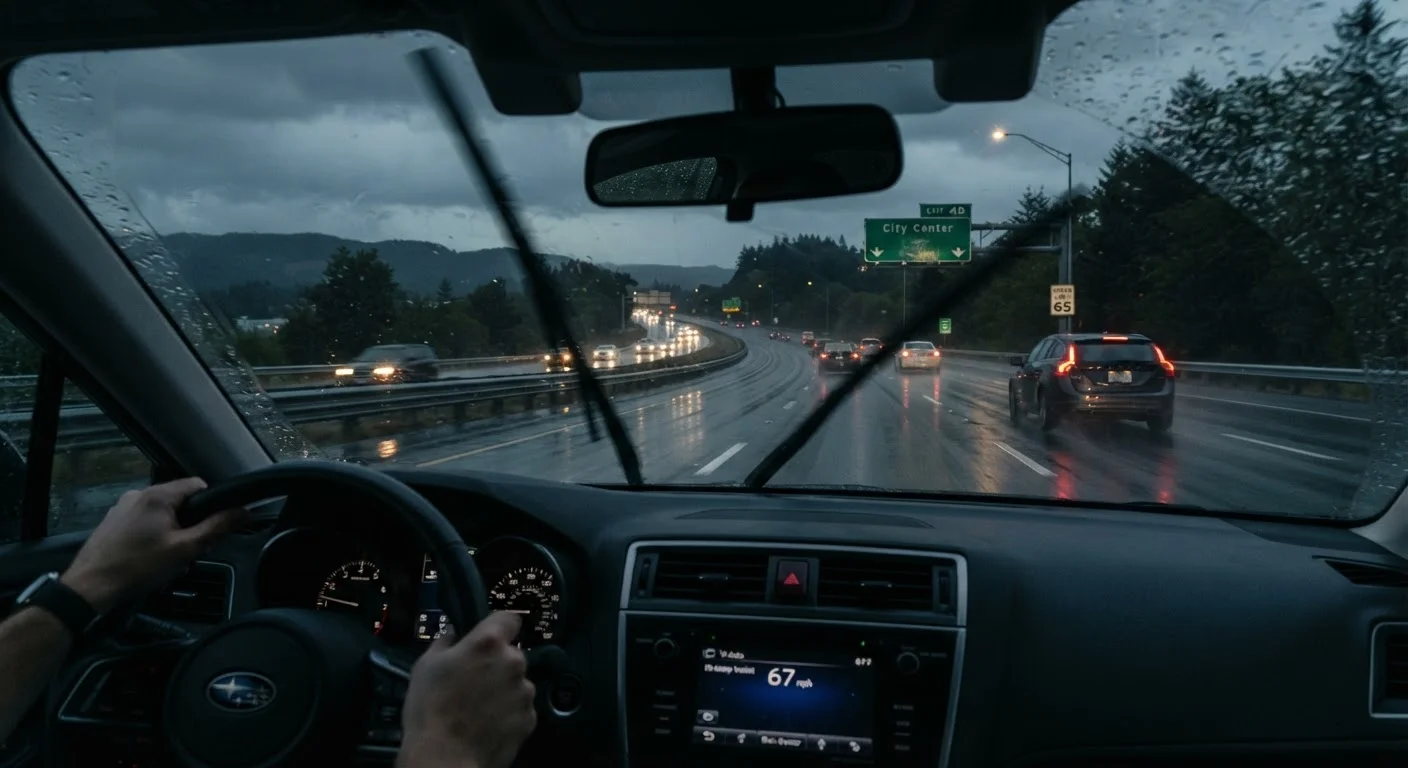
Rain is the most common hazard because drivers underestimate it. The first 10-15 minutes of rainfall are often the most dangerous: water mixes with accumulated oil and dust to create a slippery film before it washes away. Aquaplaning (also called hydroplaning) can occur when tire tread can't channel water fast enough - the tire rides on a thin layer of water and loses contact with the road entirely. Speed amplifies this risk significantly.
For a deeper look at how traction and speed combine to determine stopping distances, see The Science Behind Stopping Distance.
Rain, Ice, and Snow: What Each Condition Actually Does
Rain
Wet roads roughly double your stopping distance compared to dry conditions. Reduce speed, increase following distance, and avoid sudden steering or braking inputs. If your vehicle begins to aquaplane, ease off the gas gradually - do not brake hard or turn sharply until traction returns.
Ice
Black ice is nearly invisible and provides almost no friction - stopping distances can increase tenfold over dry pavement. It forms most often on bridges, overpasses, and shaded stretches of road where temperatures drop faster. If you hit ice, keep the steering wheel straight, lift off the throttle gently, and avoid braking until the vehicle slows naturally.
Snow
Packed snow sits between wet pavement and ice in terms of grip. Fresh, loose snow is unpredictable because tires can dig through to the surface unevenly. All-wheel drive helps you get moving, but it does not improve your ability to stop or steer on snow - that still depends on your tires and speed.
Aquaplaning (Hydroplaning)
When a tire rides on a thin film of water rather than the road surface, causing a complete loss of traction. It most commonly occurs at higher speeds on standing water.
Black Ice
A thin, nearly transparent layer of ice on pavement that is extremely difficult to see. It typically forms on bridges, overpasses, and shaded areas when temperatures drop below freezing.
ABS (Antilock Braking System)
A safety system that prevents wheels from locking up during hard braking, allowing the driver to maintain steering control. With ABS active, you should press the brake pedal firmly and hold it.
Traction
The grip between a tire and the road surface. Wet, icy, or snowy conditions reduce traction and increase the distance and time required to stop or change direction.
Following Distance
The gap you maintain between your vehicle and the one ahead. In poor conditions, this distance should be significantly larger than under normal driving to allow for longer stopping distances.
Slush
Partially melted snow behaves like a mix of wet road and ice. It can grab and pull your steering unexpectedly, especially when lane-changing or braking. Slow down more than you think is necessary.
Adjusting Your Driving Behavior
The core adjustment across all wet and winter conditions is the same: create more time and space. That means lower speeds, longer following distances, and smoother inputs on every control.
- Speed: Slow down beyond posted limits when conditions are poor. Legal speed limits assume reasonable conditions - not ice or heavy rain.
- Following distance: Triple your normal following distance on wet roads; on ice or packed snow, give yourself even more room.
- Braking: Apply brakes earlier and more gently. With antilock brakes (ABS), press firmly and hold - the system pulses for you. Without ABS, threshold brake by pressing just short of lock-up.
- Steering: Make gradual, smooth inputs. Jerky movements on slippery surfaces cause skids.
- Lights: Turn on headlights in rain or snow - many states require it by law, and it makes you visible to other drivers.
These habits form the foundation of defensive driving - anticipating hazards rather than reacting to them.
Your vehicle also needs seasonal preparation to handle these conditions safely. Tire tread depth, brake condition, and wiper quality all matter more in winter. The seasonal car maintenance schedule covers what to check before cold weather arrives.
This article provides general driving safety information for educational purposes. Always follow posted traffic laws and consult local advisories when road conditions are severe.