Why Repair Estimates Feel Confusing
A mechanic's estimate is written primarily for shop record-keeping - not for customer clarity. It uses trade shorthand, abbreviations, and pricing structures that make perfect sense inside a garage but read like a foreign language at the service counter. The good news is that once you know what each section represents, the document becomes straightforward to review.
The core reason estimates feel intimidating is that they bundle several different types of charges together without always labeling them clearly. Labor, parts, fluid disposal fees, and shop supply charges can appear as separate line items or rolled together depending on how the shop structures its paperwork. Breaking them apart mentally is the first step.
What you will need
Written repair estimate
The document from the shop that breaks down the proposed work, parts, and labor charges line by line.
Vehicle owner's manual
Confirms what your manufacturer recommends for service intervals and specifications, useful for cross-checking suggested work.
Smartphone or notepad
For photographing the estimate and noting any questions to ask the service writer before authorizing repairs.
Common Terms You'll See on an Estimate
Here are the terms that appear most often and what they actually mean:
- RO (Repair Order): The official work document that tracks everything done to your vehicle during the visit.
- Flat rate: The standardized labor time assigned to a specific repair job, billed regardless of actual clock time.
- OEM parts: Original Equipment Manufacturer parts - made to the same specification as what came on your car from the factory.
- Aftermarket parts: Parts made by third-party manufacturers. Quality varies widely; it's reasonable to ask which brand the shop is using.
- Sublet: Work the shop sends out to a specialist (like alignment or glass repair) and then bills back to you, sometimes with an added coordination fee.
- Shop supplies / environmental fees: A catch-all charge covering small consumables. It's standard, but you can ask what it covers if the amount seems high.
Authorization Means You've Agreed to Pay
Signing a repair order - even just for a diagnostic - is a legal agreement to pay the stated charges. Read every line before you sign. If something is unclear, ask the service writer to explain it in plain language before you commit.
How to Read the Estimate Step by Step
Working through an estimate methodically takes less than ten minutes and can save you from surprises at pickup. Follow the steps below - each one focuses on a specific section of the document.
Identify the three main sections of the estimate
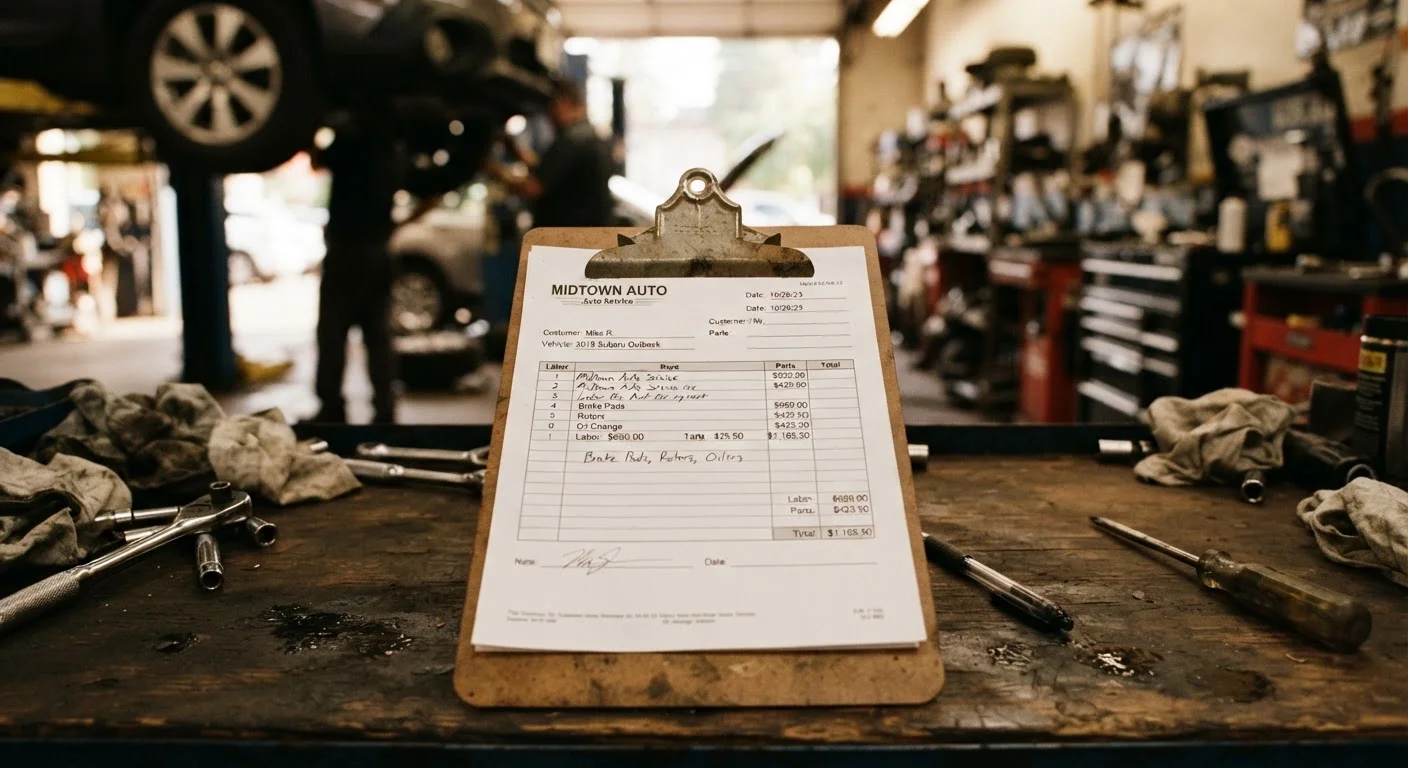
Most repair estimates - formally called a repair order or RO - are divided into three categories: labor, parts, and fees or shop supplies. Labor is what you're paying the technician to do the work. Parts are the components being replaced. Fees cover consumables like rags, fluids, or disposal charges. Knowing which bucket each line item falls into makes the whole document easier to evaluate.
Understand how labor hours are calculated
Shops bill labor using a flat-rate system. Industry guides (published by data services and used widely across the trade) assign a standard number of hours to each repair job - say, 1.5 hours to replace a thermostat. The shop bills that flat rate even if the technician finishes faster or takes longer. Multiply the flat-rate hours by the shop's labor rate (typically listed as a per-hour figure on the estimate) and you get the labor charge for that line item.
Look at parts pricing and expect a markup
Shops purchase parts at a wholesale price and sell them at a marked-up retail price - that margin is a normal part of how a repair business operates. The estimate should list each part by name and its unit price. If you want context, you can look up the same part number at a parts retailer to understand the rough wholesale range, but keep in mind shops also carry liability for the parts they install, which factors into pricing. What you're primarily checking for is whether the part description matches the work being proposed.
Check for recommended versus required work
Estimates often include items labeled "recommended" alongside the work you originally requested. Recommended items are things the technician noticed during inspection - they are not necessarily urgent. Cross-reference any recommendation against your owner's manual's maintenance schedule to see whether it aligns with your vehicle's mileage or age. You're allowed to decline recommended work and address it at a later visit. Prioritize safety-related items - brakes, steering, tires - over convenience items if budget is a constraint.
Ask about the diagnostic fee and how it applies
Many shops charge a diagnostic fee to identify what's wrong before they can quote the actual repair. This is legitimate - fault-finding takes technician time. The key question to ask upfront: Will the diagnostic fee be credited toward the repair cost if you authorize the work? Many shops apply it as a credit; others treat it as a flat charge. Get the answer in writing on the estimate itself.
Ask for your old parts back
In most states you have the right to request the replaced parts when you pick up your vehicle. Asking for old parts back is a simple way to confirm the work was actually done - a worn-out brake pad or a visibly fouled spark plug tells its own story. Make the request before you leave your car, not after the repair is complete.
Compare the final invoice to the original estimate
When you pick up the vehicle, set the final invoice next to your original estimate and compare them line by line. Charges should not increase significantly without prior verbal or written authorization from you - many states cap how much a shop can exceed a written estimate without contacting the customer. If there are discrepancies, ask the service writer to walk through each one before you pay. Understanding where each dollar goes is not being difficult; it's being an informed customer. If you're weighing where to take your car for future work, our article on dealer service vs. independent repair shops breaks down the practical differences.
Take a Photo of the Estimate Before You Leave
Snap a quick photo of the written estimate on your phone before dropping off your car. If the final invoice differs significantly from the original estimate, you'll have a clear record to reference when you pick up the vehicle.
When Something Doesn't Add Up
If a line item doesn't match what you discussed, or a recommended repair seems to have appeared out of nowhere, calmly ask the service writer to explain it before you sign anything. Reputable shops expect questions and should be able to walk through each charge clearly. If explanations feel evasive or the total jumps substantially from the original quote without a clear reason, it's reasonable to pause authorization and seek a second opinion - that's your right as a customer.
Verbal Estimates Are Hard to Dispute Later
Always ask for a written estimate before any work begins. Verbal agreements are difficult to enforce if charges end up higher than discussed. Most states require shops to provide a written estimate for repairs above a certain dollar threshold - but getting one in writing is good practice regardless of cost.
Knowing how to read an estimate also helps you make smarter decisions about where you take your car. Our overview of dealer service vs. independent repair shops walks through how pricing structures, warranty considerations, and technician expertise differ between your options.