Why a Seasonal Schedule Works Better Than a Random One
Most drivers think about car maintenance only when something goes wrong. The problem with that approach is that the warning light usually arrives after the damage is already done. A seasonal schedule works differently - it uses the natural rhythm of the calendar to prompt checks before conditions change, not after your car has already struggled through them.
Temperature swings are the single biggest stressor on vehicle systems. Cold contracts metal and thickens fluids; heat expands components and degrades rubber. Road salt corrodes brake lines and undercarriage hardware. Understanding that pattern is the foundation of smart maintenance. For a broader look at what routine car care involves, see our practical guide to keeping a car roadworthy.
Spring (March-May)
Summer (June-August)
Fall (September-November)
Winter (December-February)
What You'll Need to Get Started
You don't need a full workshop to work through this checklist. A few basic tools and a notebook go a long way. Some items - like checking tire pressure or topping off washer fluid - take two minutes and no tools at all. For a clear breakdown of which tasks are genuinely safe to handle yourself versus which ones carry real risk, our DIY vs. shop guide lays it out plainly.
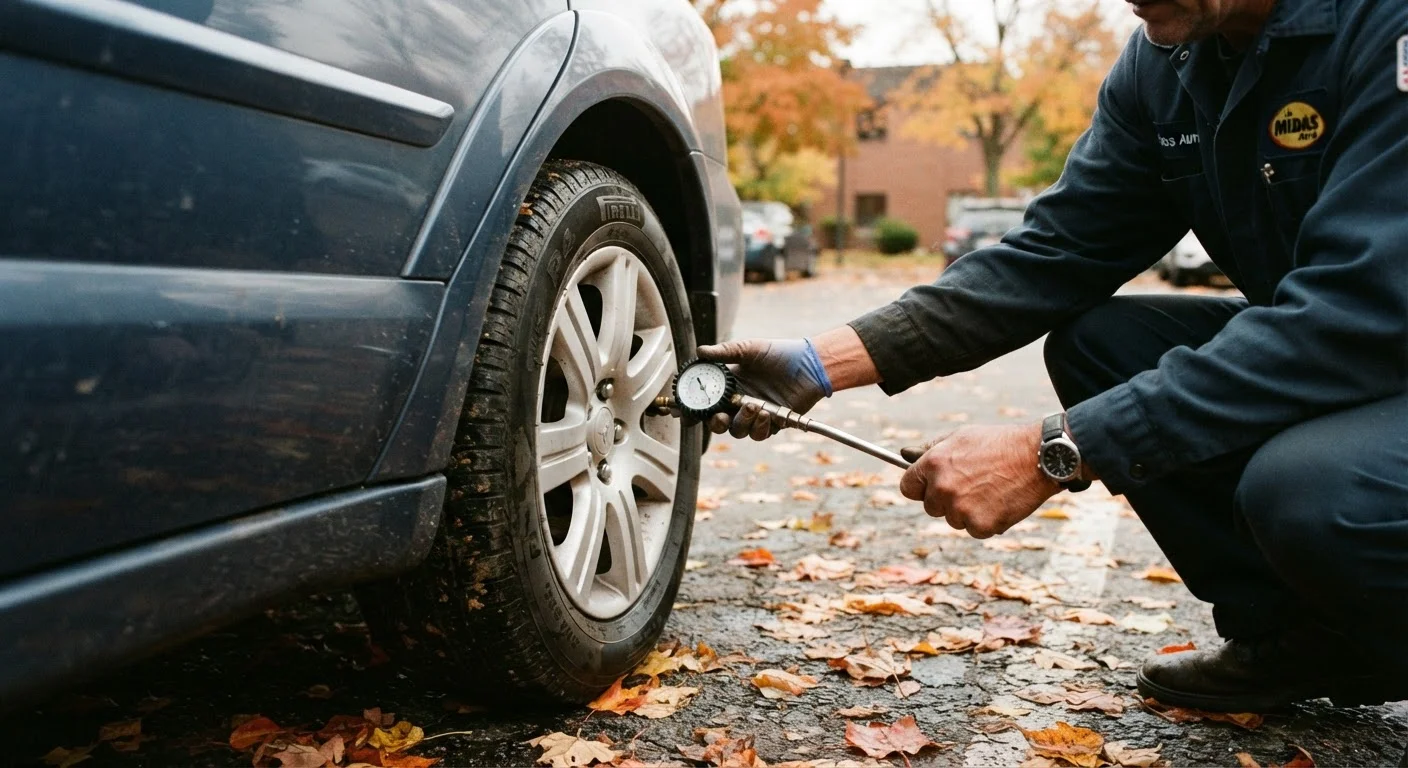
Tire pressure gauge
Check tire inflation accurately - digital or dial gauges are more reliable than the pencil-style ones.
Flashlight or phone torch
Inspect tires, undercarriage, and lighting in low-light conditions.
Battery load tester
Evaluate battery health under real-world draw conditions, not just voltage at rest.
Tread depth gauge
Measure remaining tire tread precisely - a quarter or penny works in a pinch but a gauge gives a more accurate reading.
Maintenance log (notebook or app)
Record completed tasks and dates so you can track intervals without relying on memory.
Fluid test strips
Check coolant condition and brake fluid moisture content without draining the system.
Seasonal Notes and Safety Reminders
A few things to keep in mind as you work through this checklist season by season.
Brake and suspension work: leave it to the pros
Inspecting brake pads visually is something most drivers can do. Replacing brake components, bleeding lines, or diagnosing suspension noise is not. Incorrectly serviced brakes are a serious safety risk. If anything looks worn or feels off - longer stopping distances, pulling to one side, vibration under braking - have a qualified mechanic evaluate it before the next season's demands hit.
Don't skip tire checks before winter
Tires with borderline tread that performed fine in dry summer conditions can become genuinely dangerous on wet or icy roads. Most safety organizations consider 2/32" the legal minimum, but 4/32" or above is a more practical threshold for winter driving. Check tread depth in fall - not after the first snowstorm.
If you drive a high-mileage vehicle - say, north of 100,000 miles - some of these intervals will tighten up. Older rubber, older seals, and older wiring all degrade faster. Our guide to keeping a car running past 150,000 miles covers how to adapt your routine as the odometer climbs.
New or newer drivers should also look at our car maintenance habits guide for new drivers, which builds these seasonal tasks into a broader ownership routine. And when winter weather is approaching, pairing this checklist with an understanding of how wet and icy roads actually affect your vehicle - see how winter roads change vehicle control - gives you a more complete picture.
A warning light is not a checklist substitute
Seasonal checks catch problems before dashboard warning lights appear. By the time a check-engine, oil pressure, or battery light illuminates, the underlying issue has usually been developing for a while. Use this checklist proactively - it's not a replacement for responding promptly to any warning your vehicle is already giving you.
Finally, keep a simple log. Write down the date, what you checked, and what was done. It takes 30 seconds and can save you from repeating work or missing an interval.