What the Title Actually Is
A vehicle title - sometimes called a "pink slip" - is a government-issued certificate that identifies the legal owner of a car. Every vehicle registered in the United States has one, and it travels with the car's history through every sale. The title includes the vehicle's VIN (Vehicle Identification Number), make, model, year, and the owner's name and address. Understanding what's printed on that document matters: learn how to read your car's VIN to verify the vehicle's history before you ever sign anything.
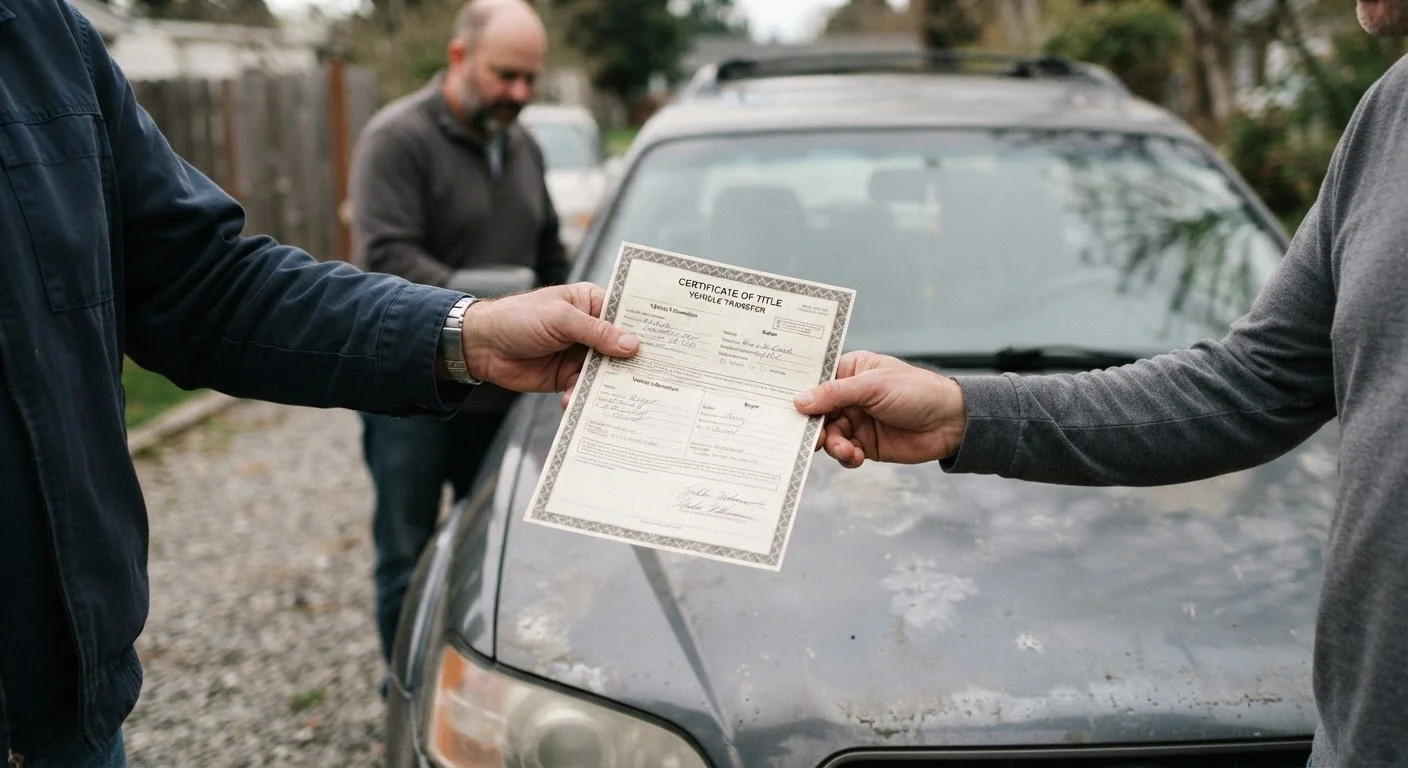
When you buy a car - whether from a dealer or a private seller - the seller signs the back of the title over to you. That signature, combined with your acceptance, is the legal moment ownership changes hands. The DMV filing afterward is simply the state catching up to what already happened on paper.
Liability Follows Ownership Immediately
The biggest thing that changes the instant you sign a title is liability. If the vehicle is involved in an accident, causes property damage, or injures someone, you - as the owner - carry legal exposure. This is true even if someone else is driving with your permission.
That's why insurance needs to be in place before you drive away. In a private sale especially, it's easy to assume there's a grace period. There isn't, legally speaking. Most states require minimum liability coverage as a condition of driving on public roads, and coverage gaps can expose you to serious financial and legal consequences.
Arrange Insurance Before You Sign
Contact your insurer before completing a private sale. Most companies can add a new vehicle to your policy over the phone or online in minutes. Driving even a short distance home without coverage puts you at significant financial and legal risk.
If you're buying privately and won't drive the car immediately - say, you're trailering it home - you still own it the moment you sign. Call your insurer ahead of time to add the vehicle to your policy, even if you're not putting it on the road right away.
Registration Deadlines Are Real Deadlines
Owning a vehicle and being legally permitted to drive it on public roads are two separate things. Registration is the ongoing authorization from your state to operate the vehicle, and it must be renewed on a regular schedule. After a title transfer, most states give you a limited window - often 10 to 30 days - to register the vehicle in your name.
Miss that window and you may face late fees or a lapse that complicates future registration. If you've recently moved, the same clock applies: re-registering after relocating typically must happen within 30 to 90 days depending on your new state.
Temporary Tags Are Not Full Registration
Dealer-issued temporary tags give you a short window to drive legally while registration is processed - typically 30 to 60 days depending on your state. They do not replace full registration, and driving on an expired temp tag can result in a traffic stop and fines. Track the date and follow up with your DMV if the registration hasn't arrived in time.
First-time owners sometimes confuse temporary dealer tags with full registration. A temp tag gives you a short window to drive legally while you complete the paperwork - it is not a substitute for registering the car. Track the expiration date carefully.
Liens, Loans, and What They Mean for You
If a car was previously financed, the lender may still have a lien recorded on the title. A lien is a legal claim that must be satisfied before a clean title can transfer. When buying from a private seller, confirm the lien is paid off and that you receive a lien-free title - or that the payoff is handled as part of the transaction.
If you're financing the purchase, your lender holds the title until the loan is fully repaid. That's standard practice. What matters is understanding that you're still legally responsible for registration, insurance, and any violations that occur while you drive it. Financing a car is very different from leasing one - for a plain-language breakdown of what financing actually involves, see what to understand before signing a car loan.
10-30 days
Typical state window to register after title transfer
Deadlines vary by state; check your state DMV for the exact timeframe to avoid late fees.
1 in 3
Used car buyers who don't verify lien status before purchase
Consumer advocacy research consistently identifies undisclosed liens as one of the most common used-car transaction problems.
Common Title Mistakes That Cause Problems Later
A title with errors - misspelled names, missing signatures, or incorrect odometer readings - can delay your registration or even void the transfer entirely. If you receive a title that looks wrong, don't sign it and don't accept it as-is. Ask the seller to correct it before you hand over payment.
Signed titles left blank in critical fields are also a red flag in private sales. Some sellers pre-sign a title and leave the buyer's name blank - called a "title jump" or "skip title" situation - which is illegal in most states and can leave you without a clean chain of ownership. New owners frequently run into this and other paperwork pitfalls; common first-year ownership mistakes covers what to watch for once the car is yours.
Keep the signed title in a safe place until the DMV has processed your registration. After that, store it securely - a fireproof box or bank safe deposit box is a sound choice. You'll need it again when it's time to sell.