The VIN Isn't Just a Serial Number
Most drivers know their VIN exists. Far fewer know what it actually says. That's a missed opportunity, because the 17 characters stamped on your dashboard aren't random - each one represents a specific piece of information about your vehicle's origins and identity.
Understanding your VIN helps you verify what you're buying, check for open recalls, confirm a car's history matches the seller's story, and navigate ownership records with confidence. If you're buying used, it's especially important - your VIN is the foundation of any vehicle history search. Our guide on reading a used car history report walks through what those reports contain once you have the number in hand.
17
Characters in every standardized VIN
The 17-character VIN format has been required on all US-sold vehicles since 1981, per NHTSA standards.
3
Letters excluded from VIN format
The letters I, O, and Q are intentionally omitted to prevent confusion with the numerals 1 and 0.
Character 10
Encodes the model year
A specific letter or number in position 10 corresponds to a defined model year in the NHTSA coding system.
How the 17 Characters Break Down
The VIN is divided into three logical sections. Here's what each part covers:
Characters 1-3: World Manufacturer Identifier (WMI)
The first character identifies the country where the vehicle was assembled. The second identifies the manufacturer. The third specifies the vehicle type or division within that manufacturer. Together, these three characters tell you where and by whom your car was built - not necessarily where the company is headquartered.
Characters 4-8: Vehicle Descriptor Section (VDS)
These five characters describe the vehicle itself - things like body style, engine type, restraint systems, and model line. The exact meaning of each position varies by manufacturer, but this section is what distinguishes a two-door coupe from a four-door sedan of the same model, or a four-cylinder from a six-cylinder version.
Character 9: The Check Digit
This single character is calculated mathematically from the other 16. Its only job is verification - it lets officials and databases confirm the VIN hasn't been altered or fabricated. A mismatch here is a serious warning sign.
Characters 10-17: Vehicle Identifier Section (VIS)
Character 10 encodes the model year. Character 11 identifies the assembly plant. The final six characters (12-17) are the sequential production number - essentially the order in which your specific vehicle rolled off the line.
Decode Your VIN for Free
The NHTSA operates a free VIN decoder at its official website (nhtsa.gov). You can check any 17-character VIN for open safety recalls at no cost. For a more complete history - including title changes, reported accidents, and odometer readings - paid vehicle history services use the same VIN as their lookup key.
Why Your VIN Matters for Ownership
Your VIN is the thread connecting your car to every official record attached to it. Recall notices from NHTSA are tracked by VIN - if a manufacturer issues a safety recall, your VIN is how you find out if your vehicle is affected. Title and lien records are tied to the VIN, so when ownership transfers, the VIN carries the chain of title with it. Our article on what changes when you sign a car title explains the legal weight behind those records.
Insurance companies, lenders, and state DMVs all use the VIN to uniquely identify your vehicle. If your car is ever stolen, the VIN is what law enforcement uses to track and recover it. It also appears on emissions and inspection records, meaning a VIN mismatch on any paperwork is worth investigating before you proceed with a purchase or registration.
Common VIN Red Flags to Watch For
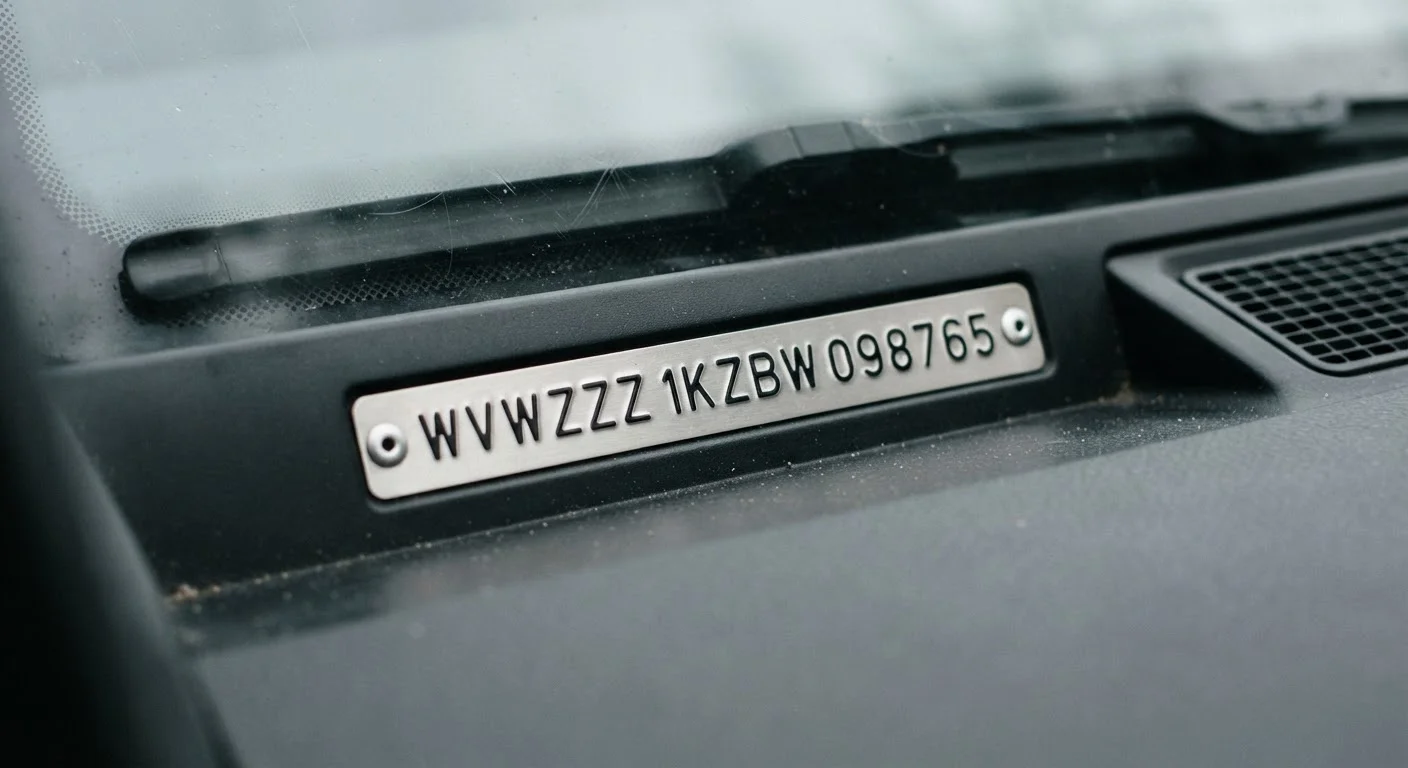
When buying a used vehicle, compare the VIN in multiple places - the dashboard plate, the door jamb sticker, the title, and the history report. They should all match exactly. If they don't, stop and find out why before you commit to anything.
Watch for signs of tampering: a VIN plate that looks like it was removed and reattached, a door jamb sticker that doesn't match the dashboard, or a title with a different number than the car itself. These aren't always innocent errors. Vehicle cloning - where a stolen car is given the VIN of a legitimately registered vehicle - does happen, and a mismatched VIN is often the only visible sign.
Also check character 9. If you want to verify the check digit yourself, the NHTSA has published the calculation method publicly. You don't need to run the math manually - most VIN decoders online handle it - but knowing it exists is a reminder that the system has a built-in fraud check.