How to Read a Warning Light Before You Panic
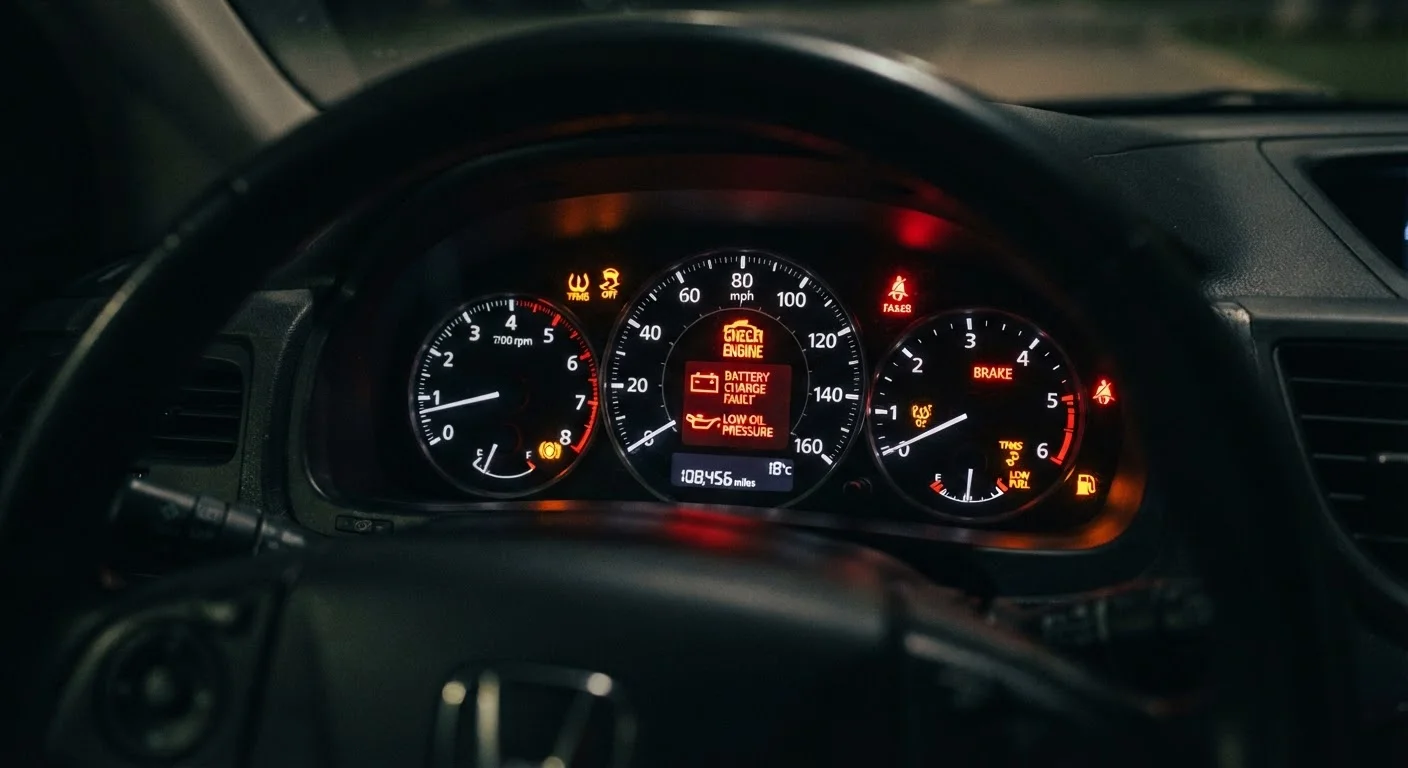
Dashboard warning lights use a color-coded system that's fairly consistent across manufacturers. Red means stop or act immediately - the issue poses a risk to your safety or the vehicle. Amber or yellow means pay attention soon, but you don't necessarily need to pull over right now. Green or blue are informational - they tell you something is on, like your high beams or cruise control.
When a light comes on, note whether it's solid or flashing. A flashing light almost always signals greater urgency than a steady one. Your owner's manual remains the definitive reference for your specific vehicle - look up the symbol there first, since some automakers use slightly different icons or assign different meanings to the same shape.
For deeper context on the check engine light specifically - one of the most misunderstood symbols on any dashboard - see what it's actually telling you.
TPMS
Tire Pressure Monitoring System. A sensor-based system that alerts the driver when one or more tires drop significantly below the recommended inflation pressure.
Oil Pressure
The force at which engine oil is circulated through the engine. Adequate pressure ensures moving parts are lubricated; a drop can cause rapid engine damage.
Alternator
A generator driven by the engine that recharges the battery while the vehicle runs. If it fails, the vehicle runs on battery power alone until it drains.
Stability Control (ESC)
Electronic Stability Control. A safety system that detects and reduces loss of traction by selectively applying brakes to individual wheels.
Coolant
A fluid that circulates through the engine and radiator to regulate operating temperature. Also called antifreeze, it prevents both overheating and freezing.
Common Warning Lights and What They Mean
The lights below appear across most modern vehicles. Urgency ratings are general guidance - always defer to your owner's manual and a qualified mechanic for your specific situation.
| Red warning light | Stop or act immediately |
| Amber/yellow warning light | Schedule service soon |
| Flashing vs. steady light | Flashing = greater urgency |
| Most reliable reference | Your vehicle's owner's manual |
| Tire pressure spec location | Driver's door jamb sticker |
Oil Pressure (Red oil can icon)
Urgency: Pull over safely and shut off the engine. This light means your engine isn't getting adequate oil pressure - running the engine risks severe internal damage within minutes. Check the oil level once the engine is off and cool. If the level is fine and the light stays on at restart, have the vehicle towed for diagnosis. Do not drive it.
Battery / Charging System (Red battery icon)
Urgency: Address soon - within the same day if possible. Your vehicle is drawing on the battery rather than the alternator. Electrical systems may begin failing; the engine could stall. Limit non-essential electronics and get to a shop promptly.
Engine Temperature (Red thermometer in liquid)
Urgency: Pull over safely. Your engine is overheating. Running a hot engine can warp cylinder heads and cause major damage. Turn off the A/C, and if traffic allows, turn the heater on to draw heat away from the engine. Pull over, shut off the engine, and let it cool before checking coolant levels. For more on what coolant does and how to check it, see our fluid reference guide.
Tire Pressure (TPMS - horseshoe with exclamation point)
Urgency: Check tires as soon as safely possible. One or more tires may be significantly under-inflated. Under-inflated tires affect handling and fuel economy and can lead to blowouts. Check pressures at a gas station and inflate to the spec listed on the driver's door jamb - not the number on the tire sidewall.
Traction Control / Stability Control (Car with squiggly lines)
Urgency: Informational if flashing briefly; investigate if stays on. Flashing during acceleration on a slippery surface is normal - the system is working. A steady light that won't clear may mean the system is disabled or has a fault. Don't ignore it in poor weather conditions.
Brake System (Exclamation point in circle, or "BRAKE")
Urgency: Varies. If your parking brake is engaged, releasing it should clear the light. If the light stays on while driving, it may indicate low brake fluid or a fault in the braking system - have it inspected immediately. Brakes are not something to defer.
When to Drive, When to Stop, When to Call a Tow
A useful mental framework: red lights stop you, amber lights schedule you. If any red warning light comes on and you're unsure what it means, err on the side of pulling over safely and consulting your owner's manual or calling for assistance. Driving with an unknown red warning risks a minor problem becoming an expensive or dangerous one.
For amber lights, get the issue diagnosed within a few days - don't let it become a weeks-long delay. Many amber warnings (like a loose gas cap triggering emissions-related codes) turn out to be minor, but some signal developing problems that worsen with time.
If you're evaluating a used vehicle and the seller mentions recent warning lights, that context matters. A used car history report can reveal past repair patterns that help you assess whether those lights were properly addressed.
Some maintenance responses - like topping off fluids or inflating a tire - are straightforward. Others require a lift, specialized tools, or professional diagnosis. Knowing where that line is saves both money and frustration.
Your Owner's Manual Is the Final Word
Dashboard icons are not fully standardized across every make and model. A symbol that means one thing on a domestic sedan may carry a different meaning or urgency level on an import or a hybrid. Always cross-reference any unfamiliar light with the warning light section of your specific owner's manual. Most manuals are also available as free PDF downloads from the manufacturer's website if yours is missing.