What's Actually Happening When the Light Comes On
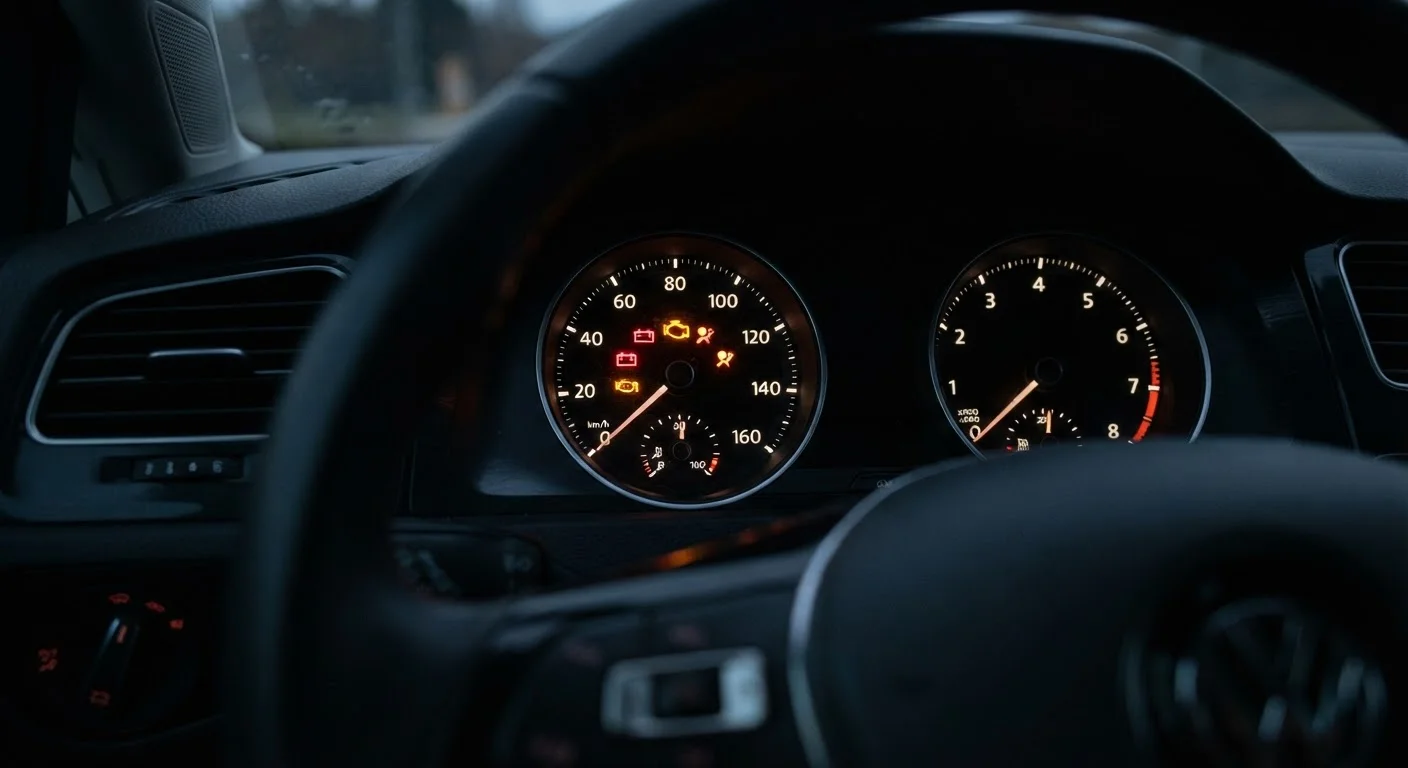
Your car's engine control module (ECM) - essentially its main computer - constantly monitors dozens of sensors. When one reports a reading outside its acceptable range, the ECM stores a diagnostic trouble code and switches on the check engine light. The light itself tells you nothing specific; it just confirms a code is waiting.
That code points to a system or circuit, not necessarily a broken part. For example, an oxygen sensor code might mean the sensor itself has failed, or it might mean a vacuum leak is sending strange readings to a healthy sensor. That's why a code is the starting point for diagnosis, not the final answer.
For a broader look at what other warning lights mean, see our plain-English dashboard warning light guide.
~40%
Share of check engine codes tied to oxygen sensors or EVAP leaks
Industry diagnostic data consistently shows O2 sensors and evaporative emission faults among the most frequently retrieved OBD-II trouble codes in the US.
$0-$150
Typical cost to retrieve a diagnostic trouble code
Many auto parts retailers offer free basic code reads; a full shop diagnostic typically ranges from $75 to $150 depending on location and shop.
7-10 days
Drive cycles needed for readiness monitors to reset after a code clear
Emissions testing authorities note that vehicles often need multiple complete drive cycles before onboard monitors report 'ready' status following a code reset.
Steady Light vs. Flashing Light: Know the Difference
This distinction matters more than most drivers realize. A steady check engine light means the ECM has logged a fault but isn't seeing an active, severe problem right now. Common causes include a faulty oxygen sensor, a failing mass airflow sensor, a worn spark plug, or - very often - a loose or cracked gas cap letting fuel vapors escape the evaporative emissions system.
A flashing check engine light is a different story. It typically indicates an active engine misfire severe enough to send unburned fuel into the exhaust, which can overheat and permanently damage the catalytic converter within minutes of driving. If your light is flashing, reduce speed, avoid hard acceleration, and get the car to a mechanic promptly. Don't just pull over and wait for the flashing to stop and assume you're fine.
Check Your Gas Cap First
Before booking a diagnostic appointment, inspect your gas cap. Remove it, check for cracks in the rubber seal, and reinstall it firmly until you hear it click. Drive normally for a day or two. If the light clears, a faulty cap was likely the culprit. Replacement caps are inexpensive and widely available - no appointment needed.
The Most Common Triggers (And How Serious They Are)
Not every check engine light means expensive repairs. Here's a practical sense of the range:
- Loose or faulty gas cap: Very common, very cheap. Tighten or replace the cap and the light often clears on its own within a day or two of driving.
- Oxygen (O2) sensor failure: Affects fuel efficiency and emissions. Not an emergency, but should be addressed within a few weeks. Left alone, it can damage the catalytic converter.
- Catalytic converter failure: More serious and more expensive. Often a downstream consequence of ignoring earlier warnings.
- Spark plugs or ignition coils: Causes misfires. Can range from a minor annoyance to the flashing-light scenario described above.
- Mass airflow sensor: Affects how the engine calculates fuel delivery. Causes rough running and reduced efficiency.
- Evaporative emission (EVAP) system leak: Usually a small vapor leak. Rarely urgent, but will cause an emissions test failure.
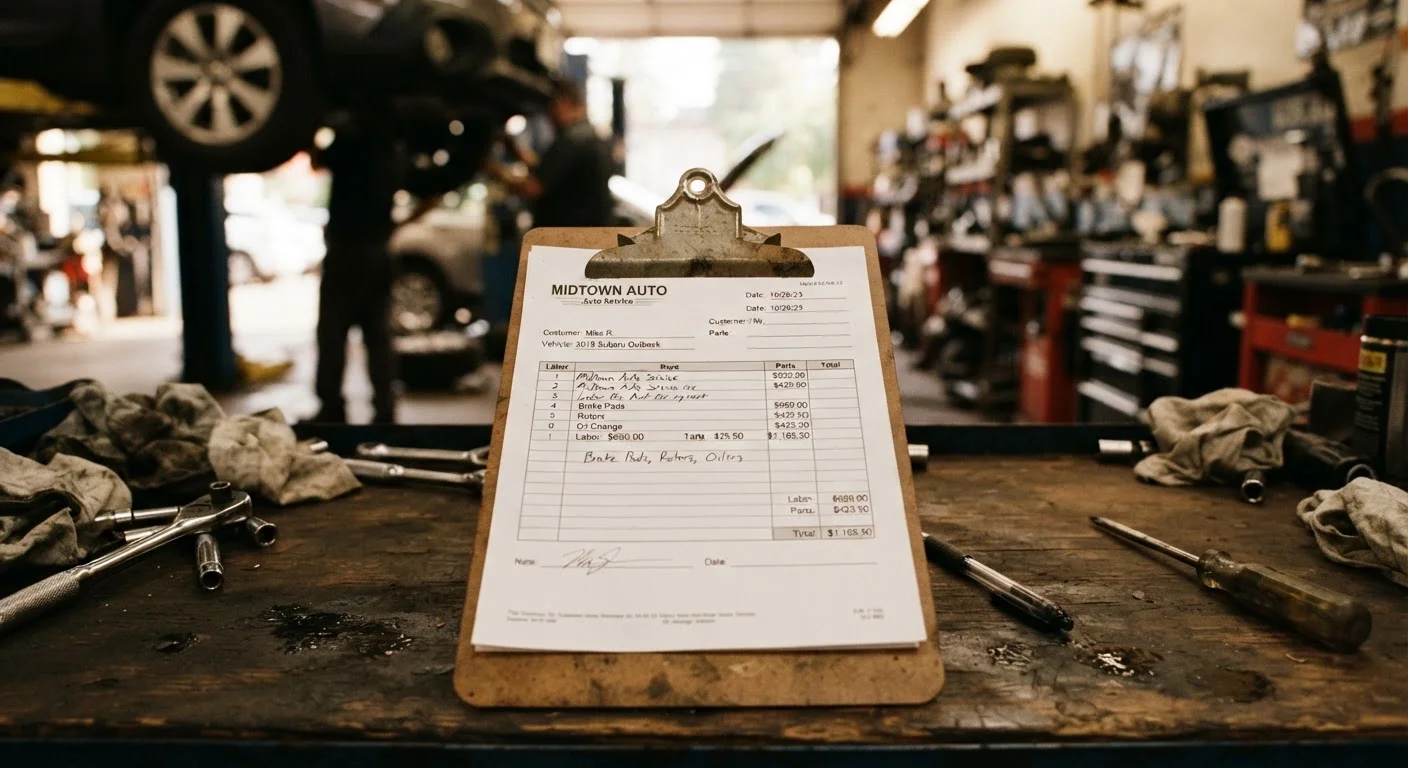
Getting a code read is the only way to know which category you're dealing with. Once you have an estimate, our guide on how to read a mechanic's estimate can help you make sense of what you're being asked to approve.
What to Expect at a Diagnostic Appointment
If you want a free starting point, many auto parts retailers will plug a basic OBD-II scanner into your car's diagnostic port (located under the dashboard, driver's side) and read the code at no charge. This gives you the code number and a general description - useful context before you speak with a mechanic.
A shop diagnostic goes deeper. A technician will retrieve the stored codes, review freeze-frame data (the sensor readings captured at the moment the fault triggered), and often perform additional tests - checking live sensor data, inspecting wiring, or running a smoke test on the EVAP system. This is how they move from "the code says oxygen sensor" to "the oxygen sensor is actually fine but there's a small vacuum hose leak."
Come prepared with basic information: when the light appeared, whether it's steady or flashing, any changes in how the car drives (rough idle, reduced power, unusual smells), and your recent maintenance history. That context helps a technician prioritize where to look.
This article provides general educational information about vehicle warning systems and is not a substitute for professional mechanical diagnosis. If you're uncertain about your vehicle's condition or safety, consult a qualified mechanic.