The Defiance Myth and What's Really Happening
When a dog ignores a "sit" or blows past a "come" recall, the instinctive interpretation is stubbornness or dominance. This framing is not supported by modern animal behavior science. Dogs are not strategically defying their owners - they are responding to their environment, their internal state, and the training history they've experienced. Understanding this distinction is foundational to fixing the problem. Training research has debunked many common behavior myths, and the defiance narrative is among the most persistent.
A dog that ignores commands is almost always communicating one of a few things: the cue hasn't been taught to a level that holds under current conditions, the environment is too stimulating for the dog to engage, the dog is stressed or unwell, or training patterns have inadvertently taught the dog that cues don't reliably predict anything meaningful. Each of these has a specific, addressable cause.
Punishment Undermines the Training Relationship
Applying corrections - verbal or physical - when a dog fails to respond to a cue typically increases stress and suppresses behavior rather than improving compliance. Research in applied animal behavior consistently shows that positive reinforcement builds more durable, reliable responses. If your dog is struggling, the answer is almost never to increase pressure.
Common Mistakes That Cause Training Breakdowns
Most cases of a dog "not listening" trace back to identifiable errors in how cues are delivered, how reinforcement is managed, or how session difficulty is calibrated. The mistakes below reflect patterns consistently observed in behavioral consultations - and each one is correctable once identified.
Repeating the same cue multiple times when the dog doesn't respond immediately.
Why it happens: Owners interpret silence as not hearing, so they say "sit, sit, SIT" assuming volume or repetition will break through. In practice, this teaches the dog that the first cue carries no real meaning.
Training in environments far beyond the dog's current distraction threshold.
Why it happens: Owners assume a behavior learned at home is learned everywhere. Dogs generalize slowly - a solid "stay" in a quiet living room is a beginner-level behavior in a park full of squirrels.
Using an inconsistent reinforcement schedule without intention or timing.
Why it happens: Treats get forgotten, praise feels awkward, or owners assume the dog "knows" the behavior well enough not to need rewards anymore. Dropping reinforcement prematurely weakens the behavior.
Pushing through training sessions when the dog is already showing stress signals.
Why it happens: Owners conflate low engagement with laziness and push harder. In reality, yawning, lip-licking, looking away, and turning the body sideways are recognized stress indicators that signal the dog is over threshold.
Asking for behaviors the dog hasn't actually learned to the required level of fluency.
Why it happens: Owners often move to harder contexts too quickly, interpreting a few correct repetitions in low-distraction settings as mastery. The dog isn't ignoring the command - it genuinely hasn't learned it well enough yet for this context.
Sudden Disengagement May Signal a Health Issue
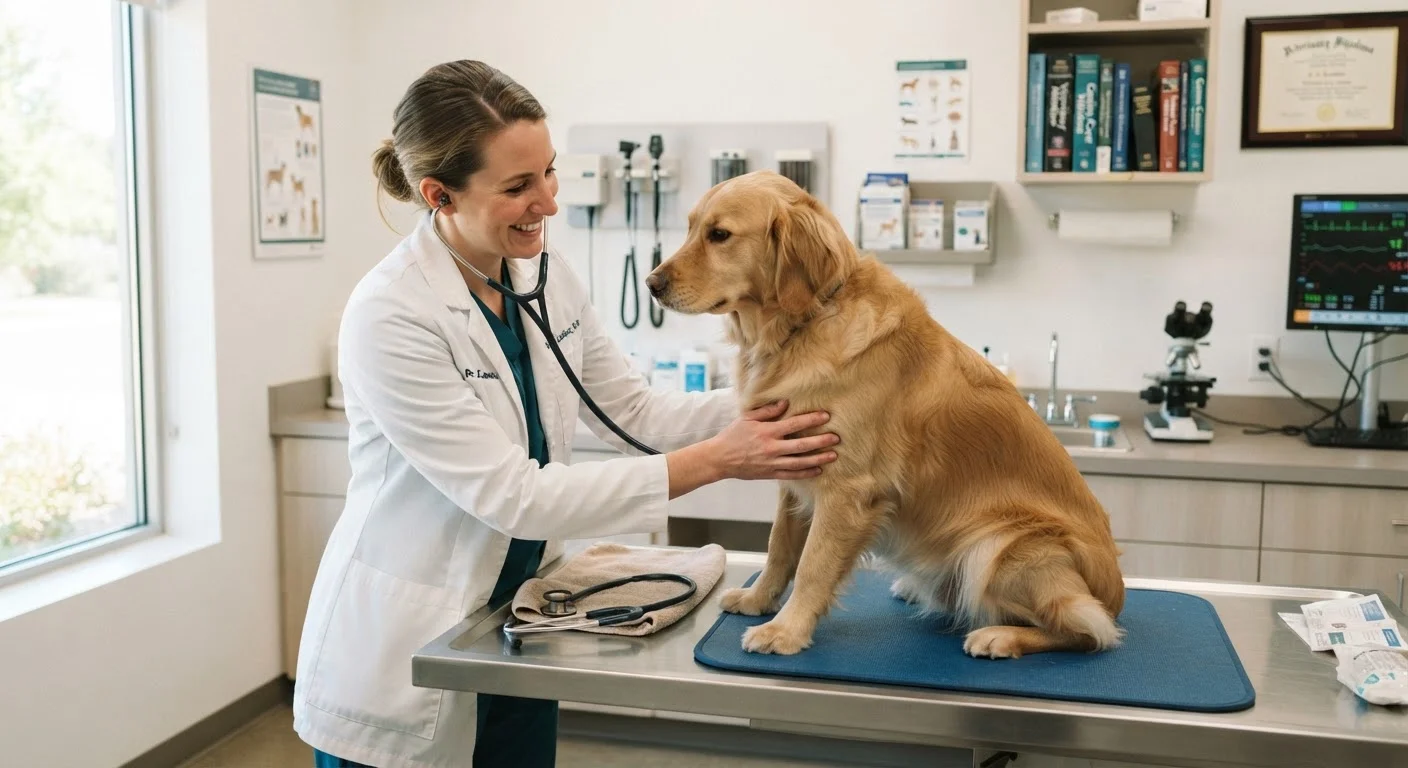
If a dog that reliably responded to cues suddenly begins ignoring them, pain or illness may be the underlying cause. Conditions affecting hearing, vision, joints, or neurological function can all reduce responsiveness. Before attributing the change to a training problem, schedule a veterinary evaluation to rule out a medical cause.
How to Rebuild Reliable Responses
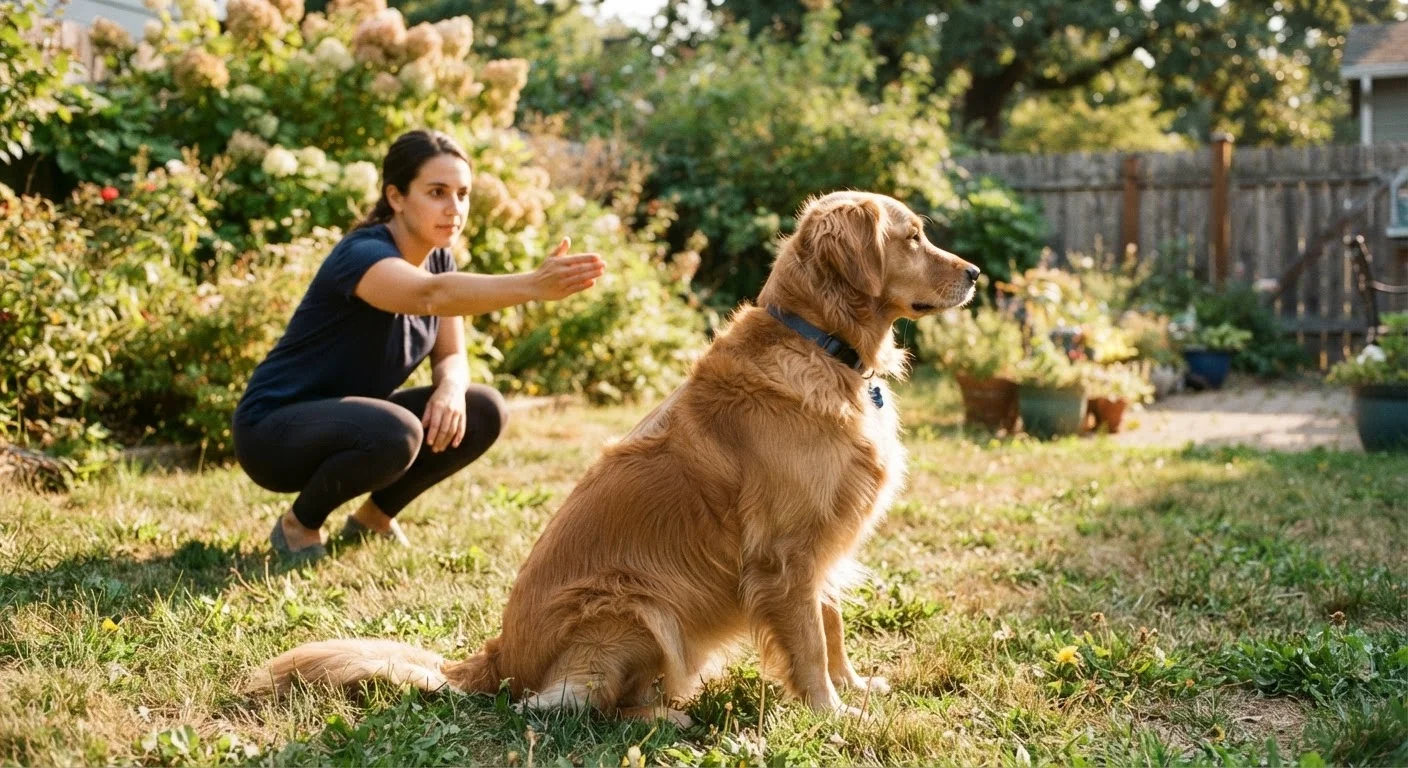
Once you've identified which pattern is contributing to disengagement, rebuilding reliability follows a predictable path. Return to the environment where the behavior was most recently solid. Keep sessions short - typically under five minutes for active training - and end on a successful repetition rather than a frustrating one. Dogs learn through repetition and consequence, not through duration or pressure.
Pay attention to your own consistency. Cues should sound and look the same every time, since dogs respond to the specific signal they were trained on. A verbal "down" and a hand signal for "down" are two separate cues unless explicitly trained together. Small variations in delivery can cause apparent lapses in compliance that are actually just cue-recognition failures.
If the behavior has degraded significantly, consider briefly returning to the luring or shaping phase used when the behavior was first introduced. This isn't regression - it's efficient maintenance. A few high-rate-of-reinforcement sessions in a low-distraction environment can restore fluency surprisingly quickly. For a structured framework on how to organize this process day to day, see our guide on building a training routine your pet will actually respond to.
~70%
Dog owners who cite "not listening" as their top training challenge
Survey data from the American Pet Products Association consistently identifies compliance and attention as the most common frustrations reported by dog owners during training.
3-5 sec
Effective timing window for reinforcement after a behavior
Applied behavior analysis research indicates that reinforcement delivered within a few seconds of a behavior is most effective at strengthening the association between cue, behavior, and consequence.
This article is for general informational and educational purposes. For dogs displaying sudden behavioral changes or signs of distress, consult a licensed veterinarian or a certified applied animal behaviorist for individualized guidance.