
Why a Budget Starts With Your Income, Not Your Expenses
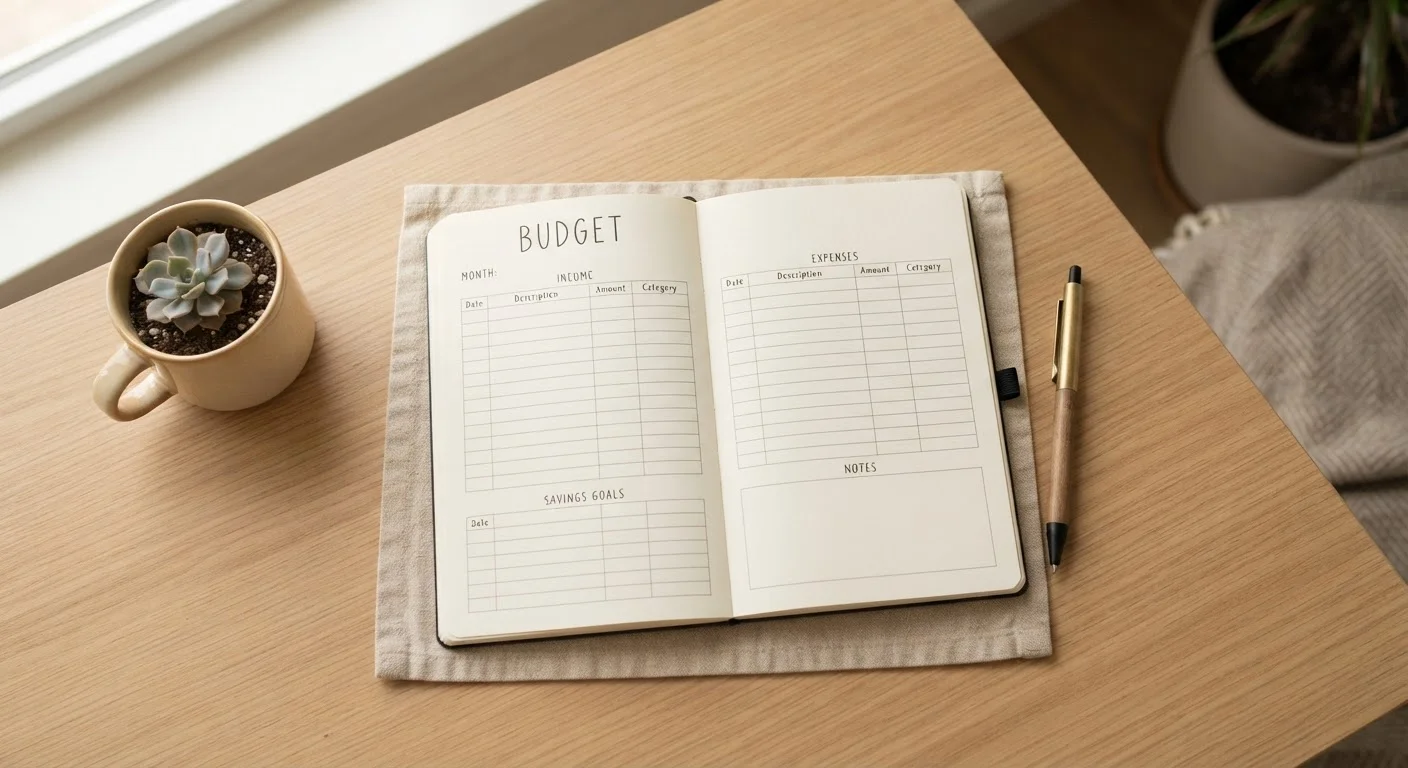
Most people begin budgeting by listing what they spend. That's the wrong starting point. A budget only becomes useful when you anchor it to what actually comes in - your net income, meaning what lands in your account after taxes and deductions.
Collect your take-home pay from all sources: salary, hourly wages, freelance work, side income, government benefits. If you're paid bi-weekly, multiply one paycheck by 26, then divide by 12 to get a monthly figure. The goal is a reliable monthly number you can plan around.
Net income
The amount of money you actually receive after taxes and other deductions are taken out - what hits your bank account, not your gross salary.
Fixed expense
A recurring cost that stays the same amount each month, such as rent, a car payment, or a set insurance premium.
Variable expense
A cost that changes from month to month depending on your choices or circumstances, like grocery spending, gas, or dining out.
Budget gap
The difference between your monthly income and your monthly expenses. A positive gap means money left over; a negative gap means you're spending more than you earn.
Zero-based budgeting
A method where every dollar of income is assigned a specific purpose - savings, bills, spending - so your income minus all assignments equals zero.
Pay-yourself-first
A budgeting approach where you move money into savings immediately when income arrives, then live on what remains.
This single step - knowing your real income - is what makes everything else in a budget honest. If you skip it, you're guessing. For a broader picture of personal budgeting concepts, see this complete budgeting reference.
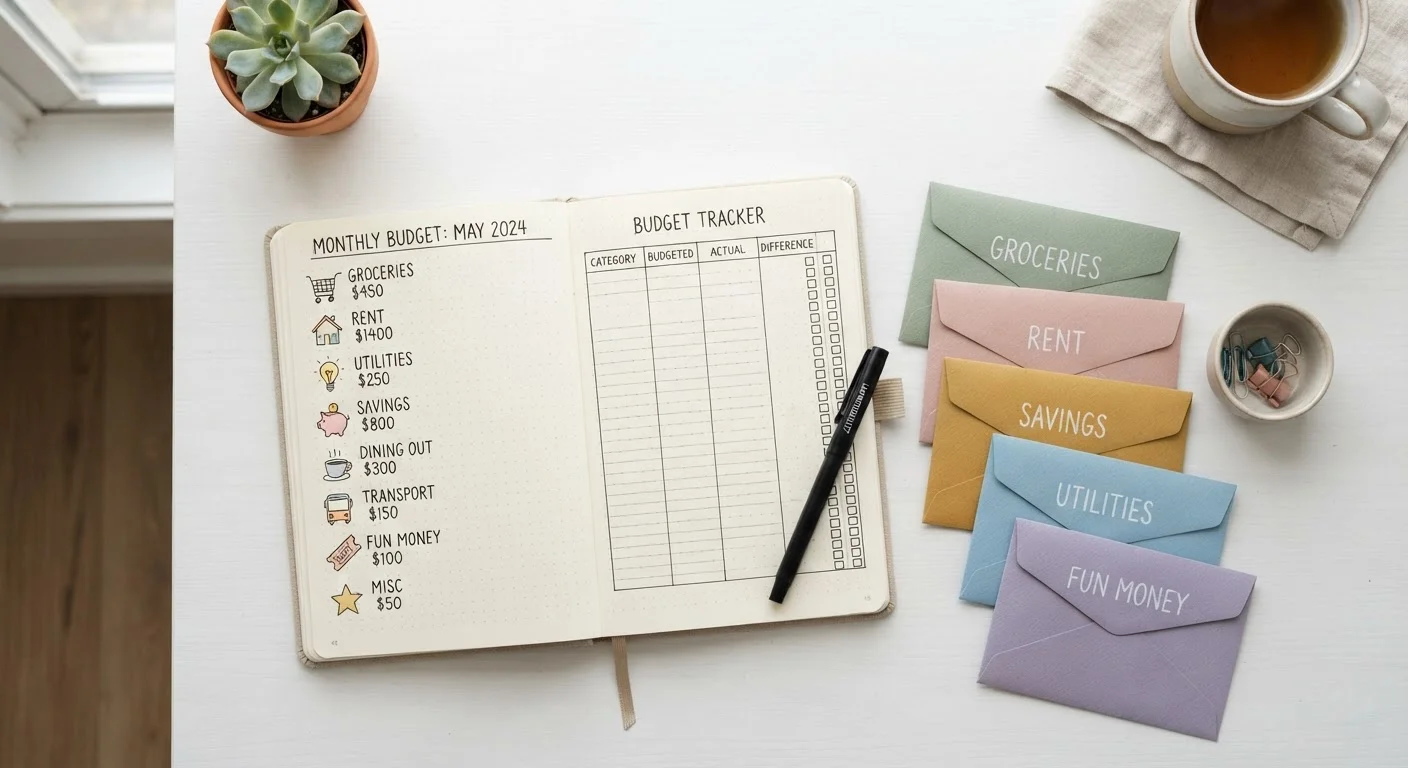
Mapping Your Fixed and Variable Expenses
Once you have your income figure, list every regular expense. Divide them into two groups:
- Fixed expenses - amounts that don't change month to month: rent or mortgage, loan payments, insurance premiums, subscriptions with set fees.
- Variable expenses - amounts that fluctuate: groceries, gas, dining out, clothing, entertainment.
Pull three months of bank and credit card statements to spot expenses you'd otherwise forget - annual fees, quarterly bills, irregular subscriptions. These irregular costs are where first-time budgeters most often underestimate their spending.
Don't try to cut anything yet. This stage is purely observational. A thorough expense audit can also be done systematically - the monthly budget setup checklist walks through that process category by category.
Check Three Months, Not One
A single month of statements can be misleading - you might hit an unusually low or high spending period. Averaging across three months gives you a much more reliable baseline before you set any spending targets.
Finding Your Starting Number: Income Minus Expenses
Subtract your total monthly expenses from your monthly net income. The result - positive or negative - is your budget gap. It tells you one of three things:
- Positive gap: You have money left over to direct toward savings, debt repayment, or other goals.
- Zero gap: Every dollar is spoken for - you're breaking even but have no buffer.
- Negative gap: You're spending more than you earn, which means something has to change.
A negative number isn't a judgment - it's information. It shows exactly where attention is needed. Many first-time budgeters discover that one or two categories (often food or subscriptions) are quietly absorbing far more than expected.
This is also the moment to be honest about irregular expenses. If you didn't account for them in step two, revisit before drawing conclusions.
Choosing a Method That Fits Your Life
Once you know your numbers, pick a framework to organize future spending. Several approaches are widely used, each with different assumptions about how closely you want to track. The overview of major budgeting methods lays out the key differences clearly.
A few common starting points:
- Percentage-based (e.g., 50/30/20): Divides income into broad buckets - roughly half for needs, a portion for wants, and a portion for savings. See the 50/30/20 breakdown for detail on when this works and when it doesn't.
- Zero-based budgeting: Every dollar of income is assigned a job until the balance reaches zero. More detailed, but very precise. Compare approaches in zero-based vs. percentage-based budgeting.
- Pay-yourself-first: Savings come out immediately after income arrives; what remains is available for expenses. Simple and effective for people who struggle to save consistently.
For a first budget, simpler is usually more durable. You can always refine as your habits develop.
No Method Works If You Don't Review It
The best budgeting method is the one you'll actually use consistently. Switching methods frequently - before giving any one approach a fair trial - is one of the most common reasons first budgets fail. Give a chosen method at least two full months before evaluating whether it fits.
Making It Stick: Simple Habits Over Perfect Systems
A budget only works if you look at it. Build a brief monthly review into your routine - 20 to 30 minutes is enough. Compare what you planned to what you actually spent, adjust categories that consistently run over, and reset for the coming month.
If you feel like budgeting isn't working, it's worth examining your assumptions about what a budget is supposed to do. Common budgeting myths addresses several reasons people give up before results appear.
A few habits that help beginners stay consistent:
- Review spending weekly, even briefly, so nothing surprises you at month-end.
- Give yourself a small, defined amount for discretionary spending so the budget doesn't feel like pure restriction.
- Treat the first two months as a calibration period - the goal is accuracy, not perfection.
Budgeting is also closely linked to your savings and credit health over time. The self-audit checklist for savings and credit is a useful companion once your budget is running.
This article is for general informational purposes only and does not constitute personalized financial advice. Consider speaking with a qualified financial professional about decisions specific to your situation.