How Each Method Actually Works
At their core, both approaches share the same goal - making sure your money goes where you intend it to go. The difference is in how much structure they impose and how much upfront work they require.
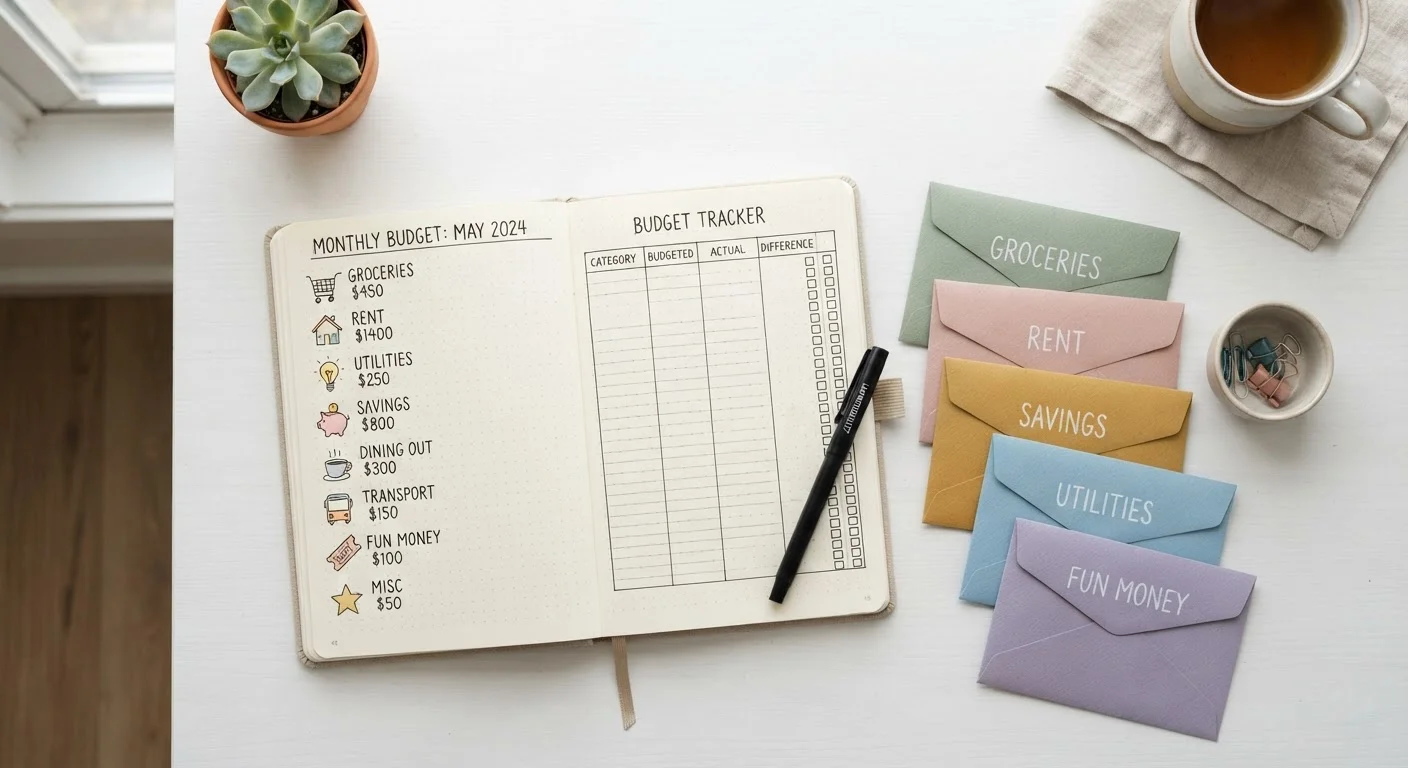
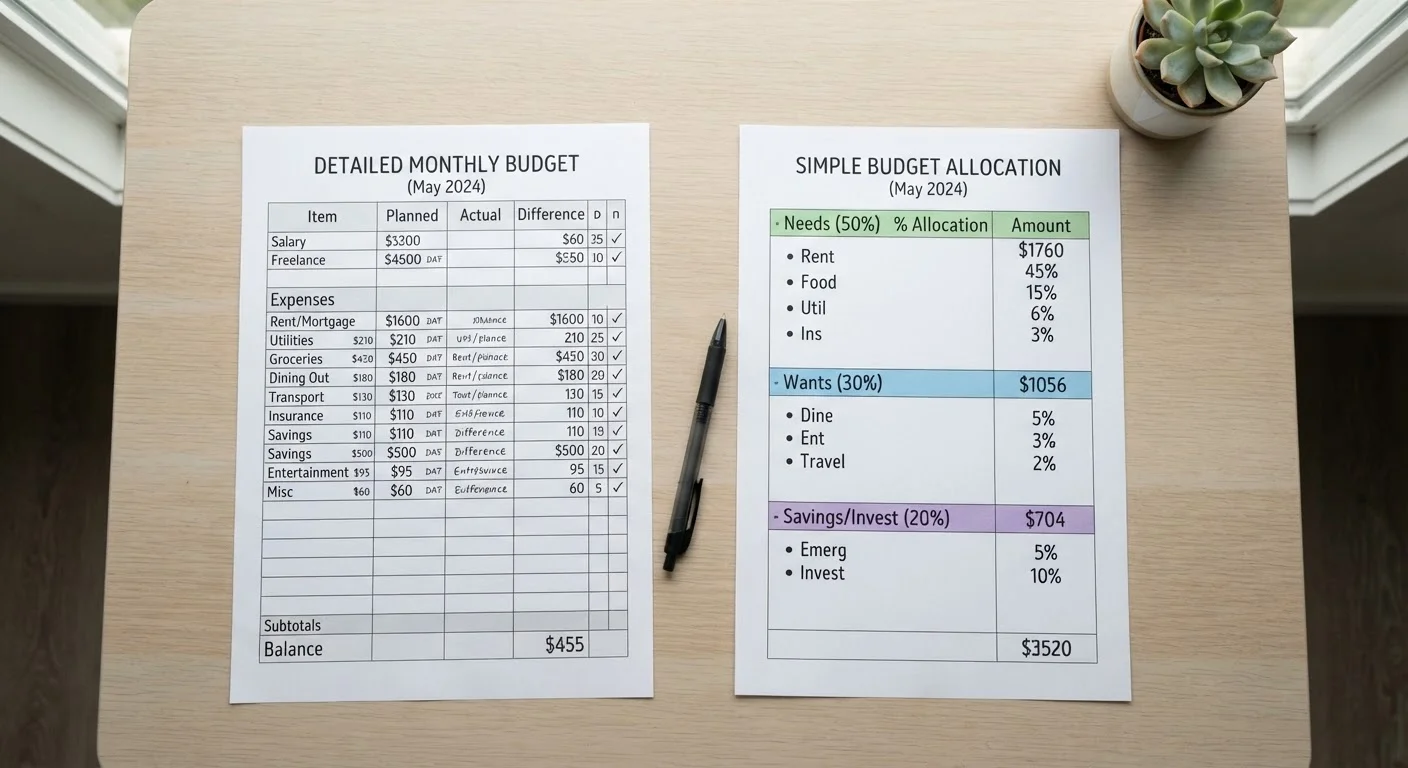
Zero-based budgeting (ZBB) starts with your take-home income and subtracts planned expenses until the balance reaches zero. Every dollar is assigned: rent, groceries, car payment, retirement contribution, fun money, emergency savings - all of it. Nothing is left unallocated. If you earn $3,800 this month, your plan should account for all $3,800. This doesn't mean you spend it all; savings and debt repayment are valid assignments too.
Percentage-based budgeting works differently. You divide income into broad buckets based on predefined ratios. The most widely referenced framework is the 50/30/20 rule - roughly 50% toward needs, 30% toward wants, and 20% toward savings and debt repayment. Rather than itemizing each expense, you monitor whether your overall spending stays within each category's share of income.
For a deeper look at how these and other frameworks compare, see budgeting approaches worth knowing before you pick one.
| Criterion | Zero-Based Budgeting | Percentage-Based Budgeting |
|---|---|---|
| Core principle | Every dollar assigned a specific purpose | Income split into broad percentage categories |
| Monthly setup time | Higher - rebuilt each month | Lower - ratios stay consistent |
| Spending visibility | Very granular, line-by-line | Category-level overview |
| Handles variable income | Well - based on actual earnings | Less naturally - assumes steady income |
| Best for behavior change | Strong - forces deliberate allocation | Moderate - less scrutiny per dollar |
| Ease of starting out | Steeper learning curve | Simpler and faster to set up |
| Flexibility mid-month | Requires reallocating between categories | More fluid within each bucket |
The Real Trade-Off: Control vs. Simplicity
Zero-based budgeting's biggest strength is visibility. Because you justify every dollar before spending it, you're less likely to let subscription fees or impulse purchases slide by unnoticed. That granularity is also its main drawback - rebuilding a detailed plan each month takes real effort, especially if your expenses shift frequently.
Understanding the difference between fixed and variable expenses matters here: fixed costs are easy to slot into either system, but variable costs (dining out, entertainment, clothing) are where the two methods diverge most visibly. ZBB asks you to set a specific dollar cap for each variable category; percentage budgeting asks only that the total stays within your designated slice.
Percentage-based budgeting, on the other hand, demands much less weekly maintenance. Once you've established your category percentages, you mainly track whether total spending in each bucket is staying in range. This makes it sustainable for people who find highly detailed tracking discouraging. The downside: it can mask overspending within a category. If your "needs" bucket is 50% of income but half of that goes to one fixed bill, you may not notice smaller problem areas until they've compounded.
No Method Works If You Don't Track
Both zero-based and percentage-based budgets depend on one non-negotiable habit: regularly checking actual spending against your plan. A budget that sits in a spreadsheet untouched is just a wish list. Whether you use an app, a notebook, or a simple bank statement review, consistent tracking is what turns either method into a useful tool.
This article is for general informational purposes only and does not constitute personalised financial advice. For guidance specific to your financial situation, consider consulting a qualified financial professional.
Which One Should You Use?
Neither method is objectively superior - fit matters more than framework. A few questions can help point you in the right direction.
- How much time will you invest? ZBB works best for people who will actually sit down monthly, list income, and allocate every dollar. If that feels unsustainable, percentage budgeting is far more likely to stick.
- How stable is your income? Variable earners often find ZBB more practical because it adjusts to actual take-home pay each month rather than assuming a steady baseline.
- Are you trying to change behavior or maintain it? If you're actively trying to eliminate overspending or pay down debt faster, the precision of ZBB tends to produce more noticeable results. If your finances are basically on track and you want to preserve good habits, the lighter touch of percentage budgeting may be enough.
If you're just getting started, the step-by-step guide to building your first budget can help you apply either method without feeling overwhelmed. And if past budgets haven't lasted, it's worth reviewing why most budgets fall apart within 60 days - the issue is rarely the method itself.