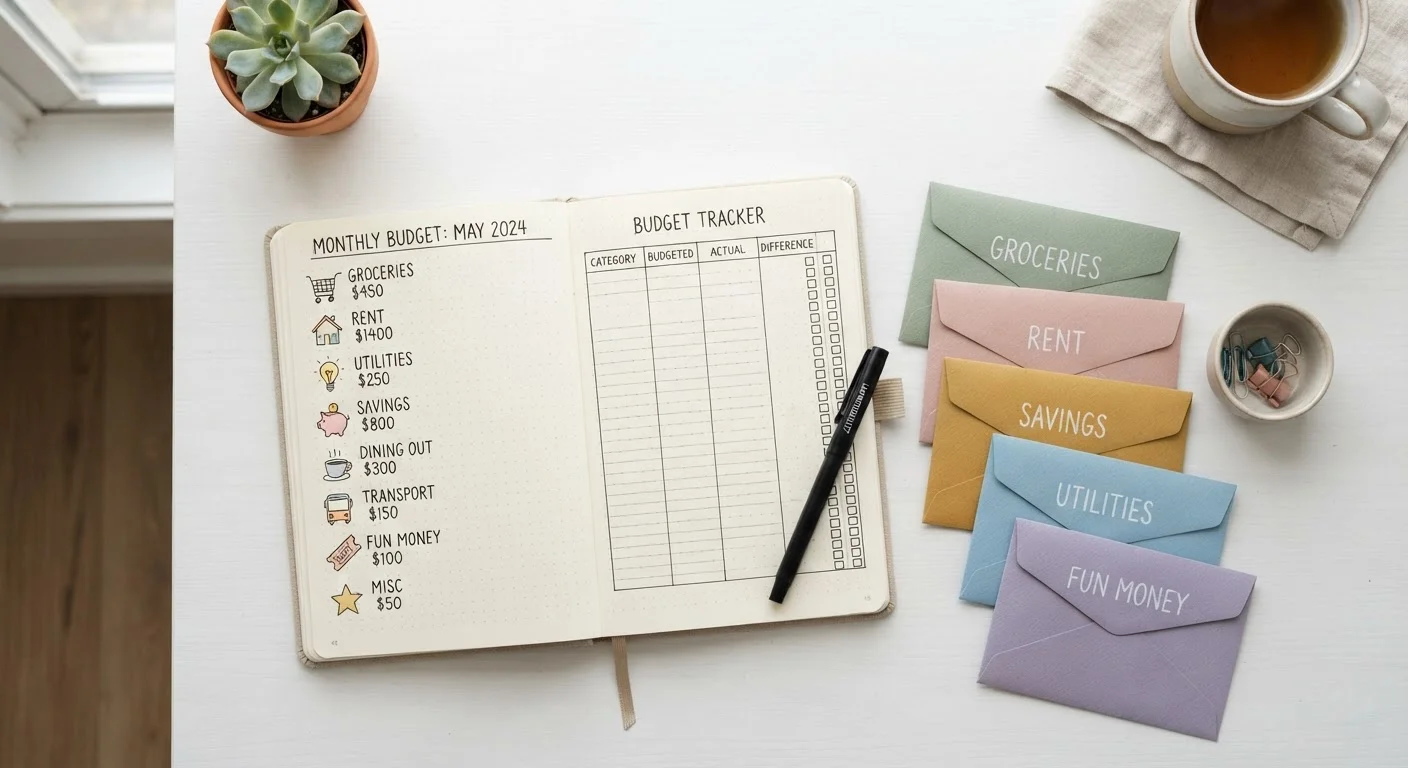
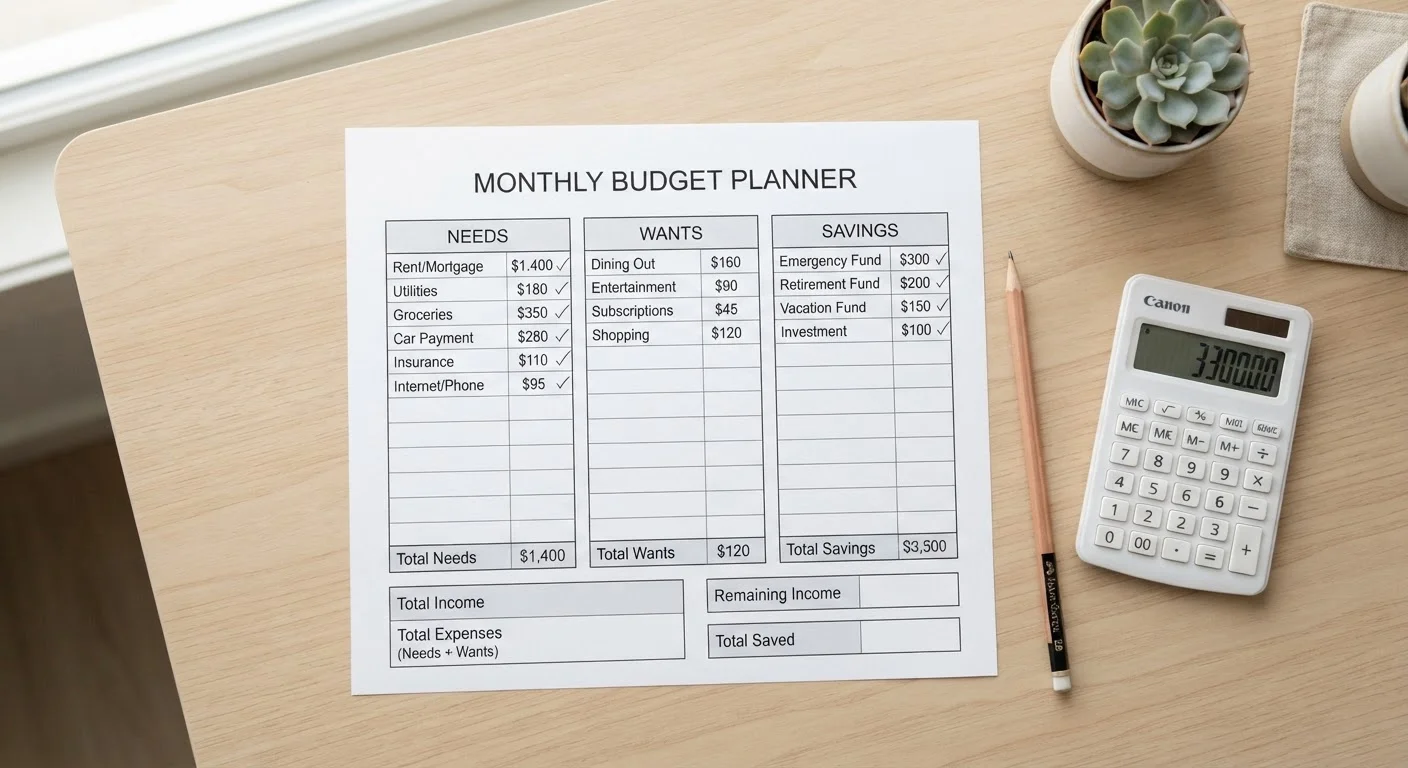
Breaking Down the Three Buckets
The rule starts with one number: your monthly after-tax income. Everything flows from there. Here's what each percentage is meant to cover.
50% - Needs
Needs are non-negotiable expenses. These include rent or mortgage payments, utilities, groceries, health insurance premiums, minimum debt payments, and basic transportation (car payment, insurance, or transit passes). The test is simple: if skipping it would cause serious harm or legal consequence, it's a need.
30% - Wants
Wants are lifestyle expenses that you choose but don't strictly require. Dining out, streaming subscriptions, gym memberships, travel, and clothing beyond the basics all fall here. This isn't a guilt category - it's a deliberate allocation that acknowledges enjoyment as part of a sustainable financial life.
20% - Savings and Debt Repayment
This bucket funds your future. It covers emergency fund contributions, retirement savings (including 401(k) or IRA deposits), and extra payments on debt above the required minimum. The order in which you prioritize within this 20% - emergency fund vs. retirement vs. high-interest debt - matters, but that's a separate question from the rule itself.
For a deeper look at pulling these numbers together from scratch, see Building Your First Budget From a Blank Page.
~35%
Median US renter cost burden
According to Harvard's Joint Center for Housing Studies, roughly half of US renters spend more than 30% of income on housing - many exceed 35% - straining the 50% needs ceiling.
20%
Recommended savings and debt repayment allocation
The Consumer Financial Protection Bureau (CFPB) cites the 50/30/20 framework as a common starting point for household budgeting education.
$1,400
Median monthly savings shortfall
A Bankrate survey found that a significant share of Americans save less than the recommended 20% of income, with many citing fixed expenses as the primary barrier.
How to Apply It to Your Own Income
Start with your actual take-home pay - not your salary. If you're paid biweekly, multiply one paycheck by 26 and divide by 12 to get a monthly figure. Then calculate each threshold:
- Needs ceiling: Monthly take-home × 0.50
- Wants ceiling: Monthly take-home × 0.30
- Savings/debt target: Monthly take-home × 0.20
Next, list your current monthly expenses and sort them into the three categories. Where do you land? Most people find at least one bucket is over and one is under. The value of the exercise is in seeing the gaps clearly, not in achieving perfect splits immediately.
Start With One Month of Real Data
Before adjusting any percentages, track your actual spending for a full calendar month using bank and credit card statements. Many people discover their wants spending is significantly higher than estimated - or that a 'need' they assumed is fixed (like a phone plan) has cheaper alternatives. Real data beats estimates every time.
If you haven't yet done a full accounting of what you spend each month, a room-by-room financial audit can surface expenses you've forgotten or overlooked.
Where the Rule Falls Short
The 50/30/20 rule is useful precisely because it's simple - but simplicity has a cost. Here are real limitations worth knowing before you rely on it.
Housing Costs Have Outpaced the Formula
In many US metros, rent alone can consume 35-45% of take-home pay for median earners. That leaves almost nothing for other needs before the bucket is full. The rule was designed in an era when housing costs were a smaller share of household budgets for most Americans.
It's Percentage-Based, Not Dollar-Based
Someone earning $3,000 a month and someone earning $10,000 a month both apply the same percentages - but their lived realities are very different. Fixed costs like utilities don't scale with income, so lower earners may find the 50% needs cap genuinely unworkable without lifestyle changes that take time.
It Doesn't Prioritize Within Buckets
Knowing that 20% goes to savings tells you nothing about whether to build an emergency fund first, pay down high-interest credit card debt, or maximize a 401(k) match. Those decisions require additional thinking. The rule is a skeleton, not a full plan.
For a broader view of budgeting frameworks - including zero-based budgeting and the pay-yourself-first approach - see Budgeting Approaches Worth Knowing Before You Pick One.
Adjusting the Percentages to Fit Your Life
The 50/30/20 split is a starting point, not a mandate. Personal finance professionals generally agree that the right budget is one you can actually sustain - and that may mean different numbers for different people.
Common adjustments include:
- High-debt households: Shift to 50/20/30, temporarily directing more than 20% to debt repayment until balances are reduced.
- Aggressive savers: A 50/20/30 split in the other direction - 30% to savings - is appropriate if you have low fixed costs and ambitious retirement goals.
- Low-income earners: Needs may realistically take 60-65%. Shrinking wants rather than savings is generally the better trade-off, even if it means a tight discretionary budget short-term.
If your situation involves housing decisions that complicate the needs bucket, Renting vs. Buying: How to Think Through the Decision lays out the financial trade-offs clearly.
The 50/30/20 rule is part of a broader framework for saving and building credit - it's most effective when paired with consistent habits and periodic reviews. As your income grows or your expenses shift, revisit the percentages. A budget that fit you at 28 may need real revision at 35.
This article is for general informational purposes only and does not constitute personalized financial advice. Consult a qualified financial professional before making decisions specific to your circumstances.