
Why These Myths Stick
Budgeting has a reputation problem. For many people, the word calls up images of spreadsheets, deprivation, and constant second-guessing at the grocery checkout. Those associations aren't accidental - they reflect deeply held beliefs about what budgeting requires and who it's actually for.
The problem is that most of those beliefs are wrong, and they're costing people real progress. When a misconception feels credible enough, it functions as a reason not to start. Understanding what's actually true - and what isn't - is often the first practical step toward building a workable financial plan.
If you've ever wanted to understand what budgeting actually is before trying it, this overview of what a budget really means is a useful starting point.
Myth
Budgeting is only useful once you have enough money to manage.
Fact
Budgeting is most useful precisely when money is tight - it helps you direct limited dollars intentionally rather than watching them disappear.
The idea that budgets are a tool for people who already have their finances figured out gets it backwards. A budget is a plan for whatever income you actually have. Someone earning $2,000 a month benefits from a spending plan just as much - arguably more - than someone earning $10,000, because the margin for unplanned spending is smaller and the cost of financial surprises is higher.
Low income does create real constraints that no budget can dissolve, but knowing exactly where money is going still has value. It can surface small leaks, clarify trade-offs, and reduce the anxiety of not knowing whether the bills will clear.
Myth
A budget means you can't spend money on things you enjoy.
Fact
A budget doesn't eliminate discretionary spending - it gives that spending a defined, intentional place in your plan.
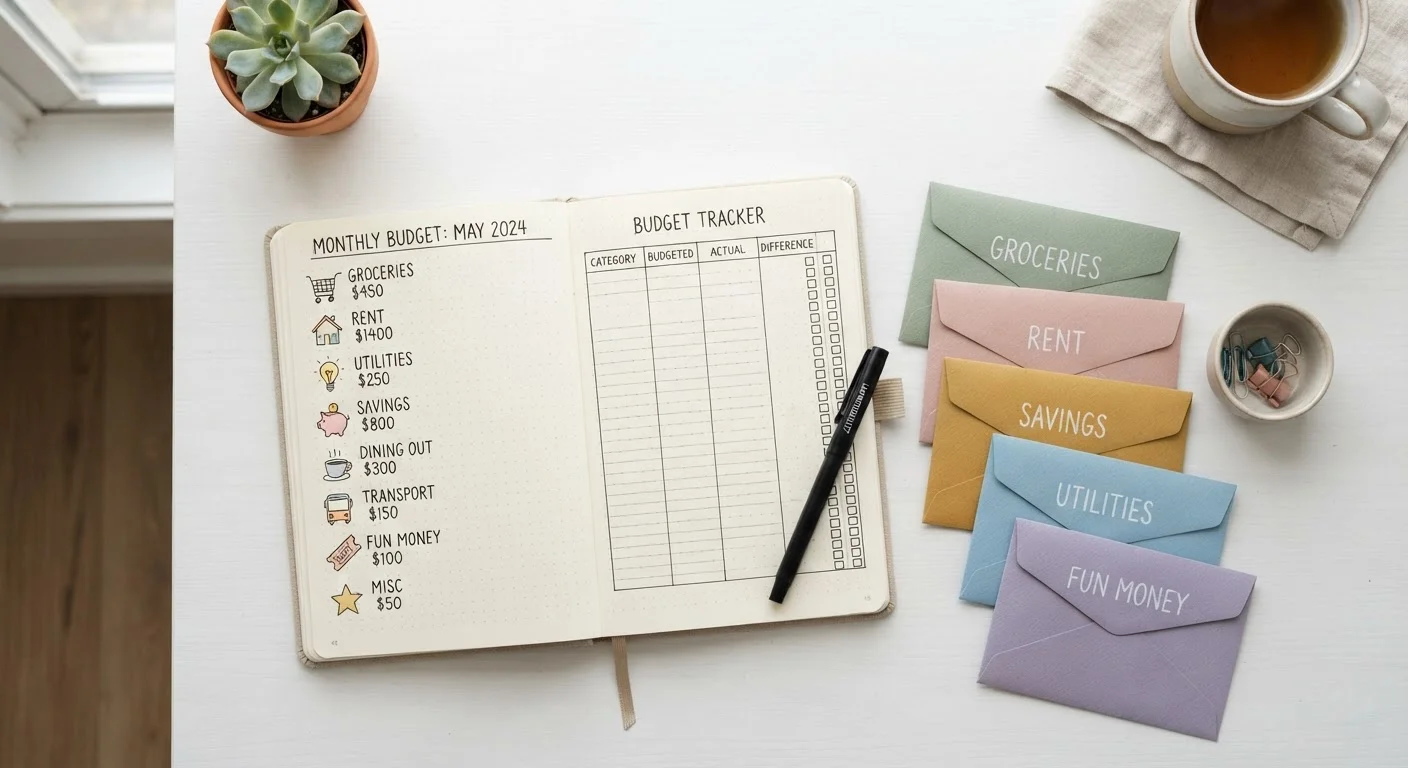
This is probably the most common reason people avoid budgeting altogether. The word conjures restriction, sacrifice, and a life stripped of small pleasures. But a budget is simply an allocation plan. You decide in advance where your money goes - and that can absolutely include dining out, entertainment, travel, or whatever matters to you.
The difference between budgeted fun spending and untracked fun spending is that the former is deliberate and sustainable. When discretionary spending has a category with a defined limit, you can enjoy it without guilt or the lingering concern that you've overstepped.
Myth
Irregular income makes budgeting impossible.
Fact
Variable income requires a different budgeting approach, not the absence of one.
Freelancers, gig workers, and anyone with fluctuating paychecks often assume that standard budgeting advice doesn't apply to them. It's true that a fixed monthly budget built on a salary assumption won't translate directly. But the core principle - planning what to do with money before it arrives - is actually more valuable when income is unpredictable, not less.
Common adaptations include budgeting from a baseline (your typical low-income month), building a buffer account to smooth out the highs and lows, and prioritizing essential expenses first. Zero-based budgeting can also work well for variable earners because it's rebuilt fresh each month based on actual income received.
Myth
If you've failed at budgeting before, you're just not a 'budget person.'
Fact
Most budgets fail because of design problems, not personality flaws.
The concept of being a 'budget person' - or not - frames financial behavior as a fixed trait rather than a learnable skill. That framing is both inaccurate and discouraging. Budgets frequently fail because they're built with unrealistic numbers, no flexibility for irregular expenses, or more detail than anyone can sustain. Those are structural problems with the budget itself.
A budget that collapsed after two months wasn't necessarily proof that you can't budget. It may have been proof that that particular system didn't fit your life. Habits that support long-term financial plans tend to look less like willpower and more like systems designed to reduce friction.
Myth
You need to track every single dollar for a budget to work.
Fact
Useful budgets can operate at varying levels of detail - granular tracking is one option, not a requirement.
Some budgeting methods do involve detailed expense tracking, and for some people that level of visibility is motivating and useful. But it isn't a prerequisite. Percentage-based frameworks like the 50/30/20 rule operate at a high level - needs, wants, savings - without requiring you to log every coffee purchase.
Tracking every dollar has real trade-offs: it takes consistent effort and can become unsustainable. The right level of detail is the one you'll actually maintain, not the most rigorous one theoretically possible.
What These Myths Have in Common
Notice that each myth above places the obstacle outside the budget itself - in your income, your personality, your circumstances, or your past behavior. That framing is worth examining, because it shifts responsibility away from the tool and onto the person considering it.
Budgets fail for structural and behavioral reasons, not because certain people are simply not cut out for them. Research into why budgets fail consistently points to design problems - budgets that are too rigid, too detailed, or built on inaccurate spending data - not to personal inadequacy.
~1 in 3
US adults without any budget
Surveys consistently find that a significant share of American adults do not use a formal budget, with behavioral barriers and perceived complexity cited among the top reasons.
60 days
Typical window when new budgets collapse
Financial behavior research suggests most budget attempts that fail do so within the first two months, often due to overly rigid structures rather than lack of intent.
If you're ready to move past the myths and try an actual approach, building your first budget from a blank page walks through the process without jargon or pressure. And if you're weighing which method to use, an overview of major budgeting approaches can help you find one that fits your actual life.
Starting Imperfect Still Beats Not Starting
A rough budget based on estimated spending is more useful than waiting until you have perfect data or the ideal system. The goal in the first month isn't accuracy - it's familiarity. You'll adjust as you learn more about your actual patterns, and that iteration is part of how budgeting becomes sustainable.
This article is for general informational purposes only and does not constitute personalized financial advice. For guidance specific to your situation, consider speaking with a qualified financial professional.