What a Speed Limit Actually Tells You
Speed limits are established through traffic engineering studies that evaluate road geometry, land use, typical traffic volumes, and - critically - favorable driving conditions. The number on that sign reflects a legal ceiling, not a one-size-fits-all recommendation for every moment of every day.
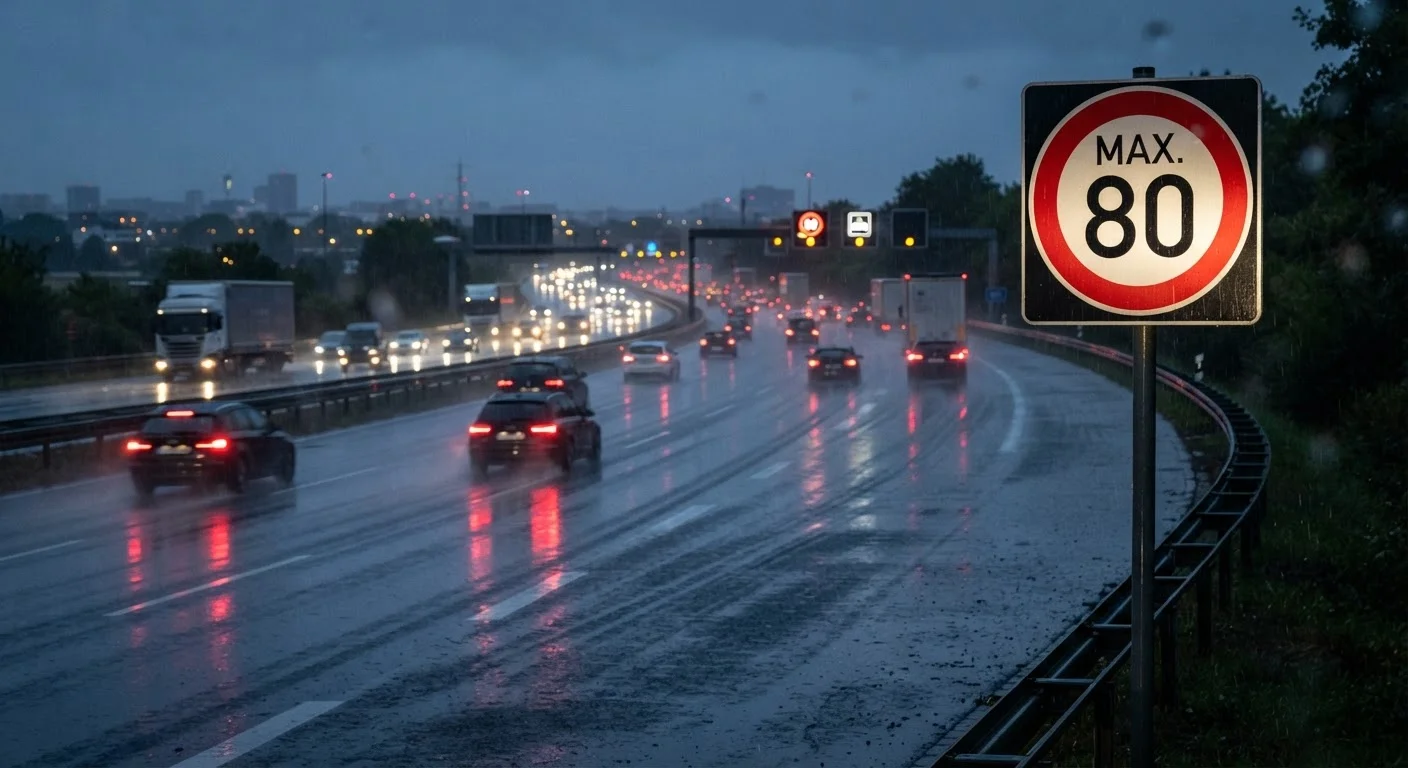
When engineers post 55 mph on a rural two-lane highway, they're generally assuming dry pavement, good daylight visibility, and alert, competent drivers. Change any of those variables - add a downpour, a patch of black ice, or a dense fog bank - and that same 55 mph becomes a genuinely dangerous choice, even though it's technically legal.
Understanding this distinction is foundational to safe driving. As our piece on defensive driving explains, anticipating hazards - not just reacting to them - is what separates careful drivers from risky ones.
| Criterion | Posted Speed Limit | Safe Speed |
|---|---|---|
| Set by | Traffic engineers and lawmakers | Driver judgment in the moment |
| Assumes | Ideal road and weather conditions | Actual present conditions |
| Legal status | Enforceable maximum | Not a fixed number; varies by situation |
| Changes with weather | No - fixed on the sign | Yes - must be actively adjusted |
| Accounts for visibility | Only under baseline conditions | Yes - core factor in the decision |
| Can you be cited for it | Yes - for exceeding it | Yes - for being unsafe even below the limit |
When the Posted Limit Is Too Fast
Several common scenarios call for speeds meaningfully lower than what's posted:
- Wet or icy roads: Stopping distances can double or more on wet pavement and increase dramatically on ice. The posted limit doesn't account for this.
- Reduced visibility: Fog, heavy rain, and blinding sun all shrink the distance over which you can perceive and react to hazards. Your speed should match how far ahead you can actually see.
- Curves and grades: Speed limits on straight sections may not apply to sharp bends. Many curves have their own advisory speed signs - and those advisories are worth taking seriously.
- Construction zones: Workers on or near the roadway, lane shifts, and uneven pavement all demand extra caution beyond what reduced posted limits alone convey.
- Heavy pedestrian activity: Near schools, parks, or busy crosswalks, the risk profile changes significantly. Common driving myths include the belief that legally traveling at the limit means you're automatically driving safely - that's not always true.
~33%
Speeding-related crash fatalities
The National Highway Traffic Safety Administration (NHTSA) has consistently found that roughly one in three traffic fatalities in the US involves speeding as a contributing factor.
2x+
Stopping distance increase on wet roads
Traffic safety research generally indicates that wet pavement can more than double the distance required to bring a vehicle to a full stop compared to dry conditions.
It's also worth knowing that most states have what's called a "basic speed law" - a provision that allows officers to cite drivers for operating at an unsafe speed even when they're traveling at or below the posted limit. The legal standard is whether your speed was reasonable and prudent for the conditions present.
When Driving Too Slowly Creates Its Own Risk
Safe speed isn't simply "slower is always safer." On a busy freeway, traveling significantly below the flow of traffic creates a different hazard. Other drivers may need to brake suddenly or change lanes unexpectedly to avoid you, raising the risk of rear-end and sideswipe collisions.
Most states have minimum speed laws or provisions against impeding traffic without cause. The goal is to stay reasonably close to the speed of surrounding traffic while still adjusting for conditions - not to crawl along at any pace that feels cautious. Following distance matters enormously here: maintaining a buffer from the car ahead gives you time to adjust your speed smoothly rather than braking abruptly.
The practical takeaway is that safe speed is a judgment, not a fixed number. It requires you to read the road, read the weather, and read the traffic around you - and then choose accordingly. That's a skill, not a reflex, and it improves with deliberate attention.