Why Phones Are a Uniquely Bad Distraction
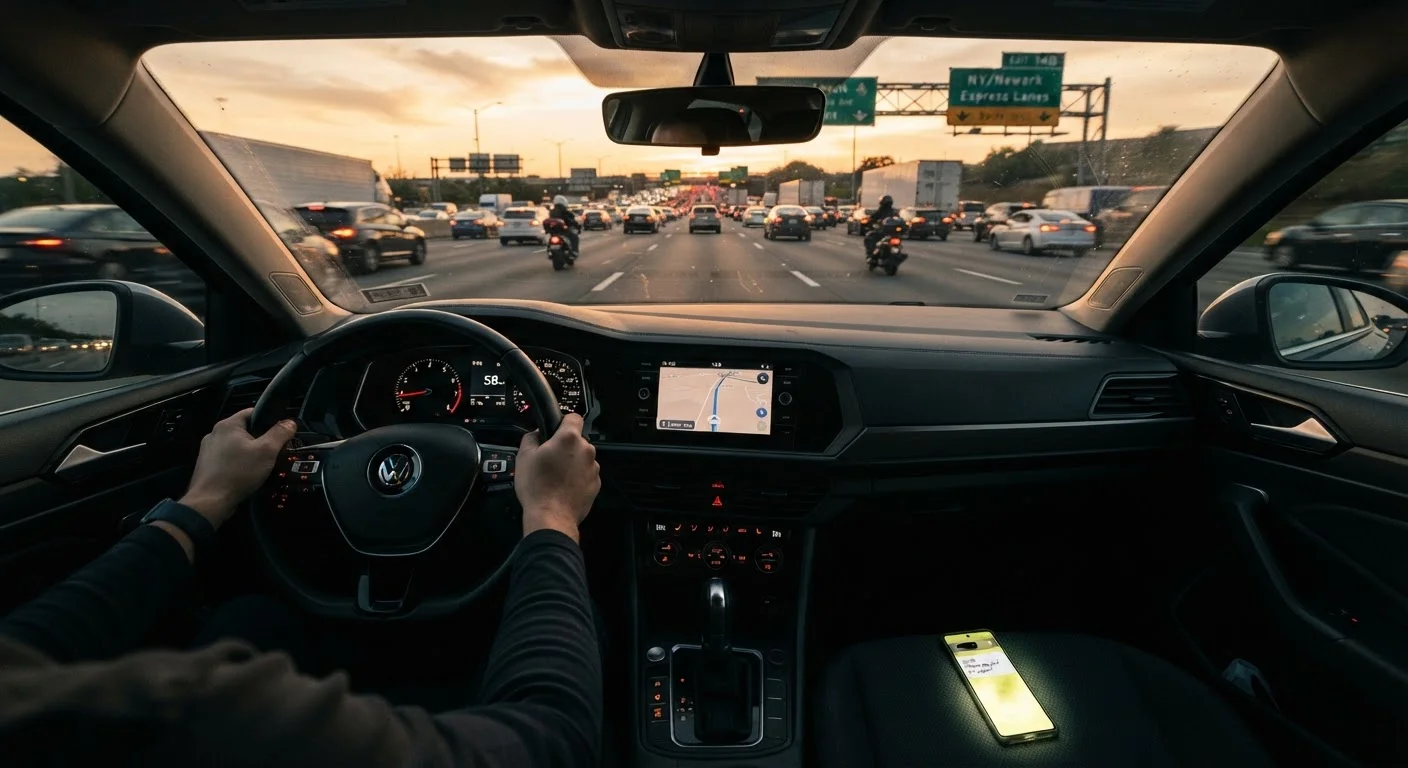
Drivers have always faced distractions - radio dials, passengers, a cup of coffee. But smartphones are different in a way that matters on the road: they are designed to demand attention. Every notification, buzz, and chime is engineered to feel urgent. That's not an accident; it's the product of deliberate design. For a driver, the result is a device that competes with the road for mental bandwidth at exactly the moment the road needs all of it.
The pull is also social. A ringing phone creates the feeling that someone is waiting. Ignoring it takes conscious effort - effort most people haven't trained themselves to apply behind the wheel. That combination of psychological urgency and habitual use makes the phone a harder distraction to resist than almost anything else in the car.
~3,300
Distraction-related traffic deaths per year (US)
According to NHTSA data on distracted driving fatalities in recent reporting years.
5 seconds
Minimum eyes-off-road time to send a text
NHTSA estimates this equals traveling the length of a football field at 55 mph without looking.
4x
Increased crash risk while using a handheld phone
Frequently cited figure in traffic safety literature, including studies referenced by the Insurance Institute for Highway Safety.
The Three Types of Distraction - and Why Phones Hit All of Them
Traffic safety researchers generally organize driver distraction into three categories:
- Visual distraction - taking your eyes off the road.
- Manual distraction - taking your hands off the wheel.
- Cognitive distraction - taking your mind off the task of driving.
Most in-car distractions hit one or two of these. Typing a text message hits all three at once. Even reading a notification - just reading - pulls your eyes away and splits your attention between the screen and the road. That overlap is what makes phone use so much more dangerous than adjusting the climate control or changing a radio station.
If you want to understand the broader picture of how attention and hazard awareness interact, our article on defensive driving principles covers how skilled drivers actively scan for threats - a skill phone distraction directly undermines.
What the Research Actually Says
The National Highway Traffic Safety Administration (NHTSA) consistently identifies distracted driving as a significant contributor to traffic fatalities. Data from NHTSA indicates that thousands of people die in distraction-related crashes in the US each year, and phones are a prominent factor in those incidents.
A frequently cited illustration: at 55 mph, five seconds of eyes-off-road travel is roughly the distance of a football field covered without looking. That's enough time for a vehicle ahead to brake hard, a pedestrian to step off a curb, or a merge to go badly wrong. Speaking of merges - if you want to see how quickly things can escalate when attention lapses at highway speed, merging safely onto a highway is worth reading alongside this guide.
Hands-Free Isn't as Safe as Most Drivers Assume
A widespread belief - and one that has shaped both behavior and legislation - is that switching to a hands-free call solves the phone problem. It solves part of it. Using a mount or Bluetooth removes the manual component: you keep both hands on the wheel. But the cognitive distraction remains. Your brain is still processing a conversation, still generating language, still managing a social interaction. That load competes with the mental work of reading traffic, judging speed, and anticipating what other drivers are about to do.
Research from multiple academic institutions has found that drivers on hands-free calls still show slower reaction times and reduced hazard detection compared to drivers not on any call. Talking to a passenger tends to be less cognitively demanding because passengers naturally pause when traffic gets complex - phone callers don't have that context and keep talking.
Treat your pre-drive phone setup the way pilots treat a pre-flight checklist - do it before the wheels move, not after. Navigation, music, and Do Not Disturb should all be configured while you're still parked.
Establishing a consistent routine before driving removes in-motion temptation and reduces the number of decisions a driver faces once traffic demands full attention.
If you're expecting an important call, let passengers handle the phone. A co-pilot who can read messages aloud or manage navigation keeps the driver's eyes and mind on the road.
Passengers have situational awareness that remote callers lack - they can pause or redirect communication when road conditions get demanding.
This doesn't mean hands-free has no value - it does reduce manual risk. But treating it as a complete safety solution is one of the driving myths that can put people at risk.
Practical Habits That Actually Work
Knowing the risks is step one. Changing the habit is step two, and that's where most drivers stall. Here are approaches that have a genuine track record:
- Use Do Not Disturb while driving. Both iOS and Android have built-in modes that silence notifications and auto-reply to messages while the car is moving. Setting this up once - and leaving it on - removes the need for willpower every trip.
- Put the phone out of reach before you start the car. Glove compartment, back seat, bag - anywhere that requires a deliberate action to retrieve it. Out of sight genuinely helps.
- Set a pre-drive routine. Navigation set up before moving, music queued, mirrors adjusted. Handling all of it before you shift into drive means less temptation to fuss with the phone while moving.
- Pull over to handle anything urgent. If something genuinely can't wait, find a safe place to stop. A parked car is the right place to take an important call.
Distraction is also closely related to other impairment factors. Driver fatigue compounds phone distraction - a tired driver is slower to catch the moment their attention drifted, making recovery even harder.
Laws, Penalties, and Enforcement
Every US state has some form of distracted driving law on the books, though the specifics vary widely. Many states ban handheld phone use for all drivers while moving. Some restrict only texting. Some apply stricter rules to new or teen drivers. Penalties range from modest fines to license points, elevated insurance rates, and in serious cases, criminal charges when distraction contributes to a crash.
Enforcement has increased as the issue has gained public attention, and many states have moved toward stricter handheld bans in recent years. Checking your own state's current statute is worthwhile - the rules may be stricter than you remember. Regardless of what's technically permitted where you drive, the research on cognitive load makes a strong case for going beyond the legal minimum.
For newer drivers especially, understanding these rules is foundational. Our guide covering what new drivers should know before hitting the road addresses distraction alongside the broader set of habits and rules that new license holders need to internalize.
This article is for general informational purposes only and does not constitute legal advice. Traffic laws vary by state and change over time; always verify current regulations in your jurisdiction.