What Blind Spots Actually Are
A blind spot is any area around your vehicle that your mirrors - and your direct line of sight from the driver's seat - cannot cover. These aren't just inconvenient gaps. They're zones where a motorcycle, cyclist, pedestrian, or entire car can disappear from view while sitting right next to you.
Blind spot
An area around a vehicle that cannot be seen directly by the driver using mirrors or normal sightlines. Blind spots vary in size depending on vehicle type and mirror adjustment.
A-pillar, B-pillar, C-pillar
The structural columns that support a vehicle's roof. The A-pillar flanks the windshield; the B-pillar sits between front and rear doors; the C-pillar frames the rear window. Thick pillars can expand blind spot zones.
Convex mirror
A curved mirror that provides a wider field of view than a flat mirror. The passenger-side mirror on most US vehicles is convex, which is why objects in it appear smaller and farther than they actually are.
Shoulder check
The act of physically turning your head to look over your shoulder before changing lanes or merging. It covers the diagonal rear-corner blind spots that mirrors cannot reach.
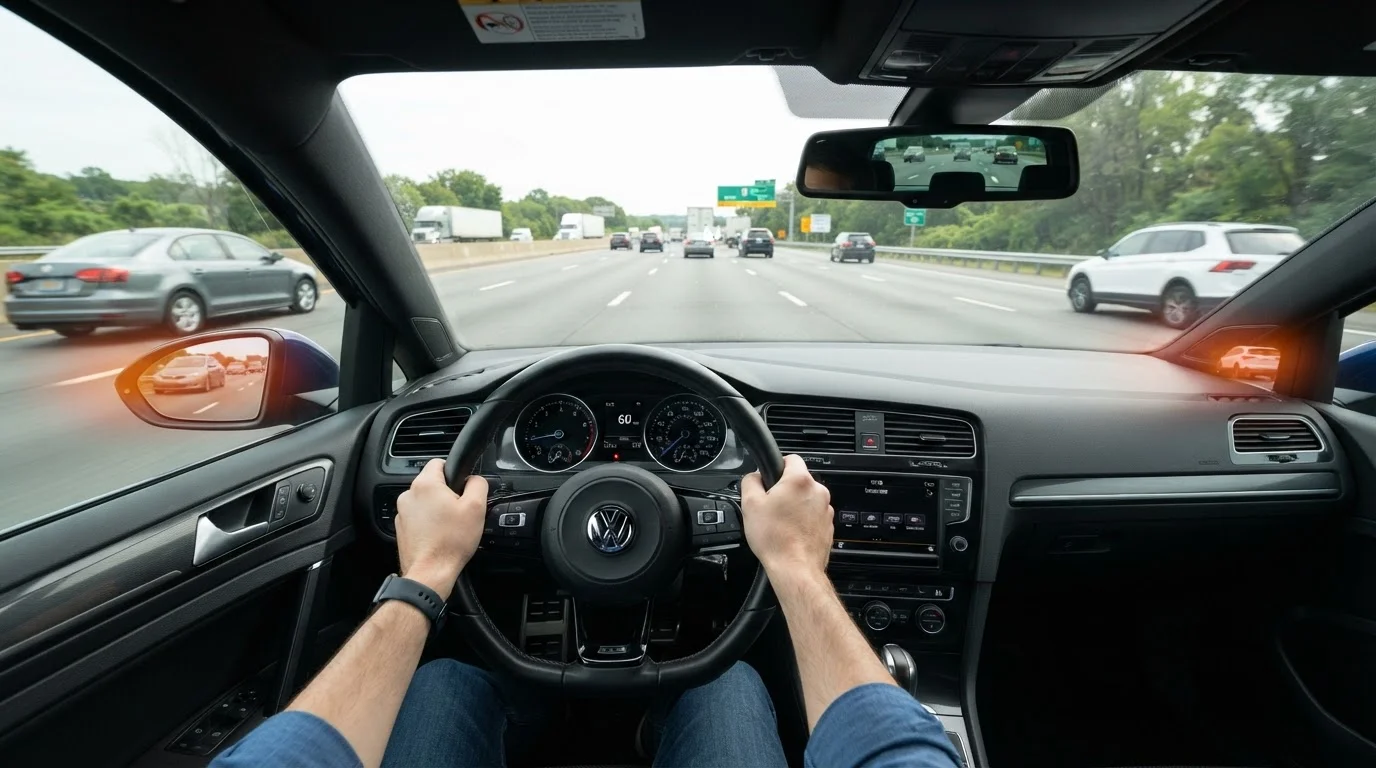
Every vehicle has at least four general blind spot zones: the two diagonal rear corners on the driver and passenger sides, the area directly behind the vehicle, and - depending on the vehicle - a significant zone in front near the hood. Longer vehicles, like pickup trucks and SUVs, tend to have larger and more dangerous versions of all four.
It's worth knowing that your mirrors, when properly adjusted, can minimize blind spots - but they cannot eliminate them. That's why a physical shoulder check before changing lanes is still the standard safe practice, even when your mirrors look clear. For a broader look at what can go wrong on the road, see common driving myths that affect safety.
Which Vehicles Have the Worst Blind Spots
Not all vehicles are equal when it comes to visibility. Here's a practical breakdown:
| Standard blind spot zones per vehicle | At least 4 |
| Vehicle class with worst rear visibility | Cargo vans and box trucks |
| Required action mirrors cannot replace | Physical shoulder check before lane changes |
| Front blind spot risk group | Children and small objects near large truck/SUV hoods |
| Passenger-side mirror type on most US vehicles | Convex (wide-angle, objects appear farther than actual) |
- Pickup trucks: Long hoods and tall ride heights create significant front blind spots. The area directly in front of the hood can hide a child or small object completely.
- SUVs and crossovers: Thick rear pillars (the structural columns flanking the rear window) limit rearward visibility. Many also have wide rear ends that expand the back blind zone.
- Sedans: Generally better overall visibility than trucks or SUVs, but the diagonal rear-corner zones are still present and significant at highway speeds.
- Vans and box trucks: The worst rear visibility of any common vehicle class - many have no rear window at all, making reversing and lane changes especially high-risk.
- Sports cars with low rooflines: Often have very thick rear pillars and small rear windows, creating surprisingly large blind spots despite their lower profile.
If you're reviewing a vehicle before purchase or rental, walk around it and physically check sightlines from the driver's seat before assuming visibility is adequate.
How to Check and Minimize Your Blind Spots
Proper mirror adjustment is the foundation. Most drivers set their side mirrors too close to the vehicle - meaning they see mostly the side of their own car, which wastes coverage. A better approach:
- Adjust the driver's side mirror so you can just barely see the edge of your car's rear corner. This shifts more mirror coverage outward.
- Adjust the passenger's side mirror similarly - lean slightly toward the center of the car when setting it, so coverage extends further out from the vehicle.
- Set the rearview mirror to give you the widest possible view through the rear window without moving your head.
Even with optimal mirror adjustment, you must still turn your head and physically look over your shoulder before changing lanes. Mirrors reduce blind spots; they don't eliminate them.
Before you drive at all, a quick pre-trip mirror check takes seconds and ensures you're not starting with misaligned coverage. New drivers especially benefit from building this habit early - it's covered in detail in our guide on what new drivers should understand before hitting the road.
Technology Helps - But Doesn't Replace Awareness
Blind spot monitoring systems and rear cameras are now common on newer vehicles. These tools can alert you to vehicles entering your blind zones and are genuinely useful - but they have limits. Camera coverage can be reduced by dirt, rain, or glare. Sensor-based systems may not detect cyclists or pedestrians as reliably as larger vehicles. Use these features as a supplement to mirror adjustment and shoulder checks, not a substitute.
Blind spots also play a role in following distance. When a vehicle ahead of you is too close, your field of view shrinks - which is part of why tailgating compounds risk beyond just reaction time. Keeping space gives you more visibility, not just more time to brake.