What Is Leash Reactivity?
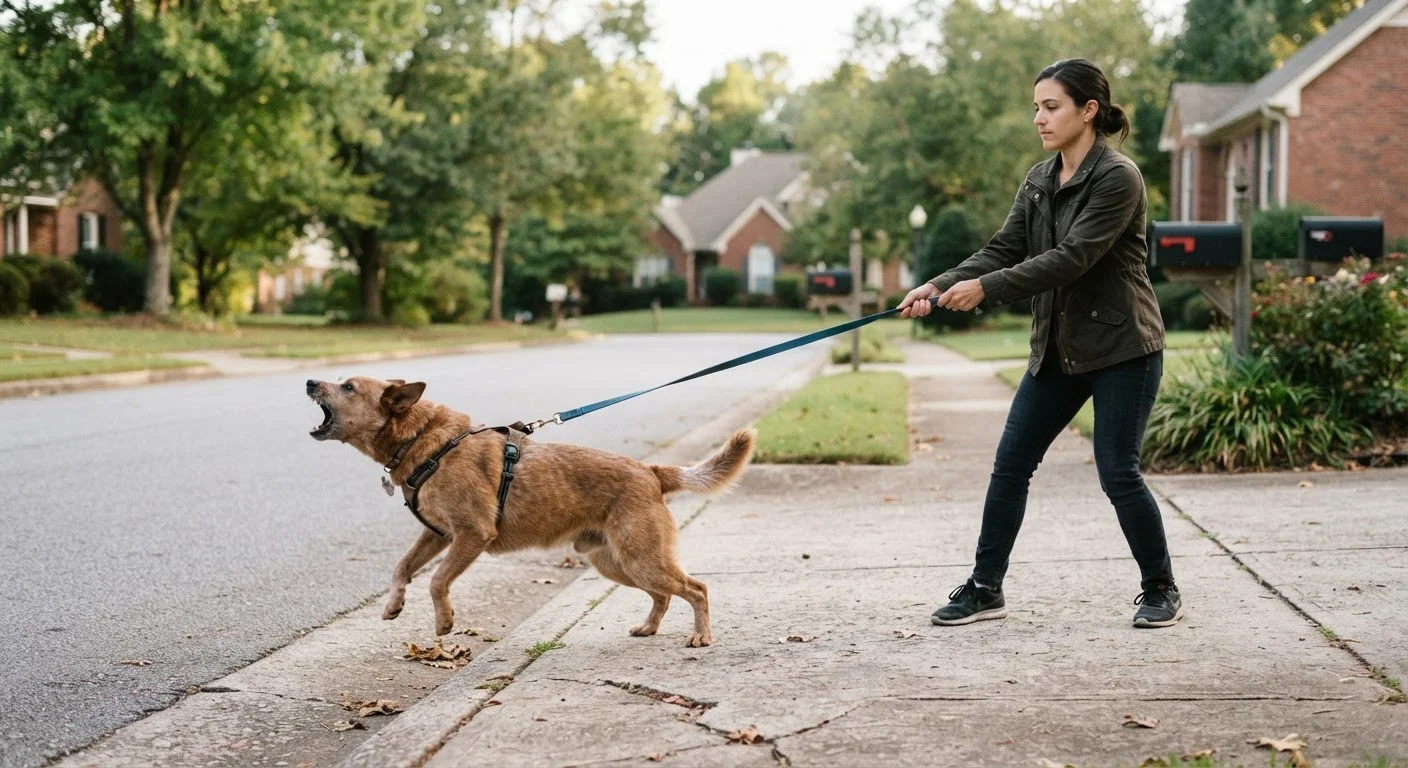
Leash reactivity refers to a dog's exaggerated behavioral response - barking, lunging, growling, or spinning - when it encounters a stimulus while on leash. The leash itself is a key variable: many reactive dogs behave calmly off-leash around the same triggers. This distinction is important because it tells us the problem is situational, not a fixed personality trait.
The behavior is extremely common. Veterinary behaviorists and certified trainers regularly identify it as one of the top reasons owners seek professional guidance. Understanding what reactivity is - and what it isn't - is the first step toward addressing it effectively. It is not aggression in the clinical sense, though it can escalate. It is not dominance-seeking. It is, at its core, an emotional response that has been reinforced over repeated exposures.
Before exploring causes, it helps to understand a few foundational training concepts. Our plain-language glossary of training terms explains concepts like threshold, stimulus, and counter-conditioning that are central to any reactive-dog protocol.
Common Triggers and Patterns
Triggers vary by dog, but the most frequently reported include other dogs, unfamiliar people, cyclists, skateboarders, and joggers. The pattern typically follows a predictable arc: the dog notices the trigger, its body stiffens, then it erupts into barking or lunging - often before the owner has a chance to redirect.
~15%
Estimated prevalence of leash reactivity in pet dogs
Behavioral surveys and veterinary behavior clinic data suggest leash reactivity affects a significant minority of the pet dog population, though exact figures vary by study methodology.
3-14 weeks
Critical socialization window for puppies
Veterinary behaviorists identify this developmental period as the most sensitive for positive exposure to diverse stimuli, with under-socialization during this time linked to higher reactivity risk.
70%+
Reactive dogs show improvement with DS/CC protocols
Studies on systematic desensitization and counter-conditioning consistently report meaningful behavioral improvement when protocols are applied correctly and consistently over time.
Reactivity tends to be distance-dependent. Dogs have a threshold - a distance beyond which they can remain calm and below which they cannot. Every time a dog crosses that threshold and reacts, the pattern is reinforced: the trigger usually moves away (a passerby keeps walking), which the dog experiences as a successful outcome. The reactive display appears to have worked.
Breed and early socialization history both influence susceptibility. Dogs with limited positive exposure to diverse stimuli during the critical socialization window (roughly 3-14 weeks of age) are more likely to develop reactive patterns later. However, reactivity can develop in any dog, including those with seemingly adequate early socialization, particularly after a startling or frightening event on leash.
The Role of Frustration vs. Fear
One of the most clinically useful distinctions in leash reactivity is whether a dog's reaction is driven primarily by frustration or fear - and often it is a combination of both.
Frustration-based reactivity is common in social, high-energy dogs that want to reach the trigger but cannot because the leash prevents it. The reaction looks explosive but the dog's body language is forward-leaning: tail up, ears forward, weight on the front feet. These dogs may have been inadvertently taught that pulling and barking eventually gets them closer to what they want.
Fear-based reactivity presents differently. The dog may try to increase distance, bark while backing up, or show stress signals - yawning, lip-licking, whale eye (whites of the eye visible) - before the full reaction occurs. The goal of the behavior is to make the scary thing go away.
Misreading the underlying emotion leads to mismatched interventions. A dog reacting out of fear that is repeatedly forced closer to the trigger in an attempt to "socialize" it is likely to become more reactive, not less. This is why individualized assessment matters.
Before starting any formal protocol, spend one week simply observing your dog's threshold distance - the point at which it first notices the trigger without reacting. Knowing this number precisely is the foundation of every effective DS/CC session.
Working above threshold means the dog is already too aroused to learn. Threshold mapping prevents owners from inadvertently practicing the reaction they are trying to eliminate.
Use the highest-value food your dog will accept - think small pieces of cooked chicken or cheese - exclusively during reactive-trigger exposure sessions. Reserve these treats only for this context so they retain their emotional power.
Counter-conditioning relies on the positive stimulus outcompeting the negative emotional response. Everyday kibble rarely carries sufficient motivational weight to shift a deeply conditioned fear or frustration response.
Behavior Modification Approaches
The most evidence-supported approaches to leash reactivity are desensitization and counter-conditioning (DS/CC), often used together. Desensitization means gradually exposing the dog to its trigger at a level below its reaction threshold - far enough away that it notices but does not erupt. Counter-conditioning pairs that sub-threshold exposure with something the dog finds highly positive, typically high-value food, to shift the emotional association from negative to neutral or positive.
This process is methodical and requires patience. Owners must learn to read their dog's threshold and manage the environment carefully - crossing the street, increasing distance, or turning around before the dog reacts. Every reaction is a small setback because it rehearses the unwanted behavior and reinforces the emotional pattern.
Punishment-based tools - leash pops, prong corrections, electronic collars - are not recommended for reactive dogs. They may suppress the outward display without resolving the underlying emotion, and they carry a meaningful risk of creating a fear association between the trigger and pain, which can worsen reactivity or contribute to aggression. The science of how reward-based methods work - and why they outperform punishment in most cases - is covered in depth in our article on positive reinforcement in pet training.
Parallel walks, look-at-that (LAT) games, and engage-disengage protocols are structured techniques commonly used within a DS/CC framework. Each has a specific purpose: building focus, reducing arousal, and teaching the dog to check in with its owner when it notices a trigger rather than fixating on it.
Consistency across sessions is essential. Our guide to building a reliable training routine offers practical structure for integrating short, focused sessions into daily walks without overwhelming dog or owner.
When to Seek Professional Help
Many owners make meaningful progress with leash reactivity through careful self-directed work, but certain situations warrant professional guidance. If a dog has made contact - bitten or attempted to bite - during a reactive episode, a veterinary behaviorist or certified applied animal behaviorist should assess the case. Similarly, if reactivity is intensifying despite consistent training efforts, a professional evaluation can identify what is being missed.
Look for professionals with credentialed certifications: a DACVB (veterinary behaviorist), a CAAB, or a CPDT-KSA with documented experience in reactivity cases. Credentials matter because the field is largely unregulated - anyone can call themselves a dog trainer.
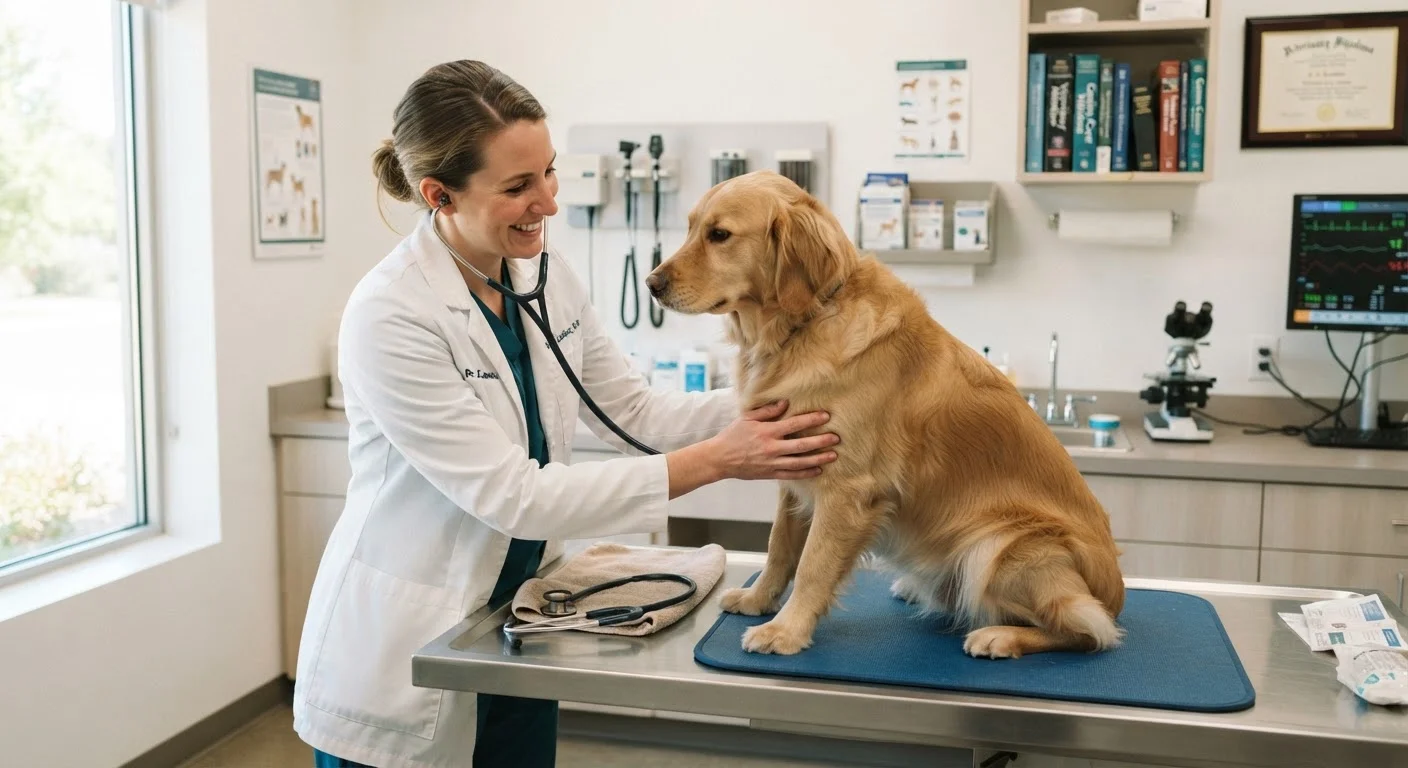
In some cases, a veterinary behaviorist may discuss whether medication could support behavior modification by reducing baseline anxiety enough for the dog to learn. Medication, when appropriate, is used alongside training - not as a replacement for it. This is a conversation for a licensed veterinarian, not a decision to make independently.
This article is for general informational and educational purposes only. It is not a substitute for individualized advice from a qualified veterinary or animal behavior professional. If your dog's behavior poses a safety risk to people or other animals, consult a credentialed professional promptly.