
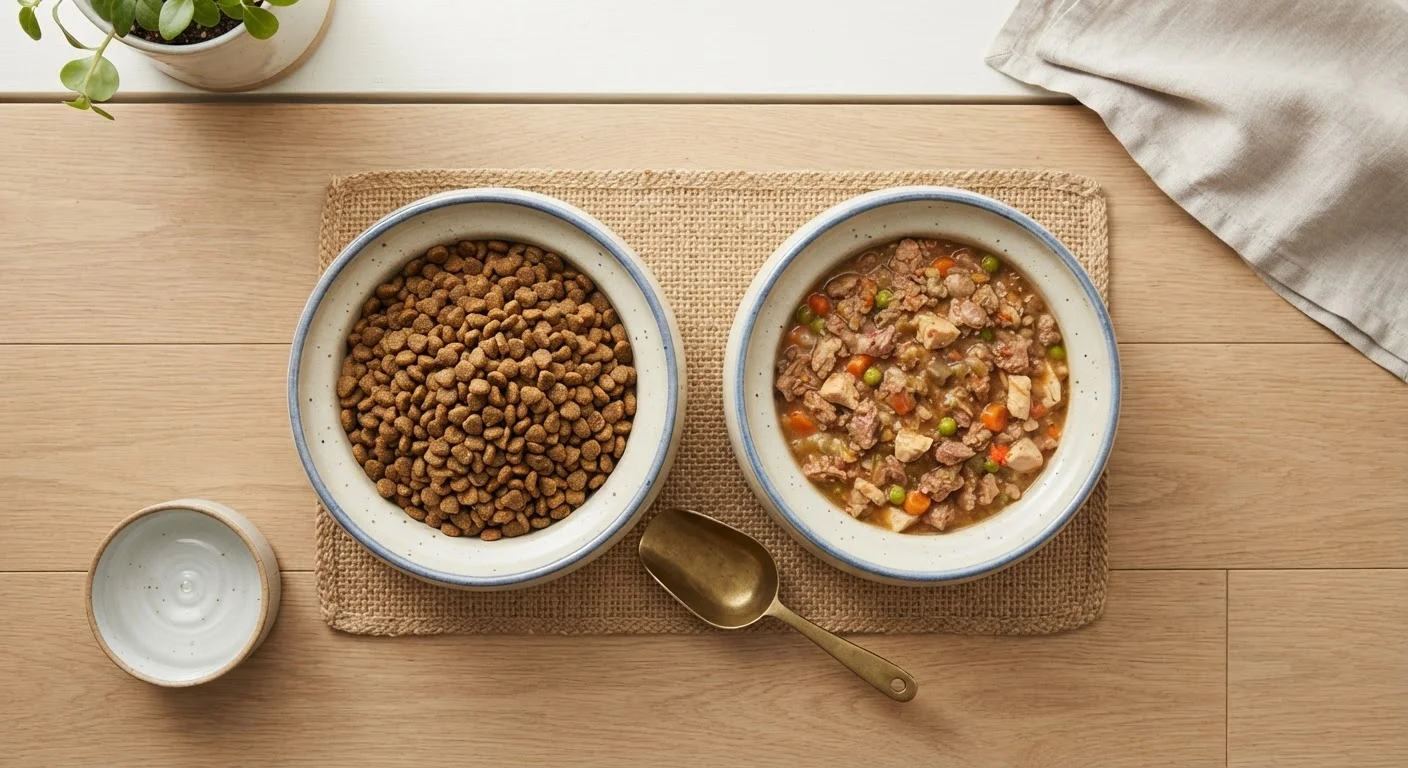
What Sets Dry and Wet Food Apart Nutritionally
The most fundamental difference between dry and wet pet food is moisture content. Dry kibble typically contains 6-10% water, while canned wet food ranges from 70-80%. This gap has cascading effects on caloric density, palatability, and how each format fits into a pet's overall diet.
Because kibble has so little water, it is far more calorie-dense by volume. A cup of dry food delivers significantly more energy than the same volume of wet food. This makes portion discipline essential with kibble - free-feeding (leaving food available all day) can easily lead to overconsumption and weight gain, particularly in indoor pets with lower activity levels.
Wet food, by contrast, adds substantial dietary moisture, which matters most for cats. Cats evolved as desert animals with a naturally low thirst drive; they are biologically adapted to obtain most of their hydration from prey rather than a water bowl. A cat fed exclusively dry food may not compensate adequately by drinking more water, which veterinary research has linked to increased risk of lower urinary tract disease and kidney stress over time.
| Criterion | Dry Food (Kibble) | Wet Food (Canned) |
|---|---|---|
| Moisture Content | 6-10% | 70-80% |
| Caloric Density (per gram) | Higher | Lower |
| Palatability | Moderate | Generally higher |
| Dental Abrasion | Modest benefit | Minimal benefit |
| Shelf Life (opened) | Weeks (room temp) | 24-48 hours (refrigerated) |
| Cost Per Serving | Generally lower | Generally higher |
| Ease of Portion Control | Easy to measure | Requires spoilage management |
| Suitable for Low-Thirst Cats | Less ideal | Better suited |
For dogs, moisture content is still relevant but generally less critical than in cats, since dogs tend to drink more readily. That said, dogs with kidney disease, a history of urinary stones, or certain digestive conditions may also benefit from increased dietary moisture - always a conversation to have with your veterinarian.
To understand how manufacturers disclose these nutritional differences, see our guide on reading a pet food label for a plain-language walkthrough of guaranteed analysis panels and AAFCO statements.
Practical Trade-Offs: Dental Health, Cost, and Palatability
Dry food has long been associated with dental benefits. The mechanical action of chewing kibble can help reduce plaque accumulation on tooth surfaces. However, it is worth noting that this effect is modest and not a substitute for active dental care - regular toothbrushing or veterinary dental cleanings remain the gold standard for oral health. Some cats and dogs swallow kibble whole, negating any abrasive benefit entirely.
Wet food does not offer the same mechanical cleaning action, but it is generally far more palatable. Its rich aroma and soft texture make it easier for picky eaters, convalescing animals, and senior pets to consume enthusiastically. For aging animals in particular, chewing kibble can become physically difficult - a concern explored further in our article on health considerations for senior pets.
70-80%
Water content in typical wet pet food
Compared to just 6-10% in dry kibble, making wet food a significant source of dietary moisture for cats and dogs.
~58%
US pet owners who feed dry food exclusively
According to the American Pet Products Association's National Pet Owners Survey, dry food remains the most commonly chosen format among US dog and cat owners.
3-4×
Higher water intake from wet vs. dry diets in cats
Research published in veterinary nutrition literature suggests cats on wet food diets consume substantially more total water than those on dry-only diets.
From a cost standpoint, dry food is almost always more economical per calorie delivered. Wet food costs more per serving and, once opened, must be refrigerated and used within 24-48 hours to prevent spoilage. For multi-pet households or owners managing tight budgets, this difference can add up quickly.
A mixed feeding approach - offering a measured amount of both formats - is a practical middle ground that many veterinarians consider appropriate. It combines the hydration advantages of wet food with the convenience and cost-efficiency of kibble. If you pursue this, ensure total daily calories stay within your vet's recommended range; both portions count toward the daily total.
No single format is objectively superior. The right choice is shaped by your individual pet's species, age, health status, and preferences - all factors worth discussing at your next veterinary visit. You can also explore foundational feeding guidance in our Pet Care Basics hub.
This article is for general informational purposes only and is not a substitute for professional veterinary advice. Always consult a licensed veterinarian before making significant changes to your pet's diet, especially if your pet has an existing health condition.