Why the Distinction Exists at All
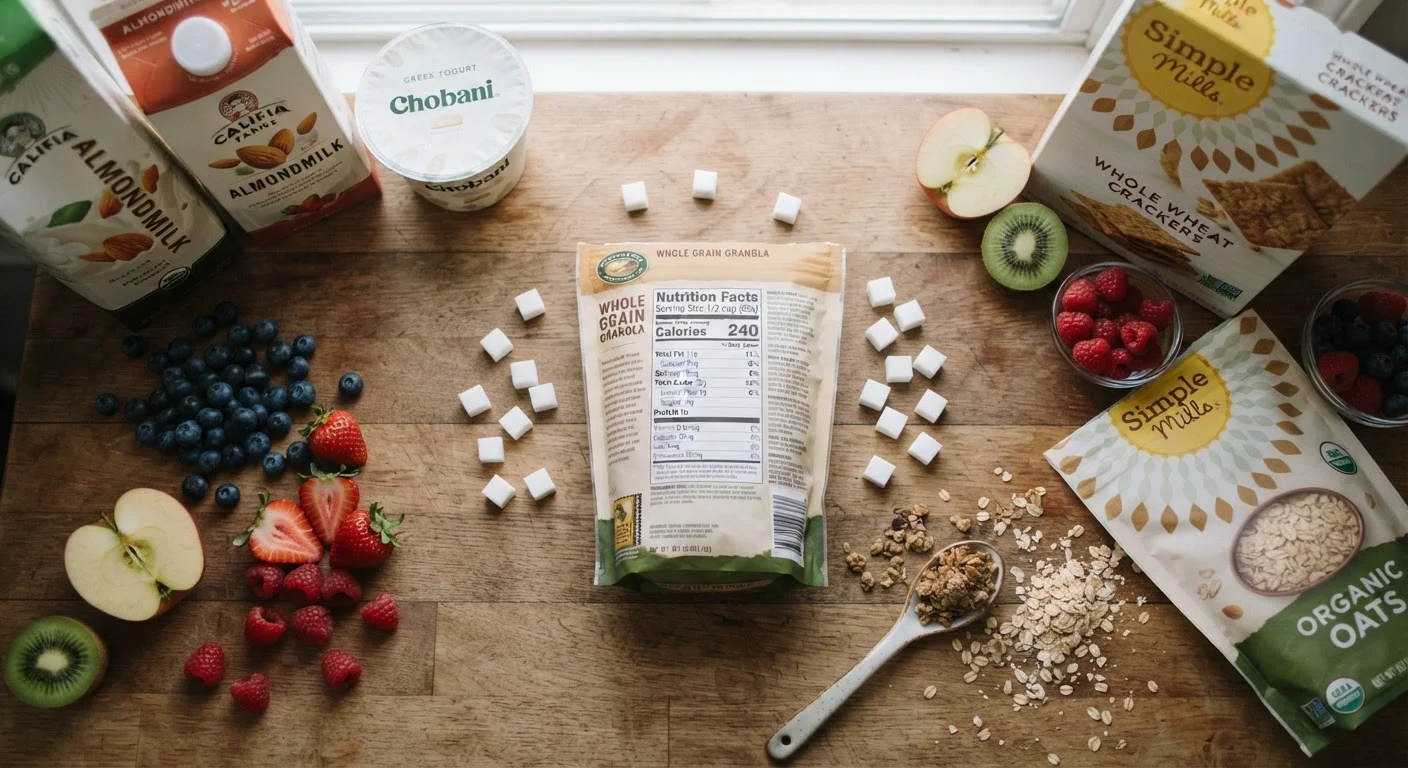
For decades, nutrition labels lumped all sugars together under a single number. The problem: a gram of sugar from a fresh strawberry and a gram from a flavored yogurt may be chemically similar, but they reach the body through very different dietary packaging. Nutrition science eventually caught up with that nuance.
When the FDA overhauled the Nutrition Facts label - with full compliance required by 2021 - it mandated a dedicated line for added sugars. The decision was grounded in epidemiological research showing that high added sugar consumption correlates with elevated triglycerides, increased blood pressure, and higher rates of type 2 diabetes, even when total calorie intake is held constant. Separating added sugars on the label gives consumers the data they need to act on that evidence. See what the nutrition label is actually telling you for a broader breakdown of every panel section.
The Biology: Context Changes Everything
Chemically, glucose is glucose. Your digestive system will break down sucrose from a soda and sucrose from a mango into the same simple sugars before they enter the bloodstream. So why does the source matter to researchers and dietitians?
The answer lies in what surrounds the sugar molecule. Whole fruit delivers fructose and glucose alongside water, dietary fiber, vitamins, and polyphenols. Fiber slows gastric emptying, which moderates the rate at which sugar hits the bloodstream and blunts the insulin response. Processed foods with added sugar typically strip away those moderating factors. The result is a faster glycemic rise with fewer accompanying nutrients - calories, in other words, that carry almost no nutritional payload.
This is the same principle that distinguishes whole grains from refined grains: processing tends to remove the dietary context that makes a food metabolically manageable.
17 tsp
Average daily added sugar intake in the US
CDC dietary surveillance data estimates American adults consume roughly 17 teaspoons of added sugar per day - well above the recommended limit of about 12 teaspoons for a 2,000-calorie diet.
39%
Of US adults with excess added sugar intake
Research published in JAMA Internal Medicine found that a substantial proportion of US adults exceeded 10% of daily calories from added sugar, a threshold associated with significantly elevated cardiovascular risk.
60+
Names for added sugar in ingredient lists
Food industry analysts and nutrition educators have catalogued more than 60 distinct terms used for added sugars on commercial food ingredient lists, ranging from familiar syrups to technical chemical names.
Spotting Added Sugar in Ingredient Lists
Knowing added sugar exists on the label is step one. Knowing where manufacturers hide it in ingredient lists is equally important. The FDA requires ingredients to be listed in descending order by weight, so a sweetener appearing first or second signals that a product is heavily sweetened. But manufacturers sometimes use several different sweeteners in smaller amounts - each ranks lower individually while their combined effect is substantial.
More than 60 names for added sugar appear in commercial food ingredient lists. Common aliases include:
- High-fructose corn syrup and corn syrup solids
- Cane juice, evaporated cane juice, and cane syrup
- Dextrose, maltose, galactose, and other -ose endings
- Agave nectar, brown rice syrup, barley malt syrup, and tapioca syrup
- Molasses, treacle, and concentrated fruit juice used as sweeteners
Reading an ingredient list with these aliases in mind allows you to see through marketing terms like "sweetened with fruit juice" - which still counts as an added sugar when used to sweeten a product.
A Quick Label-Reading Shortcut
When evaluating a packaged food, go straight to the added sugars line and check the %DV. If it reads 20% or higher per serving, that product is a high added sugar source. Pairing this check with a scan of the first five ingredients for sugar aliases gives you a reliable two-step filter without needing to memorize every technical term.
Putting It Into Practice
The Dietary Guidelines for Americans suggest that added sugars contribute less than 10% of total daily caloric intake. For practical shopping purposes, the added sugars line on the label also displays a percent Daily Value (%DV) based on a 50-gram reference amount. A product with 5% DV or less per serving is considered low in added sugar; 20% DV or more per serving is considered high.
Breakfast cereals, flavored yogurts, condiments, salad dressings, and packaged breads are among the category leaders for hidden added sugars - categories where consumers may not expect sweetness to be a primary ingredient. Beverages, including sports drinks, flavored coffees, and sweetened teas, are the single largest source of added sugar in the average American diet, according to data compiled by the Centers for Disease Control and Prevention.
This article is for general informational and educational purposes only and does not constitute medical or dietary advice. Consult a registered dietitian or qualified healthcare provider for guidance tailored to your individual health needs.
This content is provided for informational purposes only and is not a substitute for professional medical advice, diagnosis, or treatment.