What Exfoliation Actually Does
Skin naturally sheds dead cells from its outermost layer, but this process can slow with age, environmental stress, or certain skin conditions. When dead cells accumulate, the result is often dullness, rough texture, clogged pores, and uneven tone. Exfoliation - whether physical or chemical - accelerates that removal process.
The key distinction between the two approaches is how they remove dead cells. Physical exfoliation relies on manual abrasion; chemical exfoliation uses active compounds to loosen the cellular bonds that hold dead skin to the surface. Understanding this difference makes it much easier to predict how each will interact with your specific skin. If you're building a routine from scratch, it helps to first read our beginner skincare guide before adding active steps like exfoliation.
Physical Exfoliation: How It Works and Who It Suits
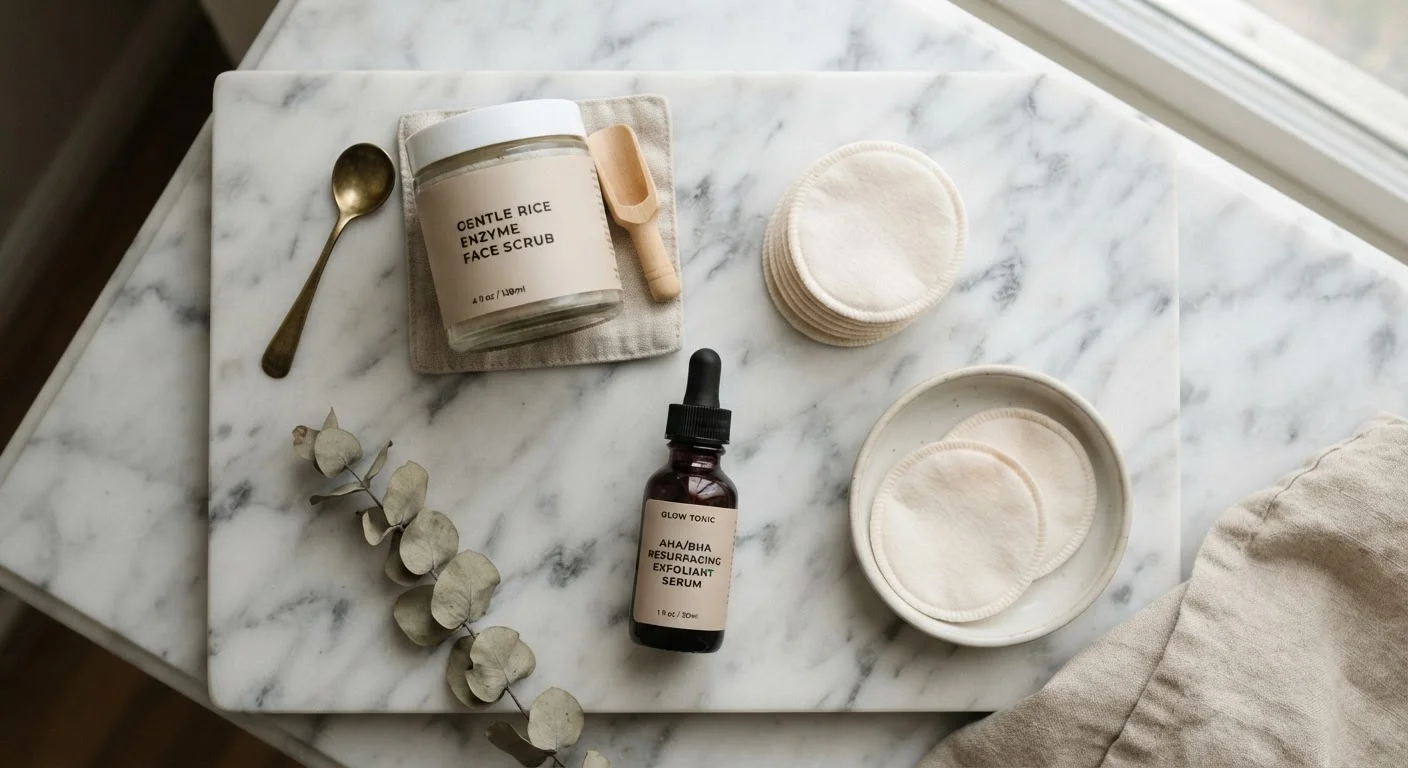
Physical exfoliants include scrubs with fine particles (sugar, rice bran, jojoba beads), cleansing brushes, exfoliating cloths, and konjac sponges. They remove dead cells through direct friction applied to the skin's surface.
Potential benefits
- Immediate smoothing effect you can feel during application
- No waiting time or pH-dependent activation
- Useful for body skin, which is generally more tolerant than facial skin
Limitations and risks
- Irregular particle shapes (like crushed walnut shell) can create micro-tears in skin - smooth, round particles are less likely to cause this
- Pressure and friction are difficult to self-regulate, leading to over-exfoliation
- Generally not recommended for active acne, rosacea, or sensitive skin, where physical manipulation can spread bacteria or worsen inflammation
Start Slower Than You Think You Need To
When introducing any exfoliant, begin with the lowest frequency and concentration available. Give your skin two to three weeks to adjust before increasing use. Layering multiple exfoliating products at once - even gentle ones - multiplies the risk of barrier disruption. One well-chosen exfoliant, used consistently, outperforms an aggressive rotation of several.
Physical exfoliation tends to work best on normal skin types with no active breakouts or chronic sensitivity. Those with different skin types - particularly sensitive or acne-prone - should evaluate carefully before adopting this method.
Chemical Exfoliation: Acids, Enzymes, and How They Work
Chemical exfoliants fall into three broad categories: alpha-hydroxy acids (AHAs), beta-hydroxy acids (BHAs), and enzymes.
- AHAs (glycolic acid, lactic acid, mandelic acid) are water-soluble and work primarily on the surface. They're well-suited for addressing dullness, fine lines, and uneven tone. Lactic acid is generally considered more gentle than glycolic acid, making it a reasonable starting point for those newer to chemical exfoliation.
- BHAs (salicylic acid is the most common) are oil-soluble, meaning they can penetrate into pores to clear sebum and debris. This makes them particularly useful for oily and acne-prone skin.
- Enzymes (papain from papaya, bromelain from pineapple) digest dead skin proteins with minimal pH dependency. They're among the gentlest options and are often suitable for sensitive skin types.
| Physical Exfoliation | Chemical Exfoliation | |
|---|---|---|
| Mechanism | Manual friction removes dead cells | Acids/enzymes dissolve cell bonds |
| Speed of results | Immediate surface smoothing | Gradual, builds over days |
| Suitable skin types | Normal, non-sensitive | Most types (varies by acid) |
| Acne-prone skin | Caution - can spread bacteria | BHAs generally well-suited |
| Sensitive skin | Often too abrasive | Enzymes/lactic acid gentler |
| Risk of over-exfoliation | Higher - hard to self-regulate | Moderate - concentration-dependent |
| Pore-clearing ability | Surface only | BHAs penetrate into pores |
Because chemical exfoliants interact with other active ingredients, it's worth reviewing which ingredient combinations to avoid before layering them into your routine.
Common Mistakes That Undermine Both Approaches
Regardless of which method you choose, the most frequent error is using it too often. Over-exfoliating strips the skin's protective barrier, leading to increased sensitivity, redness, dryness, and even more breakouts - the opposite of the intended result. Most skin types benefit from exfoliating no more than two to three times per week, and some sensitive skin types do well with once weekly.
A second mistake is skipping SPF afterward. Both physical and chemical exfoliation temporarily increase the skin's sensitivity to ultraviolet light by removing the outermost dead-cell layer. Using broad-spectrum sunscreen daily - not just on exfoliation days - is essential. For a fuller picture of habits that quietly damage skin over time, see our guide on routine habits that backfire.
This article is for general informational purposes only and is not a substitute for professional dermatological advice. If you have a skin condition, consult a qualified dermatologist before introducing active exfoliants.