Why Label Literacy Matters
Skincare labels carry a lot of information - and almost as much that's left unsaid. The ingredient list is the most objective part of any product's packaging: it follows a regulated structure, uses standardized naming conventions, and doesn't rely on marketing language. Learning to read it gives you a foundation for evaluating any product, regardless of price point or brand positioning.
If you're just starting to build a skincare routine, our beginner's guide to skincare covers skin types and routine basics before you dive into label detail. Once you're comfortable with the fundamentals here, our plain-language active ingredients reference explains the actives you'll encounter most often.
What you will need
How to Read a Skincare Label: Step by Step
Follow these steps each time you evaluate a new product. With practice, the process takes under two minutes.
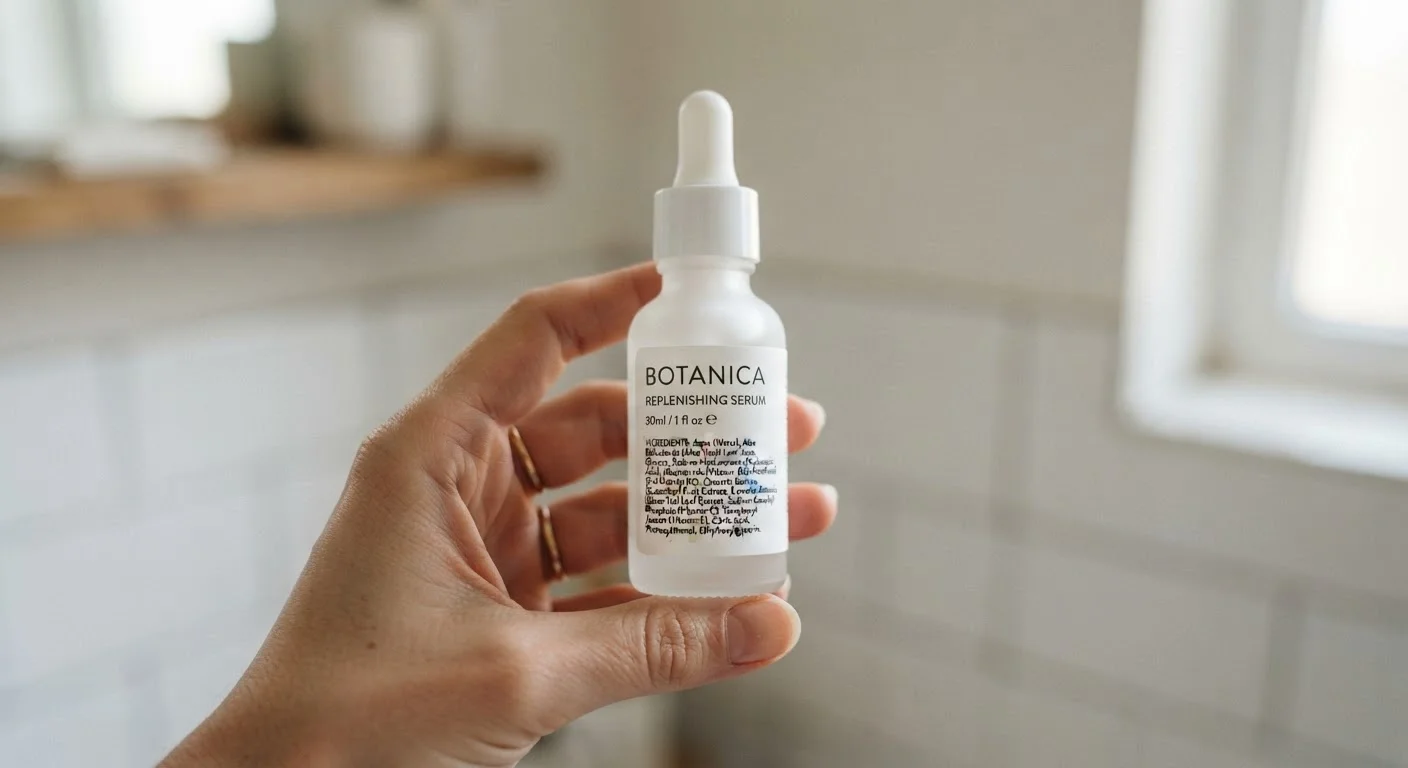
Locate the full ingredient list
By US law, cosmetic products sold domestically must display a complete ingredient list on the label. It is typically found on the back or bottom of the packaging, often in small print. Look for the heading "Ingredients" or "Ingredients/Ingrédients" (bilingual labeling is common on products also sold in Canada).
If you're shopping online, the ingredient list should be available in the product description. If it isn't displayed, that's a transparency gap worth noting.
Understand the descending-order rule
Cosmetic ingredients must be listed in descending order of concentration - the ingredient present in the largest amount appears first, and so on down the list. Water (aqua) leads most formulas because it forms the bulk of most lotions and serums.
A practical rule of thumb: ingredients listed after the preservatives (often parabens, phenoxyethanol, or sodium benzoate) are typically present at concentrations below 1%. This is the point where many active ingredients, including peptides and botanical extracts, often appear - and where their real-world efficacy may be limited.
Identify active ingredients listed separately
If a product makes a drug claim - most commonly SPF (sunscreen) - the active ingredients responsible for that claim are listed in a separate "Active Ingredients" section at the top of the label, along with their percentage concentrations. This is an FDA requirement for over-the-counter drug products.
Ingredients like zinc oxide (18%), avobenzone (3%), or salicylic acid (2%) will appear here with their exact concentrations clearly stated. This is one of the few places on a cosmetic or OTC label where concentration is mandatory and standardized.
Decode common ingredient aliases
Many ingredients appear under their official INCI (International Nomenclature of Cosmetic Ingredients) names, which can look unfamiliar. Some common translations:
- Ascorbic acid = vitamin C
- Tocopherol = vitamin E
- Retinol = a form of vitamin A (see our guide to retinol vs. retinoids for more detail)
- Sodium hyaluronate = a salt form of hyaluronic acid
- Butyrospermum parkii = shea butter
Recognizing these equivalencies helps you compare products accurately and spot ingredients that matter to you regardless of how they're labeled on the front of the pack.
Spot fragrance - in all its forms
Fragrance is one of the most common causes of cosmetic skin reactions. On US labels it may appear as "fragrance," "parfum," or as individual fragrance components if a brand chooses full disclosure (e.g., linalool, limonene, citronellol).
Some brands market products as "fragrance-free" while still including fragrant plant extracts - these carry fragrance chemicals even if synthetic fragrance wasn't added deliberately. For more on this nuance, see our guide to fragrance in skincare.
Evaluate front-of-pack claims critically
Terms printed prominently on the front of a product - "clean," "natural," "pure," "gentle," "hypoallergenic" - are marketing descriptors, not regulated standards. No US regulatory body defines these terms for cosmetics, meaning brands use them at their own discretion.
Rather than accepting these claims at face value, use them as prompts to check the ingredient list itself. A product called "natural" may still contain synthetic preservatives; a "gentle" formula may still include ingredients that irritate certain skin types.
Labels Don't Tell You Everything
US regulations require ingredient disclosure but do not require manufacturers to list exact concentrations for most cosmetic ingredients. This means a coveted active may appear on the label but be present at a level too low to have a meaningful effect. When an ingredient's efficacy depends on concentration - such as vitamin C or AHAs - context and product transparency matter.
Use INCI Names to Compare Products
Every cosmetic ingredient has an official International Nomenclature of Cosmetic Ingredients (INCI) name - for example, 'ascorbic acid' for vitamin C or 'sodium hyaluronate' for a form of hyaluronic acid. Learning a few key INCI names makes it easier to compare products accurately, regardless of what the marketing copy calls them.
Understanding What Claims Can and Can't Tell You
Front-of-pack language is designed to attract attention, not to inform. The regulatory line in the US runs between cosmetics (products that alter appearance) and drugs (products that affect body structure or function). A moisturizer making a drug-like claim - say, that it "repairs the skin barrier" in a clinical sense - would technically require a different approval pathway. Most brands stay firmly in cosmetic territory, which means their claims face minimal pre-market scrutiny.
This doesn't mean all products are ineffective - many well-formulated cosmetics deliver real results. It does mean the burden of evaluation falls on you as a consumer. Pairing label-reading skills with knowledge of ingredient pairs is equally useful: our guide to ingredient combinations explains which actives enhance or interfere with each other.
Marketing Claims Are Not Regulated Like Drug Claims
Terms such as 'dermatologist-tested,' 'hypoallergenic,' and 'non-comedogenic' have no standardized FDA definition for cosmetics. They reflect brand positioning, not guaranteed performance. Evaluate the actual ingredient list rather than relying on front-of-pack claims to judge a product's suitability for your skin.
This article is for general informational and educational purposes only. It is not a substitute for advice from a qualified dermatologist or healthcare professional. If you have a skin condition or concerns about a specific ingredient, consult a licensed professional.