Why Your Glove Box Deserves More Thought
Most drivers treat the glove box as a junk drawer - a place where fast food napkins go to retire. But when you're pulled over, in a fender bender, or stranded on the shoulder at night, that small compartment becomes one of the most important parts of your car. Having the right documents and tools organized and within reach isn't just convenient - in many states, it's a legal requirement.
This checklist covers what every driver should have on hand, whether you're a first-time owner or someone who just hasn't audited that compartment in years. For a broader look at staying prepared behind the wheel, the Driving & Safety hub is a good place to start.
Required Legal Documents
Personal & Emergency Information
Accident & Incident Preparedness
Safety & Emergency Tools
Practical Everyday Items
What You'll Need to Get Organized
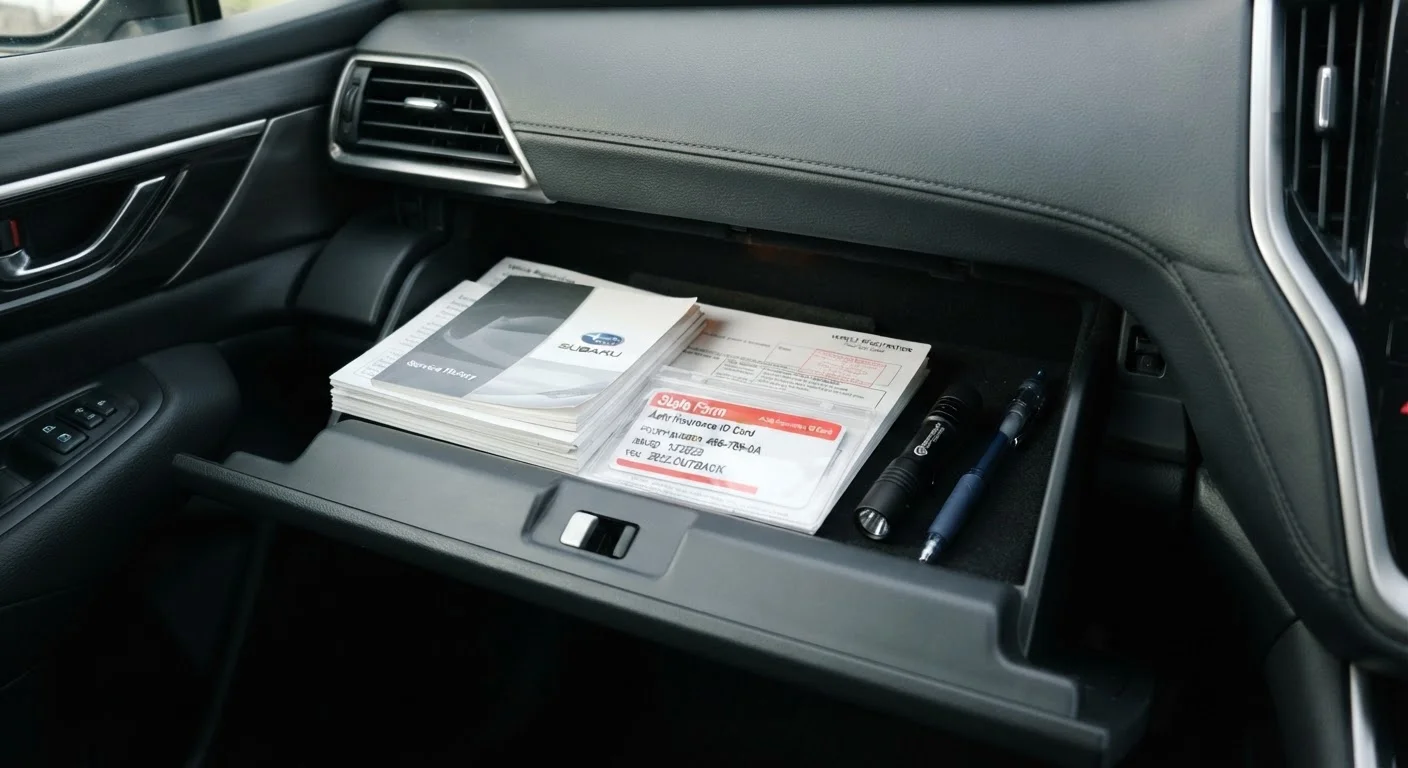
Before you start, gather everything that's currently in your glove box and set it on your passenger seat. You'll sort through it, discard what doesn't belong, and systematically add what's missing. A gallon zip-lock bag or a dedicated car document organizer can help keep papers flat and dry.
Waterproof document organizer or zip-lock bag
Keeps registration, insurance, and other paper documents flat, dry, and easy to find.
Working pen or pencil
Essential for writing down information at an accident scene or a traffic stop.
Small flashlight with fresh batteries
Provides visibility during nighttime roadside situations or when inspecting under the hood.
Basic first-aid kit
Addresses minor injuries until professional help is available.
Portable phone charger
Ensures you can make emergency calls even when your phone battery is depleted.
Keeping Everything Current
Owning the right documents only helps if they're up to date. Insurance cards and registrations expire - and handing an officer an expired card creates unnecessary complications even if your coverage is active. Set a simple calendar reminder each time you renew either document so you swap in the new card right away.
Expired Documents Can Still Cause Problems
An expired insurance card in your glove box doesn't prove you have current coverage - it can create unnecessary complications during a stop even if your policy is actually active. Check the expiration dates on both your registration and insurance card every time you renew, and replace the old card immediately. Don't leave both the old and new card in the same folder, as this can cause confusion when you're already stressed.
It's also worth tying your glove box audit to other routine vehicle checks. The routine maintenance guide outlines a realistic schedule for oil changes, tire rotations, and other tasks - many of which are good natural checkpoints to also verify your paperwork. New drivers especially will benefit from reading car maintenance habits for new owners to build these routines early.
This article is for general informational purposes only. Requirements for vehicle documentation vary by state. Always verify what your state law requires you to carry in your vehicle.