Why Insulation Myths Cost Homeowners Real Money
Insulation is one of the least visible components of a home, which makes it one of the most misunderstood. Homeowners routinely overspend on the wrong upgrades or skip important work based on ideas that don't hold up to scrutiny. The result: higher energy bills, comfort problems, and sometimes moisture damage that could have been avoided.
Understanding how insulation actually functions - not just what it's rated for - allows you to prioritize maintenance dollars effectively. This is especially relevant when paired with a broader look at home systems like heating and cooling. Our guide to HVAC filters, coils, and airflow explains how insulation and your HVAC system interact to affect efficiency.
Below, we address the most persistent misconceptions about home insulation, grounded in building science principles.
Myth
A higher R-value rating guarantees better insulation performance in your home.
Fact
R-value measures resistance to heat conduction, but air leakage - which insulation does not stop - can eliminate most of the benefit.
R-value is a material property measured under controlled laboratory conditions. In real homes, conditioned air escapes through gaps around electrical boxes, plumbing, recessed lights, and structural seams. Studies from the U.S. Department of Energy consistently indicate that air leakage accounts for a substantial share of heating and cooling loss in typical residences. Packing in more insulation without first sealing air pathways is like insulating a drafty window frame without closing the window. Effective insulation work pairs air sealing with appropriate R-value for the climate zone.
Myth
Insulation is only useful in winter - it doesn't do much in warmer months.
Fact
Insulation slows heat transfer in both directions, keeping conditioned air inside during summer just as it does in winter.
Heat moves from warmer areas to cooler ones regardless of season. In summer, that means outdoor heat tries to enter your air-conditioned living space through walls, ceilings, and floors. Well-insulated envelopes reduce this solar heat gain, lowering the load on air conditioning equipment. Homeowners in hot climates often see the largest energy savings during cooling season, not heating season, making insulation a year-round investment rather than a cold-weather fix.
Myth
Vapor barriers should be installed on every insulated surface to prevent moisture problems.
Fact
Vapor barriers are appropriate only in specific climate conditions and assemblies; misapplied, they trap moisture and cause damage.
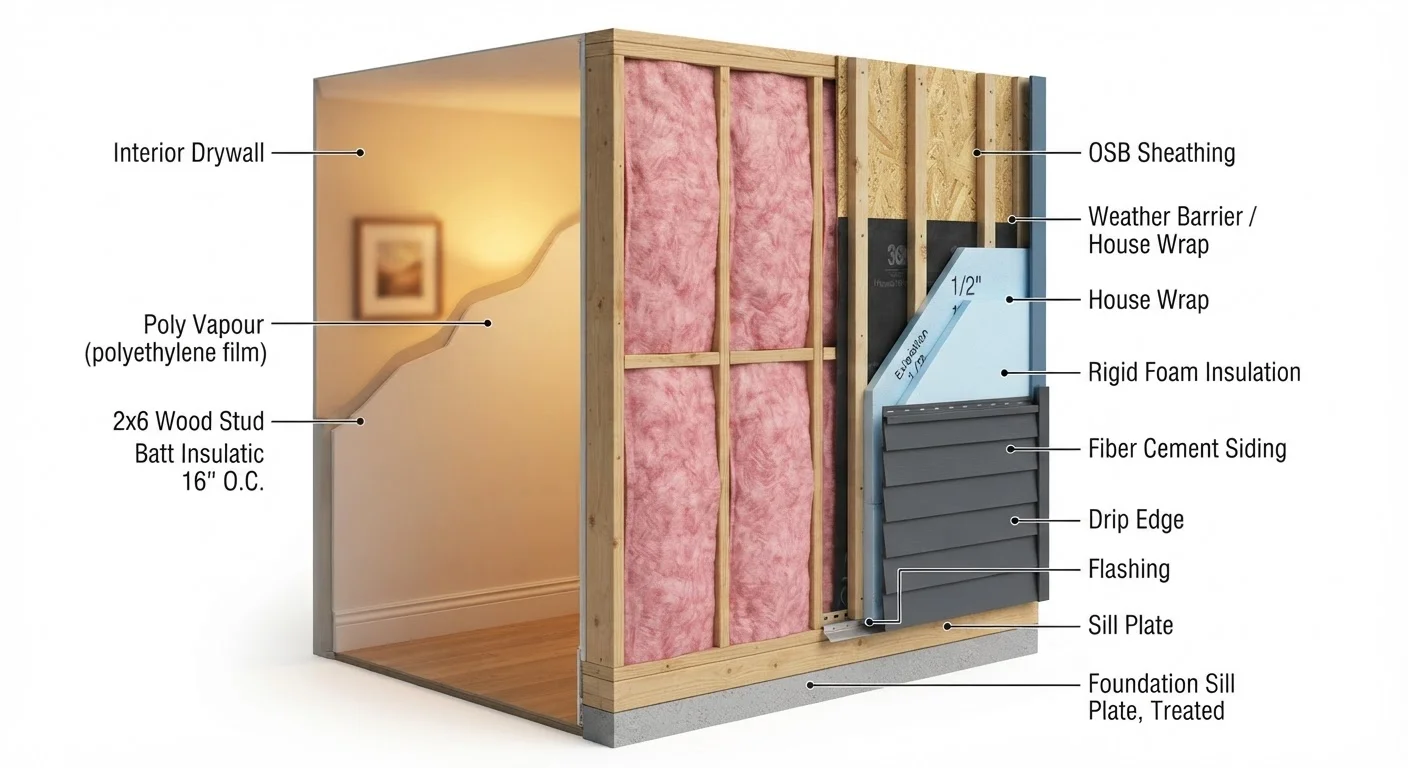
Building science guidance from organizations such as the Building Science Corporation makes clear that vapor control strategy depends heavily on climate zone, wall assembly, and interior conditions. In cold climates, a vapor retarder on the interior warm side is often appropriate. In mixed or hot-humid climates, interior vapor barriers can trap outward-drying moisture inside wall cavities, promoting mold and rot. The right approach varies by region, and installing a vapor barrier without understanding local conditions can cause the very moisture damage it's meant to prevent. Consult a qualified building professional or energy auditor before adding vapor control.
Myth
You must remove old insulation before adding new insulation in the attic.
Fact
In most cases, new insulation can be added directly over existing material, provided the old insulation is dry, undamaged, and free of mold.
Unless existing attic insulation is wet, compacted from water damage, contaminated with mold, or contains hazardous materials such as vermiculite that may contain asbestos, removal is generally not required. Adding blown-in insulation or unfaced batts over existing material is standard practice and can be cost-effective. However, if there are signs of moisture intrusion, pest activity, or the original material is vermiculite, a professional inspection is warranted before any new material is installed. Always confirm local code requirements with your contractor.
Myth
Insulating exterior walls is always the highest-priority upgrade in an existing home.
Fact
Attic insulation typically offers a better return on investment in existing homes because heat rises and attics are more accessible than wall cavities.
Retrofitting insulation into existing closed wall cavities is expensive and often disruptive, requiring either interior drywall removal or drilling and injection from the exterior. Attic floors, by contrast, are usually open and accessible, making installation straightforward and cost-effective. Because heat stratifies upward, attic bypasses also tend to be significant sources of energy loss. Energy audits in typical existing homes frequently identify attic improvements - including both air sealing and insulation depth - as the most cost-effective first step before addressing walls.
Making Informed Decisions About Your Home's Insulation
Correcting these myths points toward a straightforward maintenance framework. Start with an energy audit - many utility companies offer them at low or no cost - to identify where your home actually loses conditioned air. Air sealing gaps around electrical outlets, plumbing penetrations, and attic hatches typically delivers outsized returns relative to cost.
Attic Insulation and Ventilation Must Be Balanced
Adding insulation in the attic without maintaining proper ventilation can trap moisture and cause structural damage over time. Never block soffit vents or ridge vents when installing blown-in or batt insulation. If you are unsure about ventilation requirements, have a licensed contractor assess the attic before beginning work. Permits may be required for insulation work in some jurisdictions - check with your local building department.
When evaluating insulation work, ask contractors to explain their air-sealing approach alongside any insulation installation. A job that adds R-value without addressing air leakage will underperform its rated specification. Verify that any contractor working on attic or crawl space insulation is familiar with local building codes regarding vapor control, since requirements vary significantly by climate zone.
Prioritizing insulation investments wisely is a form of household financial discipline - similar in spirit to debunking assumptions in other areas of personal finance. Just as common budgeting myths can lead people to make poor financial choices, insulation myths lead homeowners to misallocate maintenance budgets. Focusing on verified performance data rather than marketing claims is always the sounder approach.
~15%
Heating and cooling energy lost through the attic
The U.S. Department of Energy estimates that a properly insulated and air-sealed attic can reduce heating and cooling costs significantly in typical US homes.
Up to 30%
Potential energy savings from comprehensive air sealing and insulation
According to the U.S. Environmental Protection Agency's ENERGY STAR program, combining insulation upgrades with air sealing can reduce total energy use by up to 30% in qualifying homes.