How Your HVAC System Moves Air
Your home's heating, ventilation, and air conditioning (HVAC) system operates on a straightforward principle: it pulls air in, conditions it, and pushes it back out through a network of ducts and vents. Understanding this loop is the foundation of good maintenance.
A central forced-air system has three main pathways. Return air vents draw warm or cool indoor air back to the air handler. The air handler - a cabinet containing the blower motor and, in cooling mode, the evaporator coil - conditions the air and pushes it out through supply ducts to every room. Outside, the condenser unit releases or absorbs heat depending on the season.
Every part of that loop depends on unrestricted air movement. When any segment is blocked, dirty, or leaking, the entire system works harder than it needs to - and efficiency drops across the board. This is why the three elements in this article's title - filters, coils, and airflow - are so tightly connected.
Air Filters: What They Do and When to Change Them
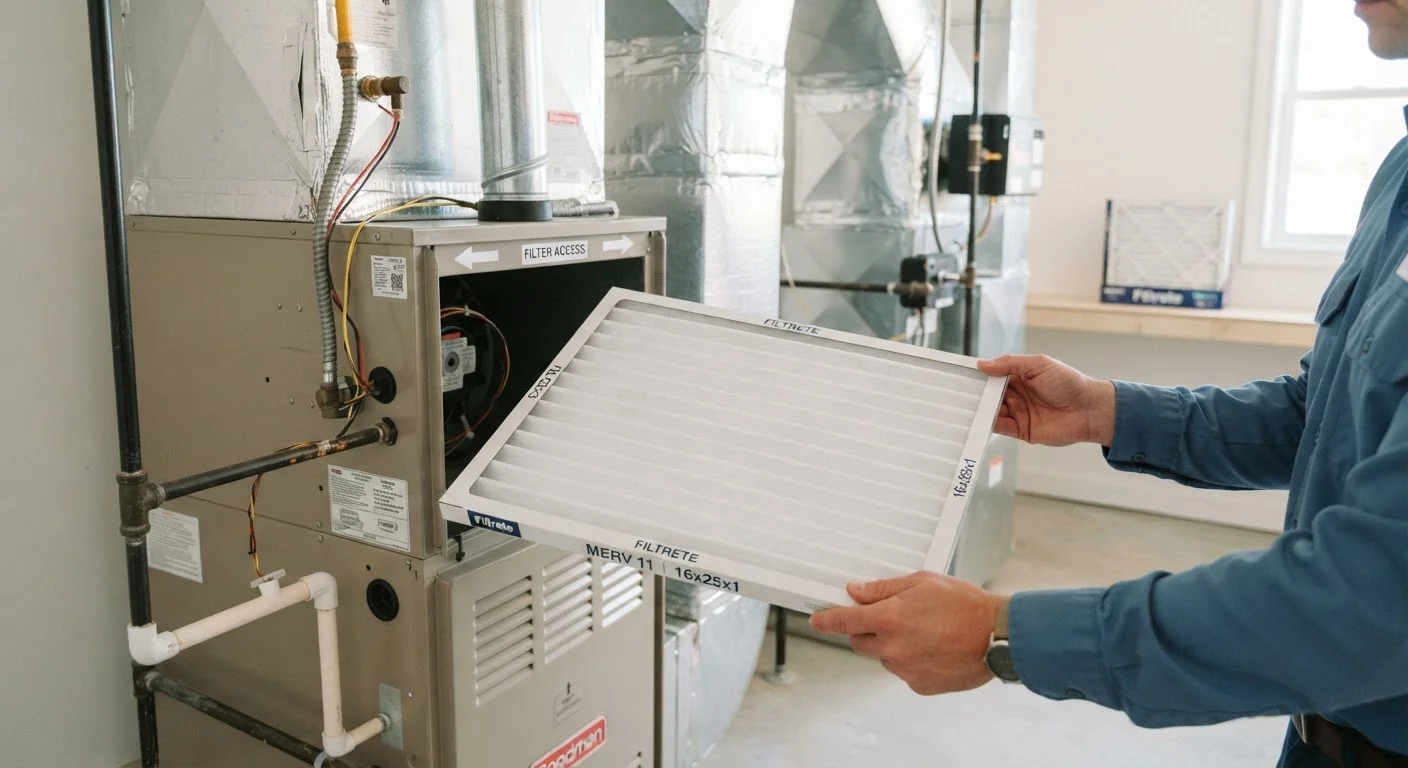
The air filter sits at the return air intake and catches dust, pollen, pet dander, and other particles before they reach the blower and coil. Its job is dual: protect equipment and improve indoor air quality.
Filters are rated by MERV (Minimum Efficiency Reporting Value), a scale from 1 to 16. Higher numbers capture smaller particles but also create more resistance to airflow. The right balance for most homes falls between MERV 8 and MERV 11. Check your system manual before upgrading to a denser filter - some older systems lack the motor power to pull air through high-MERV media effectively.
A clogged filter is one of the most common causes of HVAC problems. When air can't move freely through the filter, several things happen: the blower motor strains, the evaporator coil can freeze, and rooms become harder to heat or cool evenly. Replacement frequency depends on your household - plan on checking the filter monthly and replacing it when it has turned visibly grey.
Set a Filter Reminder That Actually Works
Write the installation date on the filter's cardboard frame with a marker each time you replace it. Set a recurring phone reminder for 30 days later to pull and inspect it. This simple habit prevents the most common cause of HVAC service calls.
Coils: The Heart of Heating and Cooling
Two coils do the core thermal work in a split-system HVAC unit. The evaporator coil, located inside the air handler, absorbs heat from indoor air as refrigerant evaporates inside it - producing the cooling effect you feel. The condenser coil, in the outdoor unit, releases that absorbed heat to the outside air.
Both coils rely on good airflow and a clean surface to exchange heat efficiently. When dust and debris coat the coil fins, they act as insulation - exactly the opposite of what you want. A dirty evaporator coil may struggle to absorb heat, causing the system to run longer. In humid conditions it can ice over entirely, blocking airflow and shutting down cooling. A dirty condenser coil forces the compressor to work at higher pressures, shortening its lifespan.
The outdoor condenser is exposed to grass clippings, cottonwood seeds, and general debris. Keeping two feet of clearance around the unit and gently rinsing the fins with a garden hose (with power off at the disconnect) once a season is a reasonable homeowner task. Evaporator coil cleaning is best left to a licensed technician, as it involves refrigerant-adjacent components. For a broader view of seasonal system prep, see our pre-season heating checklist.
Airflow Problems and How to Spot Them
Restricted or imbalanced airflow shows up in ways homeowners often misattribute to a failing unit. Before assuming a major repair is needed, check these common culprits.
- Closed or blocked vents: Closing supply vents in unused rooms creates pressure imbalances and can force air to leak at duct seams. All vents should remain open.
- Furniture over return vents: A sofa or bookcase blocking the return starves the system of air to condition.
- Duct leaks: The U.S. Department of Energy estimates that in a typical home, about 20-30% of conditioned air can be lost through duct leaks and poorly connected sections. Sealing accessible joints with mastic or metal-backed tape reduces this significantly.
- Undersized or oversized equipment: A system that is too large for the home short-cycles - running brief, frequent blasts that don't dehumidify effectively. An undersized unit runs nearly continuously without reaching the setpoint.
Uneven room temperatures, a unit that runs constantly, or unusually high energy bills are all signals worth investigating. The annual home maintenance calendar includes seasonal HVAC checkpoints that help catch these issues early.
Never Close Vents to Save Energy
It's a common misconception that closing vents in unused rooms reduces energy use. In a forced-air system, the blower pushes the same volume of air regardless - closing vents increases duct pressure, promotes leaks, and can cause the evaporator coil to freeze. Keep all vents open and use a programmable thermostat to manage comfort instead.
Routine Maintenance Every Homeowner Can Do
Most HVAC maintenance that protects system longevity falls into two categories: tasks you can do yourself and tasks that benefit from a professional visit once a year.
DIY tasks
- Replace or inspect the air filter monthly; replace when visibly dirty.
- Keep supply and return vents clear of furniture, rugs, and boxes.
- Clear at least two feet of space around the outdoor condenser unit.
- Remove visible debris (leaves, grass clippings) from condenser fins each season.
- Check that condensate drain lines are draining freely - a clogged drain can cause water damage around the air handler.
Annual professional tune-up
A licensed HVAC technician will check refrigerant levels, inspect electrical connections, clean the evaporator coil, measure airflow, and test system controls. This visit is the most reliable way to catch a developing problem - such as a refrigerant leak or failing capacitor - before it becomes an emergency replacement. For more context on where HVAC fits in the full picture of home upkeep, consult the complete homeowner's maintenance reference.