Why Mental Stimulation Matters as Much as Exercise
A dog that chews the baseboards, a cat that yowls at 3 a.m., a parrot that feather-picks - these behaviors are often misread as personality quirks or discipline failures. In many cases, they are the predictable result of under-stimulated minds. Veterinary behaviorists widely recognize that cognitive enrichment - activities that challenge an animal to think, explore, and problem-solve - is a non-negotiable pillar of animal welfare, not an optional add-on.
Boredom activates a low-grade stress response. Chronically under-stimulated pets may develop anxiety, compulsive behaviors, destructive tendencies, or inter-household conflict. Providing structured mental engagement reduces cortisol, reinforces the human-animal bond, and supports longer-term behavioral stability. For guidance on the behavioral science behind these patterns, explore the Pet Training & Behavior hub.
The good news: effective enrichment rarely requires expensive equipment. What it does require is consistency and intentionality. Below are seven evidence-aligned strategies that work across species and living situations.
Use Food as a Problem-Solving Opportunity
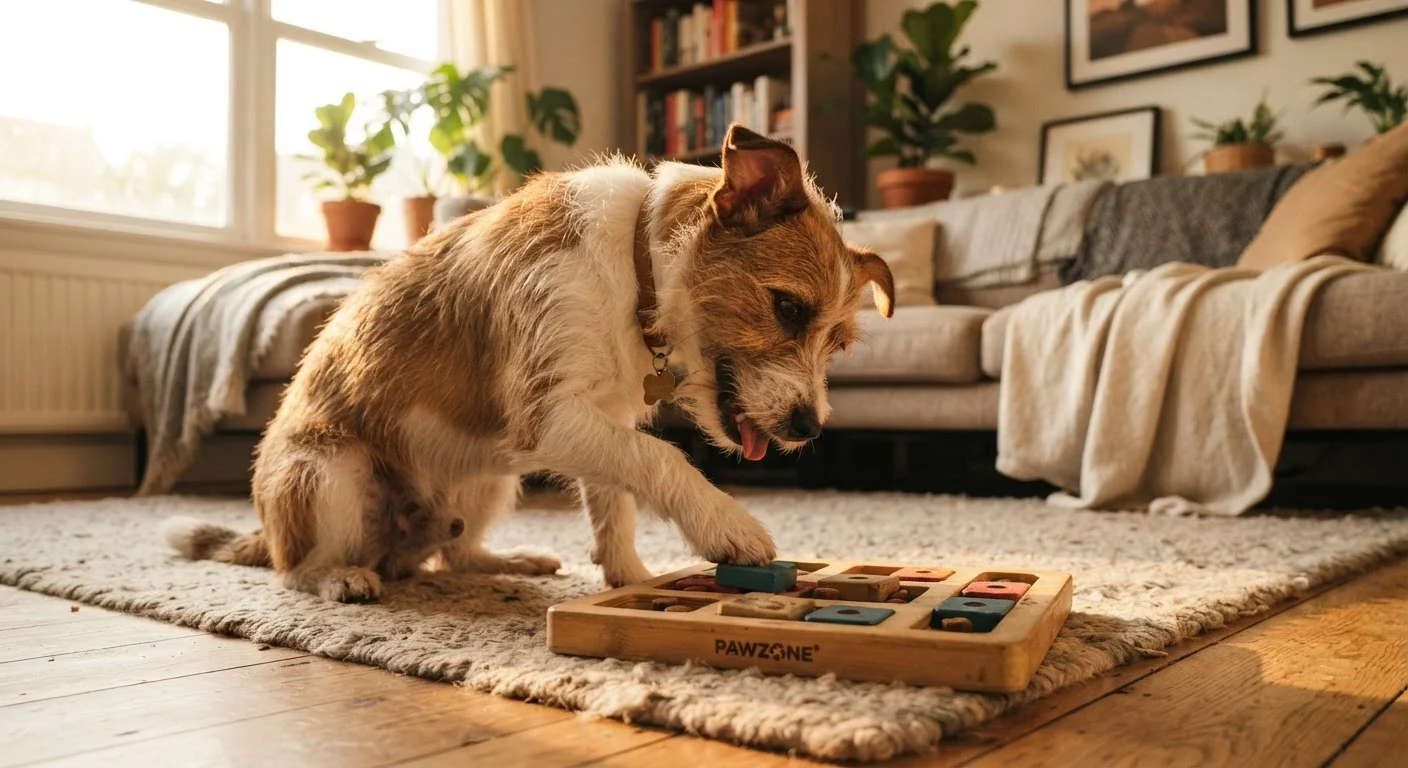
Free-feeding from a bowl removes one of the most cognitively engaging activities an animal can perform: working for food. Foraging is deeply wired into nearly every domestic species. Dogs, cats, rabbits, parrots, and even fish show measurable preference for food they have to earn over identical food offered freely - a phenomenon researchers call contrafreeloading.
Replace or supplement bowl feeding with puzzle feeders, snuffle mats, lick mats, frozen food toys, or scatter feeding in grass or shredded paper. For small mammals like guinea pigs and rabbits, hiding leafy greens inside cardboard tubes or paper bags provides foraging enrichment that also supports natural chewing behavior. See our guide to setting up an enriching home for small pets for species-specific foraging ideas.
Earning food through foraging activates problem-solving circuits that free-feeding simply cannot replicate.
Introduce Nose Work and Scent Games
A dog's nose contains roughly 300 million olfactory receptors - about 50 times more than humans. Cats, rabbits, and rodents are similarly scent-dominated. Structured nose work games, where animals search for a hidden target odor or treat, are among the most cognitively tiring activities you can offer, often more exhausting than equivalent physical exercise.
Start simply: hide small pieces of food under overturned cups or inside cardboard boxes arranged on the floor. Gradually increase complexity by using multiple rooms or introducing novel containers. Dogs trained in formal nose work sports consistently show reduced anxiety and improved confidence - but the benefits of informal scent games at home are real and accessible without formal instruction.
A ten-minute scent search can tire a dog as thoroughly as a much longer walk.
Create Environmental Complexity Through Vertical Space
For cats especially, three-dimensional space is not a luxury - it is a biological need. In the wild, cats use elevation to survey territory, avoid threats, and regulate social tension. An indoor cat with no vertical access lives in a functionally impoverished environment regardless of square footage.
Cat trees, wall-mounted shelves, window perches, and even stacked furniture create the layered landscape cats are neurologically built to navigate. Multiple cats benefit significantly: vertical space reduces direct resource competition and allows lower-confidence individuals to retreat without confrontation. If you're managing a multi-cat household, thoughtful introduction strategies paired with adequate vertical resources substantially reduce stress.
Vertical space lets cats regulate their own comfort, safety, and social distance - reducing stress measurably.
Build a Rotation of Novel Sensory Experiences
Novelty itself is enriching. The brain's dopamine system responds to new stimuli, driving exploration and attention. Keeping the same environment static month after month flattens cognitive engagement even if the initial setup was stimulating.
Rotate toys in and out of circulation on a weekly basis rather than leaving everything available simultaneously. Introduce novel textures (crinkle paper, fleece, bark) for small mammals. Play nature soundscapes or species-appropriate audio enrichment for birds and dogs during alone time. For indoor cats, consider a secure window bird feeder positioned where the cat can watch - the visual stimulation of live prey animals provides sustained, low-effort engagement. Our companion article on indoor and outdoor enrichment for cats explores this in greater depth.
Rotating the same toys back into circulation after a week can restore near-original interest levels.
Incorporate Short Daily Training Sessions
Training is cognitive enrichment in its purest form. Teaching a new cue or behavior requires sustained attention, memory consolidation, and the reward anticipation that activates positive emotional states. Even pets considered difficult to train - cats, rabbits, and many birds - respond well to short, reward-based sessions when expectations are realistic and timing is precise.
Five minutes of focused, positive reinforcement training twice a day delivers measurable benefits: strengthened human-animal communication, increased confidence in the pet, and reduced frustration-based behaviors. Training also gives pet owners a structured lens through which to observe subtle changes in responsiveness that may signal early health issues. Focus on one behavior at a time and end sessions before the animal disengages.
Two five-minute training sessions daily can deliver more behavioral benefit than a single long session weekly.
Offer Appropriate Outlets for Species-Typical Behaviors
Many problem behaviors are simply natural behaviors expressed in the wrong context. Cats scratch because they must - it maintains claw condition and deposits scent markers. Dogs dig because it is intrinsically rewarding. Parrots chew because beaks require activity. Suppressing these drives without offering an outlet increases frustration and anxiety.
The solution is redirection, not restriction: provide a designated digging box for terriers, multiple appropriate scratching surfaces for cats in varied textures and orientations, and safe chewable materials for rodents and birds. The goal is ensuring that the animal's behavioral repertoire has legal, safe, satisfying expressions. Grooming routines handled calmly also contribute to this - stress-reduced grooming techniques keep routine handling positive and part of the enrichment landscape rather than a stressor.
Redirecting natural drives toward appropriate outlets is more effective - and humane - than suppression.
Prioritize Unstructured, Pet-Led Exploration Time
Structured enrichment activities are valuable, but animals also benefit from time they control entirely. For dogs, this means off-leash sniffing time in a safe area where the human follows the dog's nose rather than directing the route. For cats, it means access to spaces where they can observe, patrol, and rest on their own terms. For small mammals, it means supervised free-roam time outside the enclosure in a secured space.
Pet-led exploration builds confidence, reduces hypervigilance, and gives animals a sense of agency over their environment - a factor that behavioral researchers consistently link to reduced stress and improved welfare outcomes. Even fifteen minutes of genuinely unstructured time daily can shift a chronically reactive or anxious pet toward a calmer baseline over weeks of consistent practice.
Giving animals control over their own exploration time builds confidence that structured activities alone cannot.
Putting It All Together
Enrichment works best as a system rather than a checklist. Rotate strategies across the week so novelty stays high - the same puzzle toy presented every day loses its cognitive challenge within days. Aim for at least two to three enrichment opportunities daily, even if each session lasts only five to ten minutes.
Track What Actually Engages Your Pet
Keep a simple log of which enrichment activities hold your pet's attention longest and which are ignored after the first exposure. Over two to three weeks, clear preferences emerge that help you invest time and effort in the most effective strategies. Individual variation - even within the same breed or species - is significant and worth mapping for your specific animal.
Pay attention to which activities your individual pet gravitates toward. A scent-driven beagle will get far more out of nose work than a visual puzzle toy. A prey-motivated cat will respond more to wand play than to static climbing structures. Matching method to temperament is what turns generic enrichment into genuinely effective mental health care.
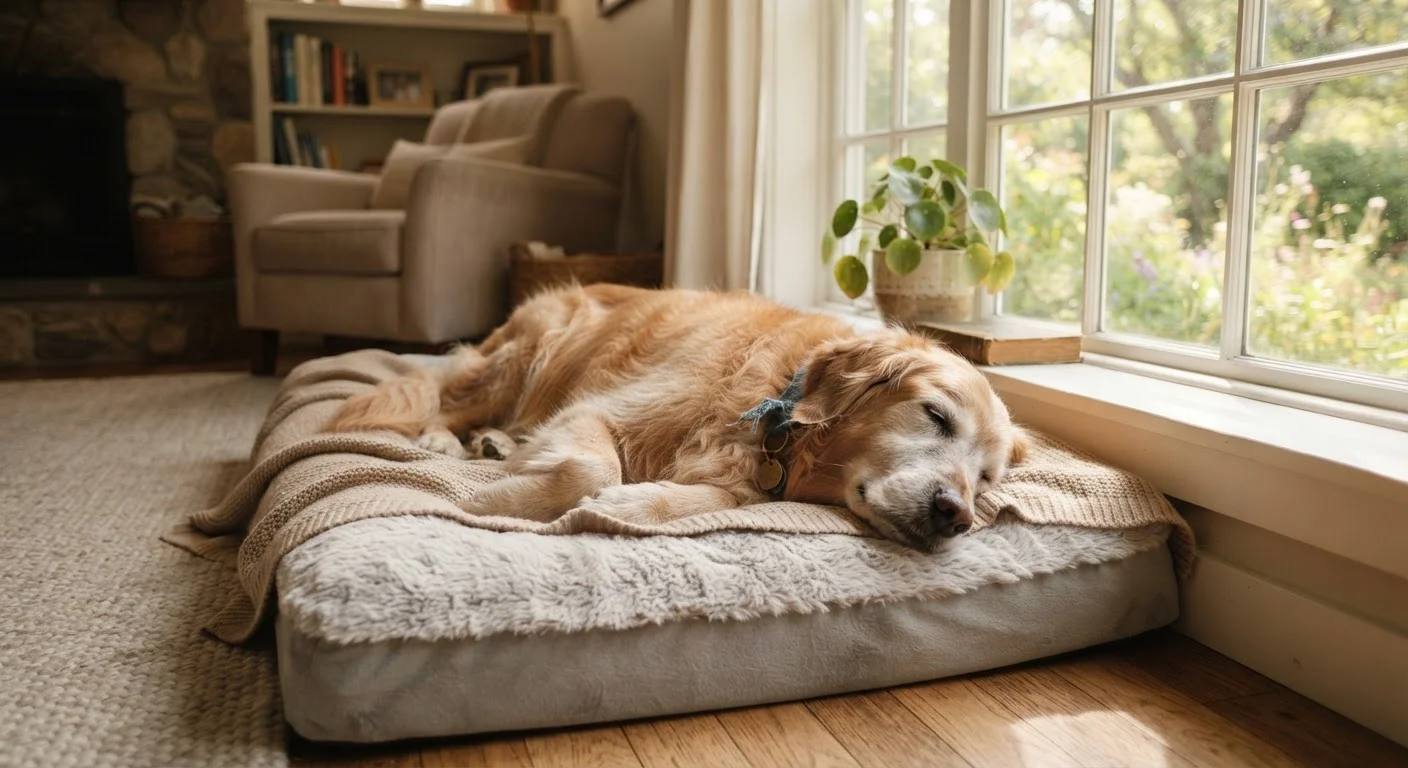
Enrichment needs also shift with age. Senior pets have distinct cognitive and mobility considerations that call for gentler, lower-impact activities - shorter sessions, less physically demanding puzzles, and calm sensory experiences like gentle massage or audio enrichment. For a broader look at keeping your pet healthy and thriving, visit our Pet Health & Wellness hub.
This article is for general informational and educational purposes only. For behavioral concerns or signs of distress in your pet, consult a licensed veterinarian or certified veterinary behaviorist.