
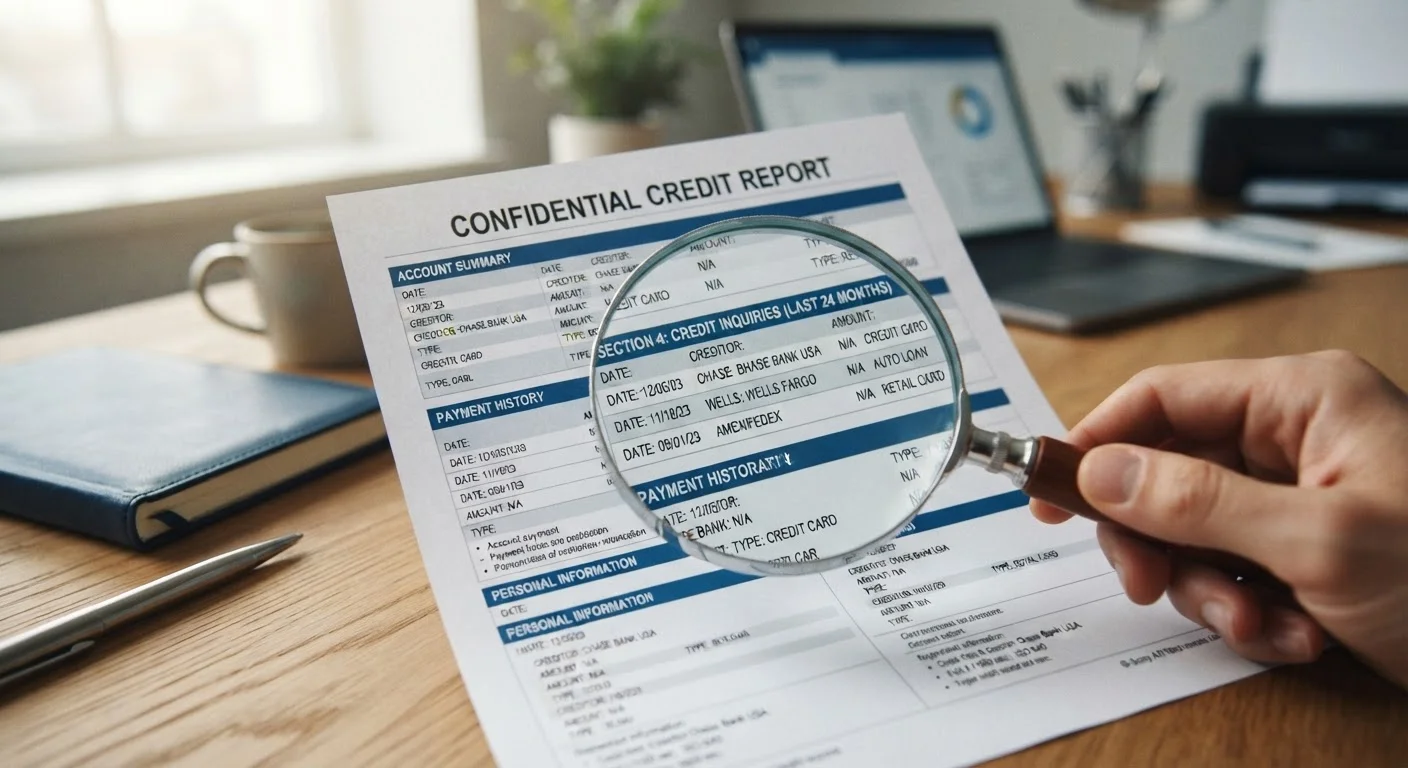
What Makes an Inquiry 'Hard' or 'Soft'?
When someone accesses your credit report, that access is recorded as an inquiry. The distinction between hard and soft comes down to one question: did you formally apply for new credit?
A hard inquiry (also called a hard pull) happens when a lender or creditor reviews your credit file as part of a formal credit application - think credit cards, personal loans, auto financing, or mortgages. Because you've asked a creditor to extend credit, this review is noted on your report and is visible to other lenders.
A soft inquiry (or soft pull) occurs in situations where no credit application is involved. Common examples include checking your own credit report, a lender pre-screening you for a promotional offer, or an employer running a background check with your permission. Soft inquiries appear in a separate section of your credit report that only you can see - they are not visible to other lenders and carry no scoring weight.
This distinction matters because many people worry unnecessarily about credit checks that are actually soft pulls. Understanding which type applies in a given situation is the first step to managing your credit with confidence. For a broader look at how scores are calculated and interpreted, see Credit Scores Decoded.
How Each Type Affects Your Credit Score
| Criterion | Hard Inquiry | Soft Inquiry |
|---|---|---|
| Triggered by | Formal credit application | Pre-approval, self-check, background screening |
| Affects credit score | Yes - temporarily | No - never |
| Visible to other lenders | Yes | No |
| Stays on report | Up to 2 years | Visible only to you; not scored |
| Score impact duration | Typically fades within 12 months | None |
| Rate-shopping protection | Yes - multiple same-type inquiries grouped | N/A |
Hard inquiries are factored into your credit score under the "new credit" category, which typically accounts for around 10% of a FICO score. In practice, a single hard inquiry tends to lower a score by fewer than five points for most people - a modest and short-lived impact. The effect usually fades within a few months, and hard inquiries stop influencing your score after twelve months, even though they remain visible on your report for two years.
Soft inquiries, by contrast, have zero effect on your credit score under any widely used scoring model. No matter how many times you check your own credit or how many pre-approval offers a lender sends you, your score is unaffected.
~5 pts
Typical score drop from one hard inquiry
According to FICO, a single hard inquiry lowers most scores by fewer than five points, and some scores are unaffected entirely.
45 days
Rate-shopping window in newer FICO models
FICO's newer scoring models group multiple mortgage or auto loan inquiries made within 45 days into a single inquiry for scoring purposes.
10%
Weight of 'new credit' in a FICO score
FICO's scoring model allocates roughly 10% of your score to new credit, the category that includes hard inquiries alongside new account age.
One important nuance: if you're shopping for a mortgage, auto loan, or student loan, multiple hard inquiries within a short window are typically treated as a single inquiry by FICO and VantageScore models. The exact window varies - FICO's newer models use 45 days - so rate-shopping carries far less scoring risk than applying for several unrelated credit cards in quick succession. Many credit score myths stem from misunderstanding this rate-shopping protection.
Common Situations That Trigger Each Type
Knowing which category a specific credit check falls into can save unnecessary worry. Here's a practical breakdown:
- Hard inquiries: Applying for a credit card, mortgage, auto loan, personal loan, student loan, or a new utility account that requires a credit check.
- Soft inquiries: Checking your own credit report or score (through any channel), receiving pre-screened credit card or loan offers, employer or landlord background checks (with your authorization), and many bank account applications.
It's worth noting that pre-qualification tools - offered by many lenders before you formally apply - almost always use soft pulls. This means you can get a sense of likely terms and eligibility without any scoring impact. Only when you move forward with a full application does a hard inquiry occur.
If you're considering a secured credit card to build or rebuild credit, be aware that the formal application will generate a hard inquiry, just like any other credit product.
This article is for general informational purposes only and does not constitute personalized financial or credit advice. Consult a qualified financial professional regarding decisions specific to your situation.