
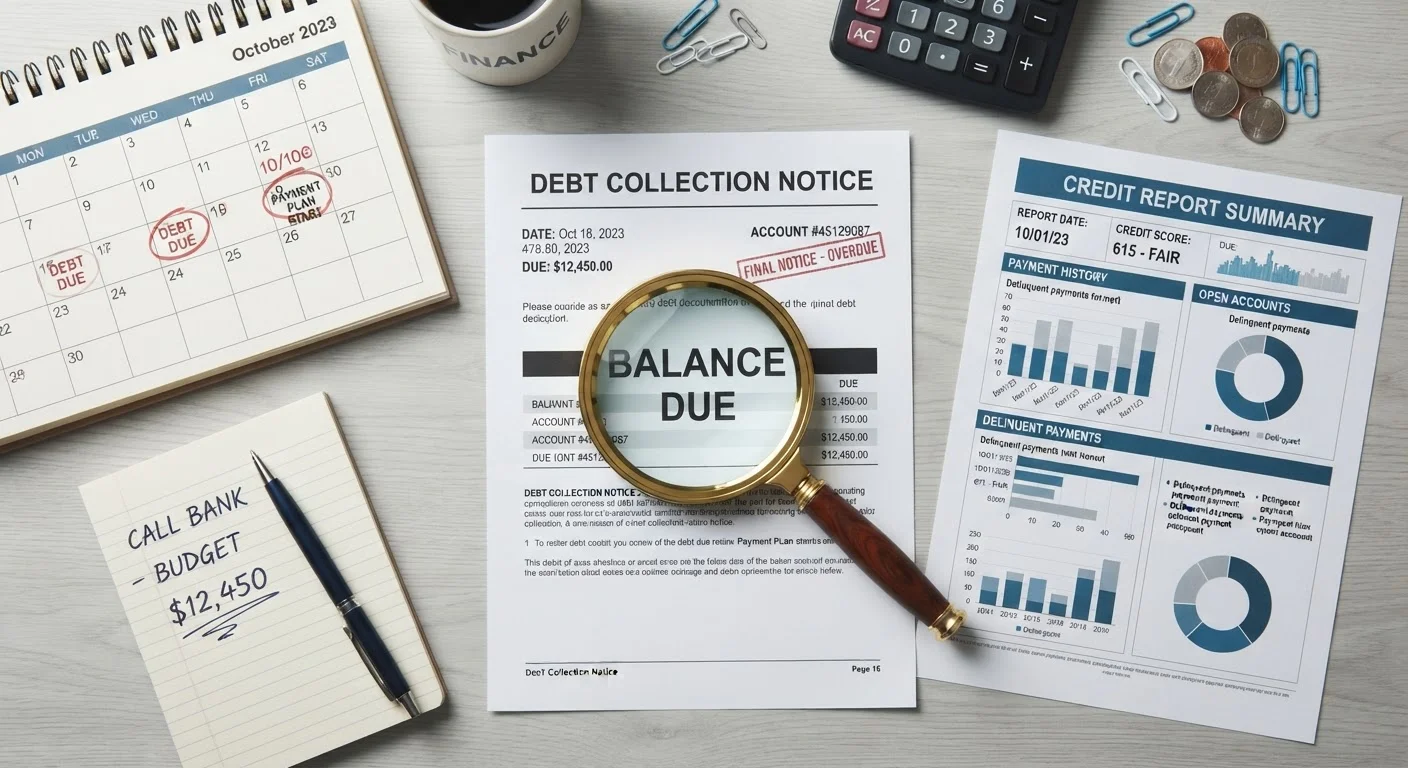
The Journey from Missed Payment to Collection Agency
Missing one payment doesn't send your account straight to collections. The process typically unfolds over months. Most creditors begin with internal collection efforts - automated reminders, calls from their own recovery teams - while charging late fees and reporting delinquencies to the credit bureaus.
After roughly 90 to 180 days of non-payment, many creditors conclude the account is unlikely to recover and classify it as a charge-off. This is an accounting designation, not debt forgiveness. The creditor writes the balance off as a loss on their books, which often triggers a hard hit to your credit score. At this point, the creditor has two main options: continue pursuing the debt internally, or sell it.
Most choose to sell. Debt portfolios are bundled and sold to collection agencies - often for pennies on the dollar, sometimes as little as 3-7 cents per dollar of face value. The collection agency now owns the debt and has a financial incentive to recover as much as possible. That gap between what they paid and what they collect is their profit.
~28%
US adults with debt in collections
A Urban Institute analysis found that roughly 28% of Americans with a credit file had debt in collections reported on their record.
3-7¢
Typical cents paid per dollar of debt
Industry data suggests collection agencies often purchase defaulted debt portfolios for as little as three to seven cents per dollar of face value.
7 years
Maximum time on credit report
Under the Fair Credit Reporting Act, a collection account must be removed from a consumer's credit report seven years after the original delinquency date.
What Happens After the Debt Is Sold
Once a collection agency acquires your debt, they will typically contact you by mail and phone. Under the Fair Debt Collection Practices Act (FDCPA), a federal law that governs third-party collectors, they must send you a written notice within five days of first contact. That notice must include the amount owed, the name of the original creditor, and information about your right to dispute the debt.
You have 30 days from that first written notice to request debt validation in writing. If you do, the collector must pause collection efforts until they provide verification. This is a meaningful consumer protection worth using if you have any doubt about the debt's accuracy or legitimacy.
What collectors cannot do under the FDCPA is equally important: they may not call before 8 a.m. or after 9 p.m. local time, use abusive language, threaten actions they can't legally take, or misrepresent the debt amount. If a collector violates these rules, you may have grounds to file a complaint with the Consumer Financial Protection Bureau (CFPB) or your state attorney general's office.
Debt Can Change Hands More Than Once
After the first sale, collection agencies sometimes resell debts they've been unable to collect to other agencies. This means you could be contacted by multiple companies about the same debt over time. Each new owner must still comply with FDCPA requirements, and your validation rights reset with each new collector's first contact. Keeping records of all communications and payments is essential to avoid confusion or duplicate collection attempts.
The Credit Report Impact and Your Options
A collection account is a significant negative mark on your credit report. It can lower your credit score substantially and remain visible to lenders for up to seven years from the original delinquency date - not from when it was sold or when you last interacted with the collector.
Consumers in this situation generally have a few paths forward:
- Pay in full: Resolves the debt and updates the status on your report, though the collection account itself stays until the seven-year window expires.
- Negotiate a settlement: Because agencies buy debt cheaply, they may accept less than the full balance. Get any settlement agreement in writing before paying. Note that settled debt for less than the full amount may result in a 1099-C tax form - consult a tax professional.
- Dispute inaccuracies: If information on your report is incorrect - wrong balance, wrong dates, or a debt that isn't yours - you can dispute it with the credit bureaus under the Fair Credit Reporting Act.
- Do nothing (with awareness of risk): Some people, particularly those with little income or assets, weigh the risk of inaction. This carries real risks including potential lawsuits and judgment, so it's a decision best made with clear-eyed understanding of the consequences.
If you're managing multiple debts at once, it may be worth reviewing how payoff strategies work - comparing the debt snowball and debt avalanche methods can provide helpful context. Some people also consider debt consolidation as a way to simplify repayment, though it works differently when collection accounts are involved.
This article is for general informational purposes only and does not constitute financial, legal, or tax advice. Consult a qualified professional for guidance specific to your situation.