
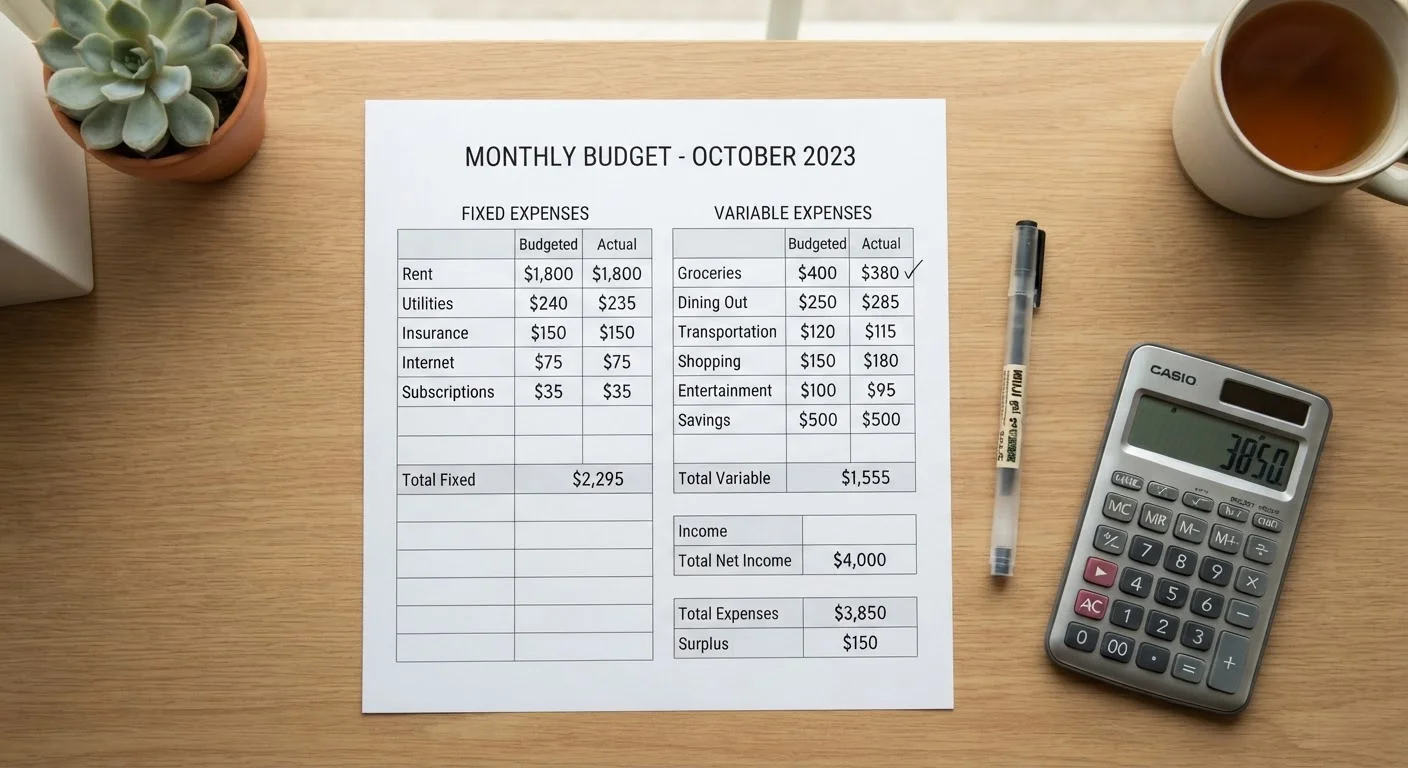
What Makes an Expense Fixed or Variable
The distinction is straightforward: a fixed expense is one where the dollar amount stays the same from month to month, regardless of how you spend your time or make choices. A variable expense is one that shifts - sometimes because of deliberate decisions, sometimes because of circumstances outside your control.
Common fixed expenses include rent or a mortgage payment, car loan payments, insurance premiums, and subscription services billed at a flat rate. These amounts appear on your statement looking identical every cycle. Variable expenses include groceries, dining out, gas, utilities, entertainment, and clothing - categories where the total depends on how much you use or consume.
A useful way to think about it: if you could write the amount on a calendar before the month even starts and be right, it's fixed. If you'd have to wait and see, it's variable.
When Fixed Isn't Truly Fixed
Some expenses feel fixed because they recur monthly, but are actually negotiable over time. Insurance premiums, for example, can be reviewed annually and adjusted based on coverage changes or provider comparisons. Similarly, subscription costs can creep up through auto-renewals. Revisiting your fixed expense list every six to twelve months is a worthwhile habit - a cost that felt non-negotiable a year ago may have alternatives now.
Understanding this distinction is the first step toward choosing a budgeting method that works for your life. See an overview of major budgeting methods to match an approach to your situation.
How to Budget Differently for Each Type
Because fixed and variable expenses behave differently, they respond better to different budgeting tactics.
For fixed expenses: List them all, total them up, and treat that number as your floor - the minimum your budget must cover before anything else is allocated. Many people automate payment of fixed expenses so they're never missed. The challenge with fixed costs isn't tracking; it's the difficulty of reducing them quickly when money gets tight. Renegotiating a lease or refinancing a loan takes time and isn't always possible.
For variable expenses: These require active monitoring throughout the month. Setting a category limit - say, $400 for groceries or $150 for dining - gives you a target, but you have to check in regularly to stay on track. The upside is flexibility: if a financial priority shifts, variable spending is often the first place you can find room to adjust.
| Criterion | Fixed Expenses | Variable Expenses |
|---|---|---|
| Amount consistency | Same every month | Changes month to month |
| Examples | Rent, loan payments, subscriptions | Groceries, gas, dining, utilities |
| Ease of planning | Very easy - predictable in advance | Requires ongoing tracking |
| Flexibility to cut | Low - changes take time | High - adjustable quickly |
| Best budgeting tactic | Automate and set as baseline | Set limits and monitor regularly |
| Risk if underestimated | Missed payments, fees | Overspending in discretionary areas |
For people with fluctuating incomes, like freelancers or gig workers, the distinction matters even more. When a slow month hits, variable expenses are the most realistic place to cut. Budgeting on an irregular income covers practical approaches for exactly this scenario.
The Gray Area: Semi-Fixed and Semi-Variable Costs
Not every expense fits neatly into one box. Utilities are a classic example: your electric bill shows up every month (fixed in structure) but the amount changes with usage and season (variable in amount). These are sometimes called semi-variable or semi-fixed expenses.
Other examples include phone plans with overage charges, gym memberships with optional add-ons, or medical costs that vary by visit. For budgeting purposes, the practical approach is to estimate a realistic average for these costs based on past statements, then treat that average as your planning figure - while keeping a small buffer for months when usage runs higher.
If you're building a zero-based or percentage-based budget, knowing where each expense sits on the fixed-to-variable spectrum helps you assign dollars more accurately and reduce the chance of running short mid-month.
This article is for general informational and educational purposes only and does not constitute personalized financial advice. Consult a qualified financial professional for guidance specific to your situation.