What a Budget Actually Is
Strip away the spreadsheet anxiety and the guilt, and a personal budget is just a plan. Specifically, it's a written estimate of how much money will come in during a set period - usually a month - and a deliberate decision about where that money will go before it's spent.
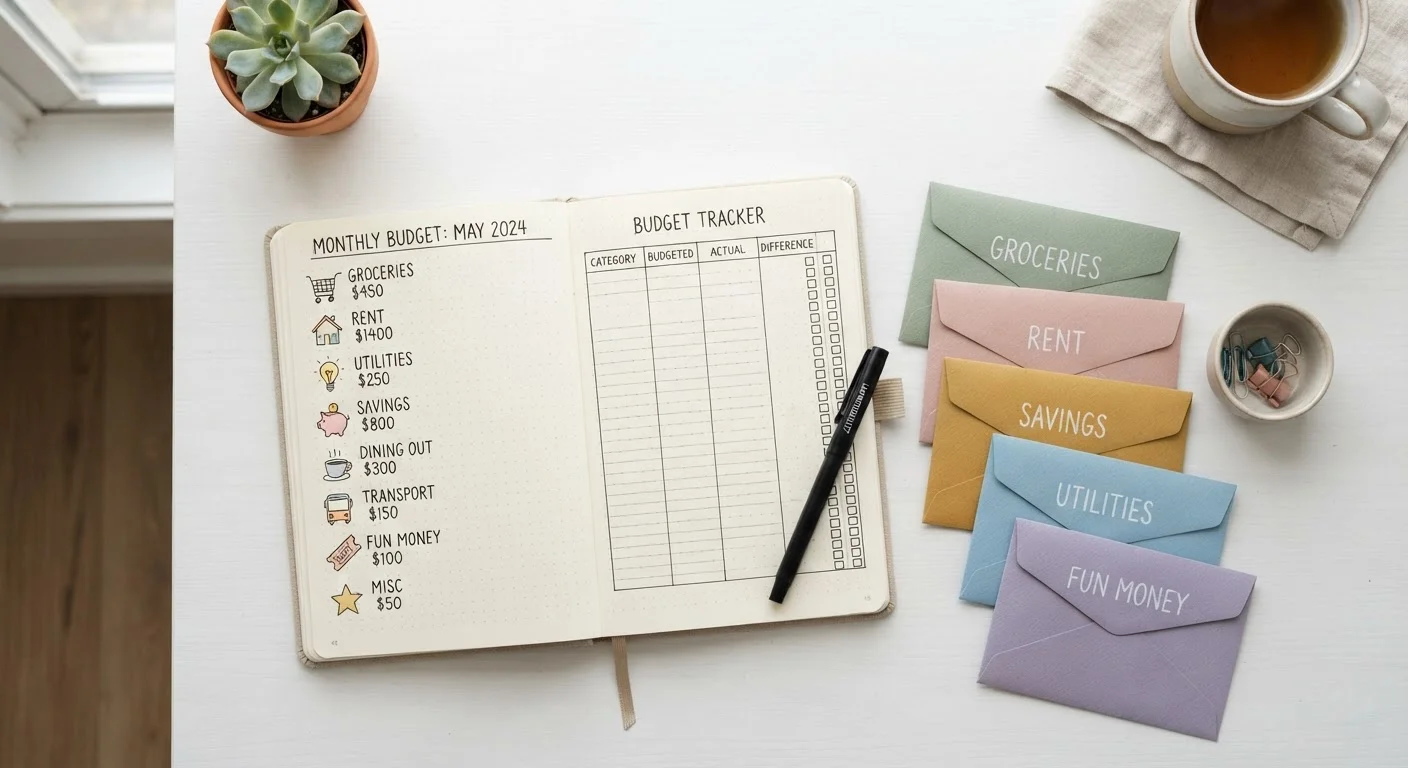
That's it. There's no required format, no minimum income threshold, and no prerequisite level of financial sophistication. A budget can live in a notebook, a spreadsheet, or an app. What matters is that it reflects your actual income and your actual expenses, so you can see clearly whether they balance.
The word "budget" carries a lot of baggage - deprivation, rigidity, failure. But those associations say more about how budgets are sometimes taught than what they actually are. A budget doesn't tell you that you can't spend money on coffee or concerts. It asks you to decide in advance how much you want to spend on those things, so you're making a choice rather than absorbing a surprise.
A Budget Is Not a Vow of Poverty
A common misconception is that budgeting requires eliminating all discretionary spending. In practice, most budgets explicitly include categories for things like dining out, hobbies, and entertainment - they just put a number on it. The point is intention, not deprivation. Discretionary spending that's planned for is fundamentally different from spending that happens by default.
The Two Things Every Budget Tracks
At its core, any personal budget tracks two categories:
- Income: Every dollar that enters your household - wages, freelance earnings, benefits, side income.
- Expenses: Every dollar that leaves - rent, groceries, subscriptions, debt payments, savings contributions, and everything in between.
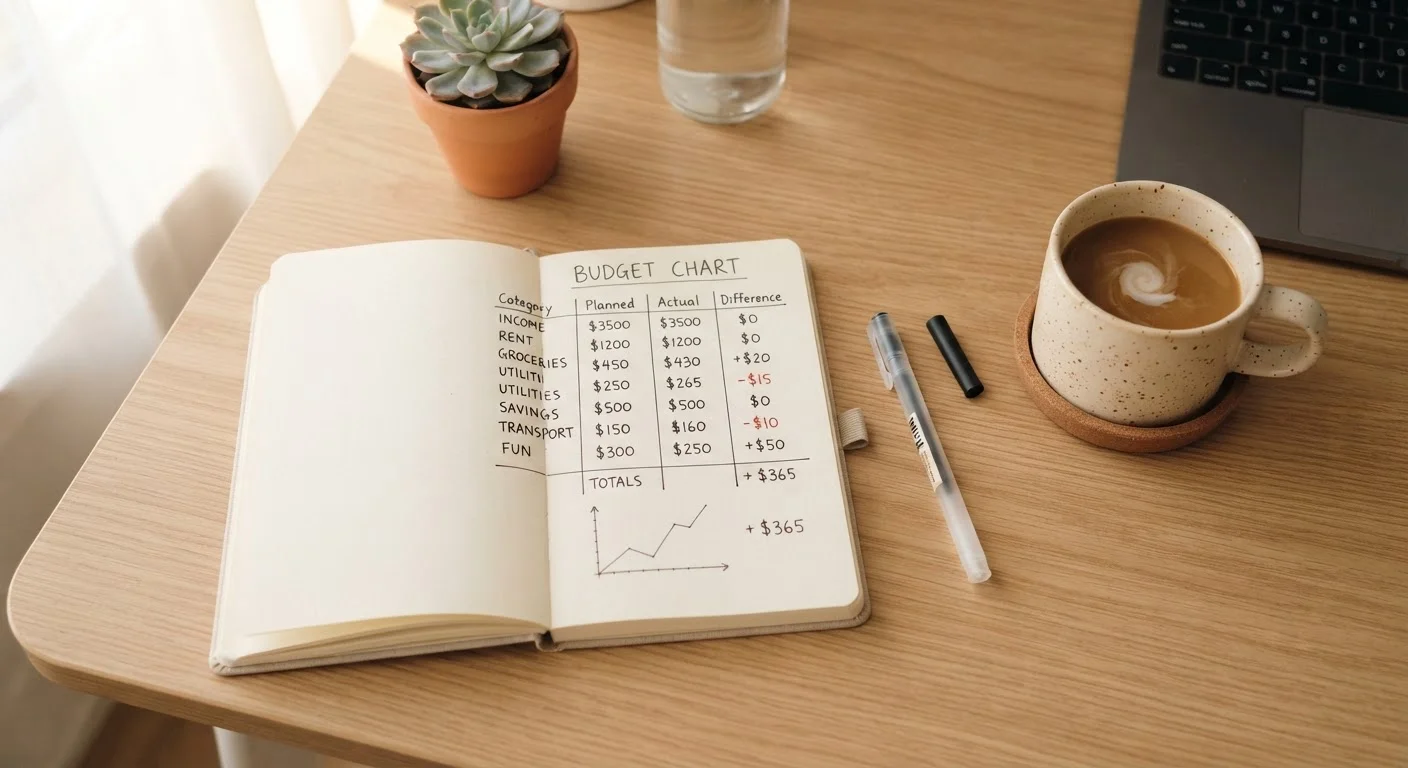
The relationship between these two numbers is what a budget reveals. If expenses consistently exceed income, that's unsustainable and the budget surfaces it early. If income exceeds expenses, the budget helps you decide intentionally what to do with the difference - whether that's building an emergency fund, paying down debt, or working toward a longer-term goal.
Expenses are often split into fixed (same amount each month, like rent or a loan payment) and variable (fluctuating amounts, like groceries or utilities). Understanding which expenses fall into which category helps you see where flexibility actually exists.
~33%
US adults who maintain a detailed household budget
A Gallup survey found that roughly one in three American adults tracks their spending against a formal budget, despite widespread acknowledgment that budgeting is beneficial.
65%
Americans living paycheck to paycheck at some point
Research from various financial wellness surveys consistently finds that a majority of US adults have experienced periods with little financial cushion, underscoring why a spending plan matters at most income levels.
Why People Resist Budgeting - and What's Actually Going On
The most common reason people avoid budgeting isn't laziness - it's discomfort. Looking squarely at your finances when you're anxious about them feels like the problem, not the solution. But a budget doesn't create financial pressure; it just makes existing pressure visible, which is the first step to addressing it.
Another common barrier is perfectionism. Many people abandon a budget the moment they overspend in one category, treating a single deviation as evidence that budgeting doesn't work for them. In reality, a budget is a living document. Missing a target in one month means the plan needs tweaking, not scrapping.
If you've heard that budgeting is only for people who are bad with money, or that it doesn't work unless you're already disciplined, those are worth examining more carefully. Common budgeting myths tend to keep people from starting in the first place - and most of them don't hold up.
“A budget is telling your money where to go instead of wondering where it went.”
— John C. Maxwell, Author and leadership speaker, widely cited in personal finance literature
How a Budget Works in Practice
A functional budget doesn't need to be elaborate. A straightforward starting point: add up all expected income for the month, then list every expected expense. Compare the two totals. If expenses exceed income, identify where cuts or adjustments are possible. If income exceeds expenses, decide deliberately where the surplus goes.
From there, the budget becomes a reference point throughout the month - something to check against real spending so you can course-correct early rather than only discovering the gap when the bank account runs dry.
There are several established approaches to structuring a budget, from zero-based budgeting (where every dollar is assigned a purpose) to percentage-based frameworks like 50/30/20. You can explore how these methods differ in our guide to budgeting approaches worth knowing. If you've never made a budget before, a more hands-on walkthrough is available in our guide to building your first budget from a blank page.
The goal isn't a perfect budget. It's a useful one - one that reflects how you actually live and gives you enough clarity to make better choices, one month at a time.
This article is for general informational and educational purposes only and does not constitute personalized financial advice. Consider consulting a qualified financial professional for guidance specific to your situation.