How the Original System Works
The envelope method dates back to a straightforward idea: if you can physically see and touch the money you have left for groceries, you'll spend it more carefully than if it's an abstract number on a bank statement.
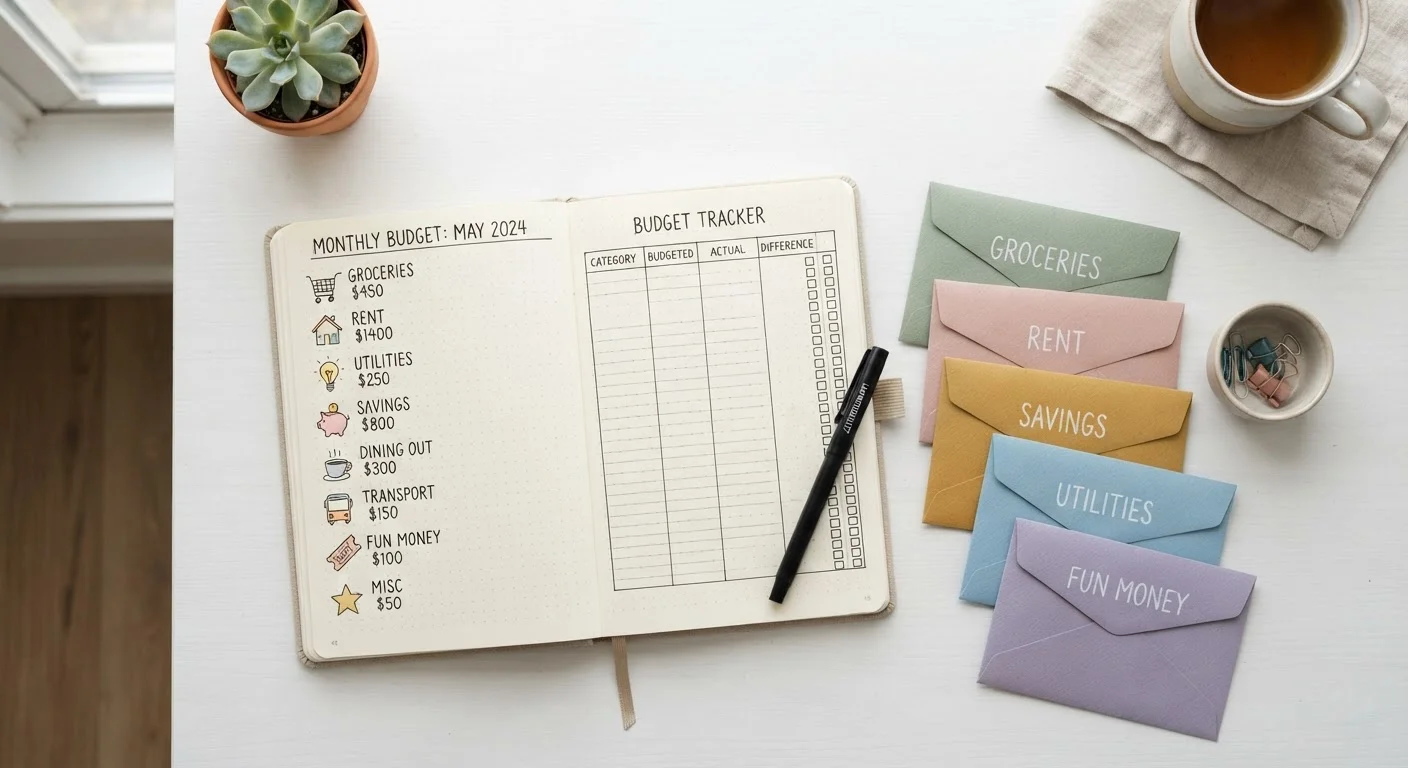
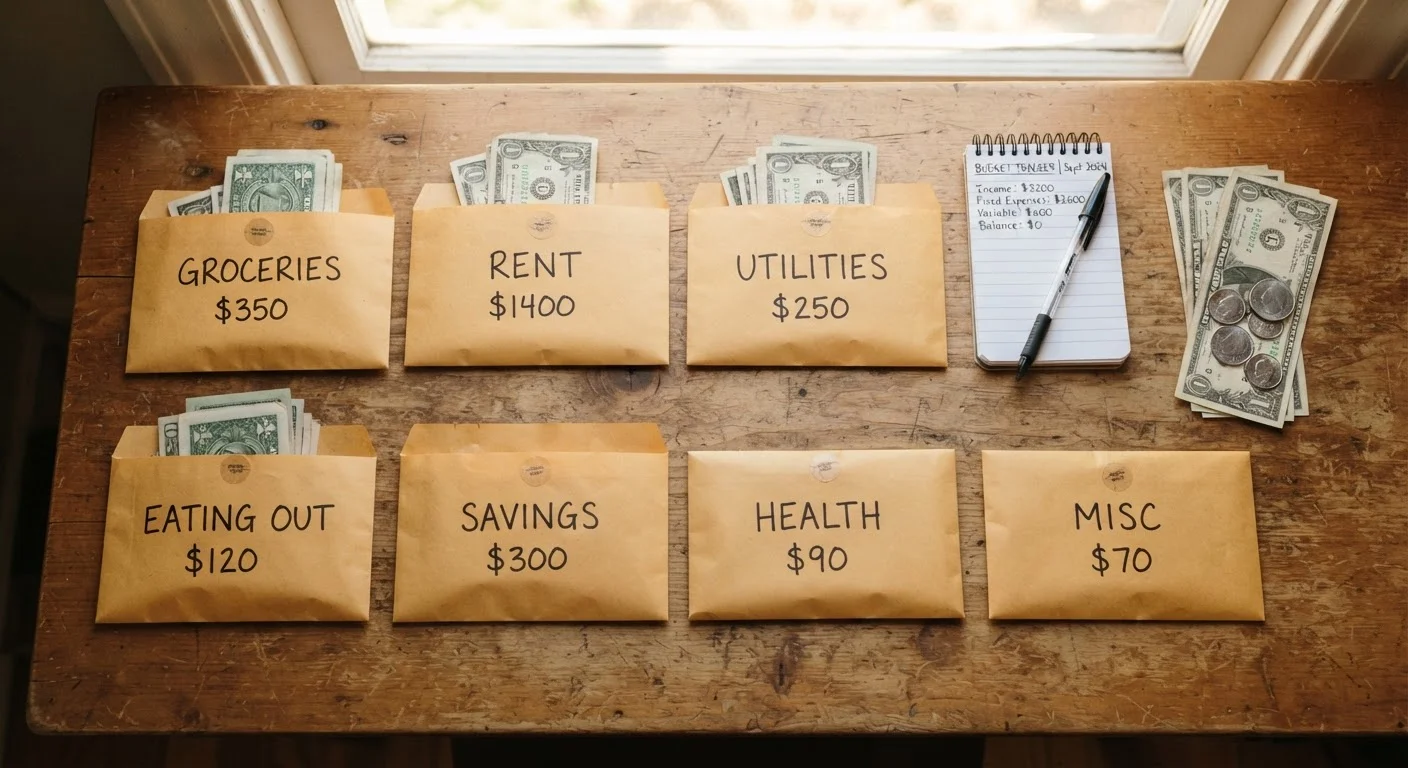
In the traditional setup, you withdraw your paycheck in cash after bills are paid, then divide it into labeled envelopes - one for groceries, one for gas, one for dining out, and so on. Each envelope holds a fixed amount for the month. When the cash is gone, spending in that category pauses. There's no overdraft buffer and no credit card to reach for. The empty envelope is the signal to stop.
The system works particularly well for variable, discretionary expenses where spending tends to drift - categories like food, clothing, and entertainment. Fixed monthly obligations like rent, utilities, or loan payments are typically handled separately, since their amounts are predetermined and don't require the same behavioral guardrail.
Envelope Budgeting Is a Tool, Not a Complete Plan
The envelope method addresses spending control but doesn't, on its own, cover savings goals, debt repayment, or investment planning. Most people use it alongside a broader budgeting framework. If you're building a full financial plan, the envelope concept fits within a larger structure - not as a standalone solution.
Adapting the Method for a Cashless Lifestyle
Most Americans rarely carry significant amounts of cash. Card payments, digital wallets, and automatic transfers have made the physical envelope increasingly impractical - but the underlying discipline is fully portable.
The most common digital adaptation involves setting up multiple checking or savings sub-accounts, each dedicated to a single spending category. Some banks and credit unions allow this without fees. When income arrives, you transfer fixed amounts into each sub-account, mirroring the act of stuffing envelopes. A debit card linked to the grocery sub-account, for example, will decline when that account reaches zero.
Budgeting apps take a similar approach with virtual envelopes - software categories that track spending against preset limits and alert you when a category is running low. The alert replaces the physical reality of an empty envelope. The effectiveness depends on how promptly you log transactions and how seriously you treat a warning notification.
Spreadsheet-based tracking is a lower-tech middle ground. You record each purchase against its category and subtract it from the monthly allocation. It requires more manual effort but gives you a complete, customizable picture of where money goes.
Start With Just Three or Four Envelopes
Resist the urge to create a category for every possible expense. Too many envelopes quickly become a tracking burden. Begin with the two or three spending areas where you lose track most easily - typically groceries, dining, and discretionary fun money - and expand only once the habit is established.
Strengths, Limitations, and Who It Suits
The envelope method's main advantage is its immediacy. Rather than reviewing a budget after the fact, you know your remaining limit before you spend. This real-time awareness tends to reduce impulse purchases and keeps discretionary categories from quietly ballooning over the course of a month.
It also has a low learning curve. There's no complex math or financial software required to start - a handful of envelopes and a clear category list is enough.
The limitations are real, though. The system demands consistency: every transaction must be tracked and deducted, or the limits become meaningless. For people who split purchases across multiple categories, track joint finances with a partner, or deal with irregular income, the mechanics can become cumbersome. Digital adaptations reduce some friction but introduce their own: app fatigue, delayed syncing, or simply ignoring a low-balance alert.
The envelope approach tends to resonate most with people who feel they lose track of discretionary spending, struggle to stay within a grocery or dining budget, or simply want a concrete, tactile system rather than an abstract plan. If you're evaluating multiple approaches, our overview of major budgeting methods can help you compare them side by side.
~33%
Americans with a formal written budget
Surveys by the National Endowment for Financial Education have consistently found that only around a third of Americans maintain a detailed written budget.
$500+
Average monthly discretionary spending variance
Research from the Consumer Expenditure Survey shows that discretionary categories like food away from home, entertainment, and apparel can vary significantly month to month for the same household.
90%+
US consumer payments made electronically
According to Federal Reserve payments data, the vast majority of US consumer transactions are now made via card, ACH, or digital wallet rather than cash.
Before building your first envelope budget, it helps to take stock of your full financial picture. Our monthly budget setup checklist walks through income sources, recurring bills, and irregular expenses before you assign a single dollar to a category. And if the idea of budgeting feels daunting, it's worth examining the assumptions behind that hesitation - many common concerns are addressed in our piece on budgeting myths that keep people from starting.
This article is for general informational purposes only and does not constitute personalized financial advice. Consider speaking with a qualified financial professional about your specific situation.